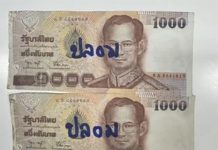
PATTAYA, Thailand – A resilient Thai baht is quietly reshaping the spending power of foreign visitors, raising concerns among tourism operators and long-term travelers in destinations like Pattaya.
According to market analysis from Krungthai Bank, the baht is expected to trade within a relatively firm range of 32.00–33.00 per US dollar this week, with short-term movements fluctuating but showing limited signs of sustained weakening. While global uncertainty — particularly tensions in the Middle East — continues to drive volatility, the baht has remained comparatively strong.

For foreign tourists, the impact is immediate and tangible.
A stronger baht means less value when exchanging foreign currency. Visitors arriving with dollars, euros, or pounds now find their budgets stretched thinner than in previous years. Everyday expenses — from accommodation and transport to food and entertainment — effectively become more expensive, even if local prices remain unchanged.
In a city like Pattaya, where affordability has long been part of its appeal, this shift is being felt across the board. Long-term visitors, in particular, are among the most affected. Those staying for months at a time are seeing cumulative costs rise, not just from inflation and service charges, but from the exchange rate itself working against them.
The timing adds to the pressure.
As Thailand heads toward the post-Songkran period — traditionally the start of a quieter tourism season — reduced purchasing power could influence how long visitors stay and how much they spend. For some, it may mean cutting back on discretionary spending. For others, it could impact decisions on whether to return at all.
Market analysts note that the baht’s direction remains uncertain, with potential for “two-way” movement depending on global developments and investor flows. However, dividend outflows to foreign investors and cautious sentiment may continue to limit any significant strengthening trend, while not necessarily delivering the kind of sustained weakness that would boost tourism spending power.
For businesses in Pattaya, the challenge is subtle but significant. Even without raising prices, the perception of higher costs can alter visitor behavior. Bars, restaurants, and service providers may still see crowds, but spending per customer could soften.
The broader concern is competitiveness. In a region where travelers can easily compare destinations, currency strength becomes a deciding factor. A stronger baht risks positioning Thailand — and Pattaya in particular — as less of a value destination than it once was.
For now, the city remains busy, and tourism continues to flow. But behind the numbers, the balance is shifting. And for many foreign visitors, the question is no longer just how much Pattaya offers — but how far their money can go.