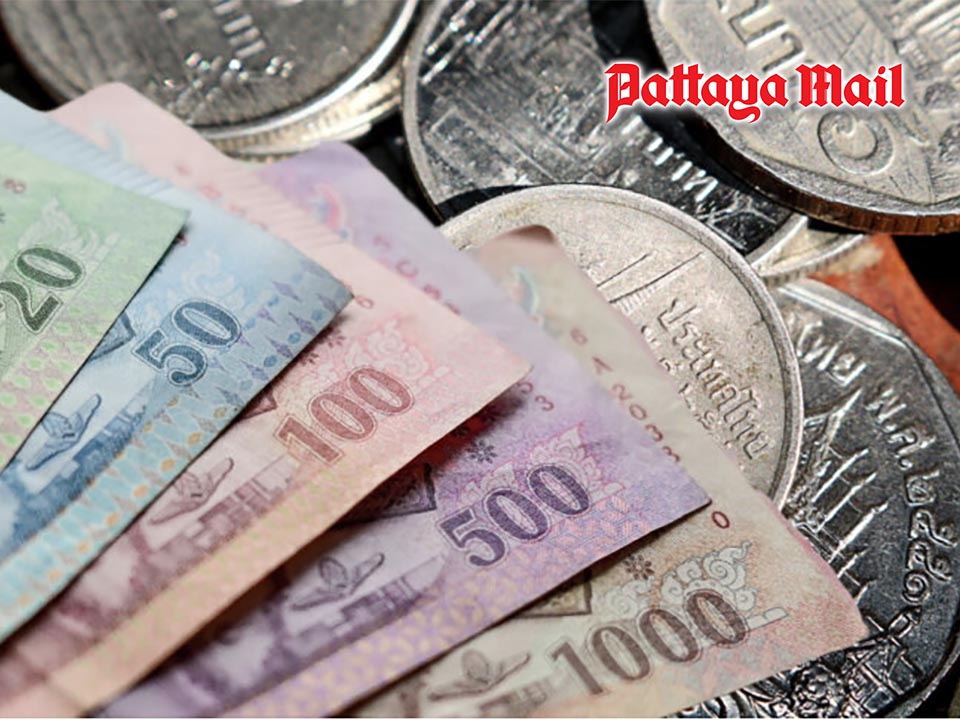
PATTAYA, Thailand – The Thai baht strengthened to 32.49 per US dollar in early trading on Friday, gaining from the previous close of 32.82, as the US dollar weakened amid easing concerns over tensions in the Middle East.
Krungthai Bank currency strategist Poon Panichpibool said the baht’s appreciation largely followed the decline in the US Dollar Index, which dropped to around 99.2 points. Market sentiment improved after geopolitical concerns in the Middle East eased, contributing to a gradual decline in global oil prices.

The dollar has also faced pressure from stronger major currencies, particularly the euro and the British pound, as markets anticipate that the European Central Bank and the Bank of England may adopt tighter monetary policies if inflation remains elevated due to geopolitical risks.
Despite the stronger baht, Panichpibool noted that the Thai currency remains highly volatile, as uncertainty surrounding global geopolitical developments continues to influence financial markets.
Domestically, investors are closely watching Thailand’s February export and import figures, which are expected to show continued growth, especially in electronics and semiconductor products. The baht is forecast to move within a range of 32.40–32.75 per dollar during the day.
Meanwhile, analysts at Siam Commercial Bank’s financial markets division projected the baht to trade within 32.40–32.70 per dollar, supported by easing concerns over the impact of geopolitical tensions on global energy prices.
Markets were also reassured after leaders from the United States and Israel signaled efforts to avoid attacks on energy infrastructure, helping stabilize energy markets.
Elsewhere, the Bank of Japan maintained its policy interest rate at 0.75%, while indicating the possibility of further increases if inflation rises. The European Central Bank kept its rate at 2%, but signaled readiness to introduce additional measures if inflation accelerates.
With global monetary policies and geopolitical developments still evolving, analysts say the Thai baht is likely to move in both directions in the short term, reflecting continued volatility in international currency markets.