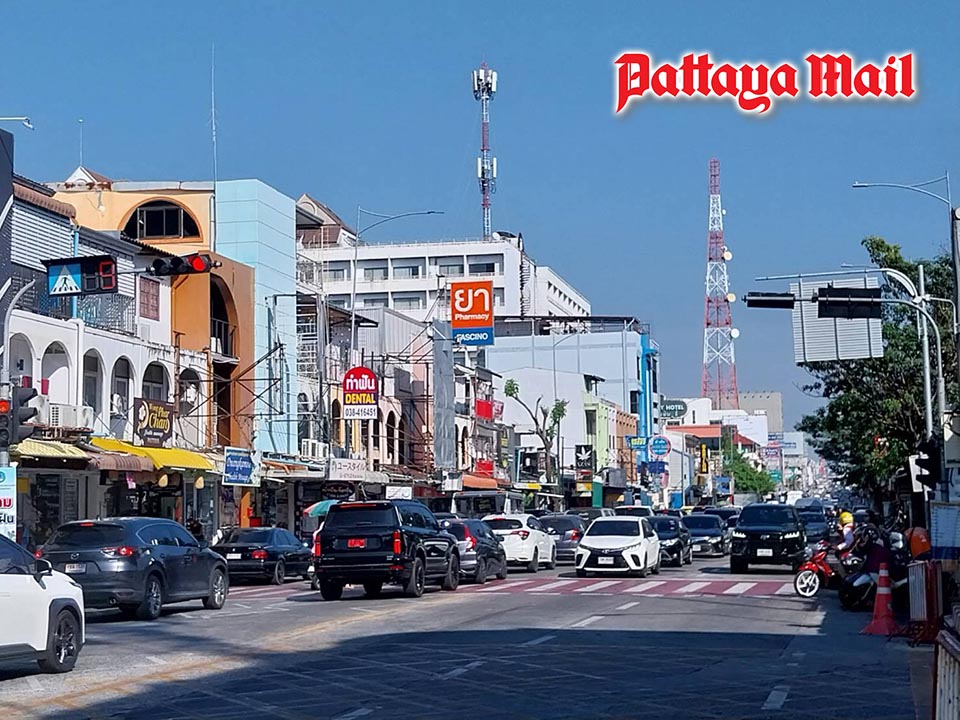
PATTAYA, Thailand – For many foreign visitors, part of Pattaya’s appeal is the ability to move around easily on foot, whether heading to the beach, a nearby market, or an evening restaurant. But on busy weekends, the reality on the ground can be very different.
With limited road space and a constant flow of vehicles entering the city, Pattaya regularly experiences heavy traffic congestion on Fridays, Saturdays, and public holidays. For tourists who do not rent cars or motorbikes—often the majority of short-term visitors—simply crossing the road or traveling a short distance can become unexpectedly difficult.

Limited roads, growing traffic
Much of Pattaya’s main road network was designed decades ago when the city was far smaller. Today, with growing domestic tourism, ride-hailing services, tour buses, delivery vehicles, and private cars filling the streets, many roads struggle to handle the weekend surge.
Key routes near the beachfront and popular entertainment areas often slow to a crawl, especially during evening hours when visitors head out for dinner or nightlife.
For foreign tourists without vehicles, this congestion means relying heavily on walking or waiting for crowded baht buses and taxis.
Pedestrian crossings often ignored
One of the biggest frustrations voiced by visitors is the difficulty of using pedestrian crossings.
Although zebra crossings exist in many parts of the city, enforcement remains inconsistent. Vehicles frequently slow down but continue moving through crossings even when pedestrians are waiting.
Some tourists say they feel forced to wait for large gaps in traffic rather than trusting the crossing itself, which defeats the purpose of pedestrian safety infrastructure.
On busy roads, this can lead to long waits and occasional risky attempts to cross between vehicles.
Tourists staying closer to hotels
As a result, some visitors adjust their behavior during crowded weekends.
Rather than exploring different neighborhoods, many choose to remain close to their hotels, walking only short distances to nearby beaches, convenience stores, or small markets.
For those staying along the beachfront, this often means limiting travel to a few nearby streets rather than venturing further across the city.
While Pattaya remains lively and attractive, the difficulty of moving around can quietly shape how tourists experience the city.
A challenge for a tourism-driven city
In a destination that welcomes millions of visitors every year, transport convenience and pedestrian safety are important factors in the overall travel experience.
Cities that rely heavily on tourism often invest in walkable streets, efficient public transport, and strict enforcement of pedestrian laws to make movement easier for visitors unfamiliar with local traffic patterns.
In Pattaya, however, rapid tourism growth has sometimes outpaced improvements in infrastructure.
Local authorities have introduced various traffic management measures over the years, including additional signals and pedestrian crossings. But with tourism continuing to grow, many observers say broader solutions may eventually be needed.
Improved pedestrian safety, better traffic discipline, and expanded transport options could help reduce the pressure felt by visitors who arrive in Pattaya expecting a relaxed seaside city where getting around is simple.
For now, however, many foreign tourists without cars continue to rely on the safest option available during busy weekends: stay close to the hotel, walk short distances, and avoid the busiest roads whenever possible.