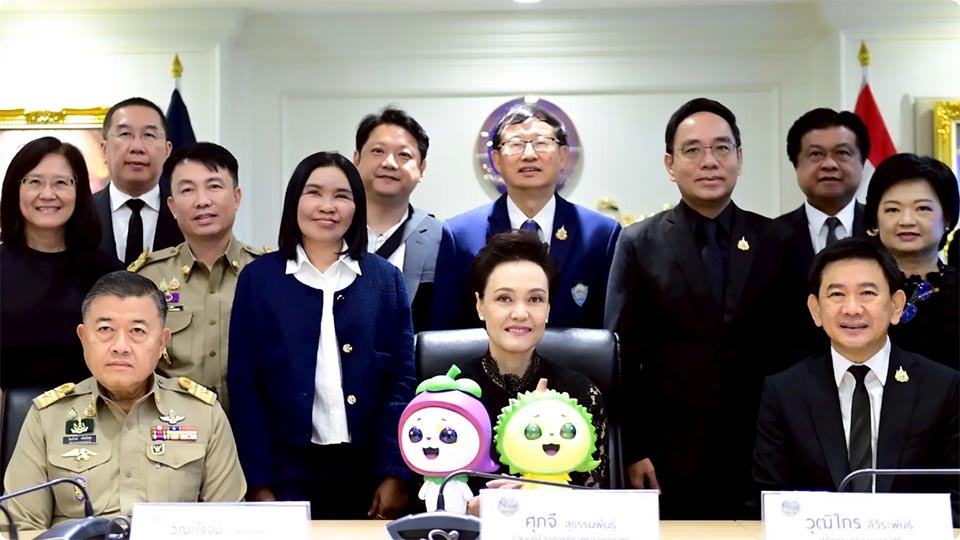
BANGKOK, Thailand – The Ministry of Commerce has introduced a comprehensive 2026 fruit management plan covering the entire supply chain, alongside a five-year strategy to strengthen long-term agricultural stability. Minister Suphajee Suthumpun assigned her advisor, Banjongjit Angsusingh, to brief the media after chairing a meeting with representatives from farmers, exporters, processors, logistics operators, and retail partners. The plan comes as Thailand expects higher fruit output this year while competing producers also expand production.
For 2026, the ministry outlined urgent measures under the national branding concept “Thailand: The Land of Tropical Fruits.” The short-term plan addresses production, processing, and logistics, as well as marketing, through eight measures intended to prevent oversupply, ease bottlenecks, and support price stability. Actions include launching a real-time fruit dashboard to monitor supply, staggering harvests by zone, expanding quality and traceability standards, managing labor during peak harvests, improving container and border logistics, and widening domestic distribution through advance agreements with retailers and exporters.
Export expansion is also a priority, with business matching activities, overseas promotions, and participation in international trade fairs to diversify markets. A unified branding and communication strategy will promote Thai fruit at home and abroad, with attention to product identity and geographical indication of goods. Authorities will also regulate foreign-operated packing houses to ensure fair competition.
The Ministry of Agriculture and Cooperatives projects total production of major fruits in 2026 at about 6.91 million tons, up 5.8 percent from last year. Durian output is expected to reach 1.89 million tons, an increase of 21 percent. Agencies are preparing distribution and marketing plans to manage the larger harvest during peak periods and maintain market balance.
The Commerce Ministry also outlined a one- to five-year framework built on precision, stability, and sustainability. The approach includes AI-based forecasting, crop zoning, contract farming, stronger farmer groups, upgraded logistics, value-added processing, low-carbon production, and closer alignment with domestic and international demand. (NNT)