|
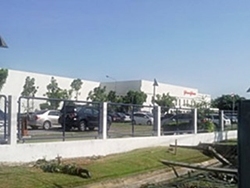
Industry Minister vows to protect Lat Krabang Industrial Estate from flooding
Minister of Industry Wannarat Channukul on Friday
inspected the city’s Lat Krabang Industrial Estate to review the
manufacturing zone’s flood protection preparedness, while vowing to protect
the zone from flooding.
Wannarat cited initial reports that the flood overflow
would surround the industrial estate in 4-5 days, while its managers are
directing the building of a flood-protection wall and expected it to be
completed within 2-3 days.
As for the 17km most at risk area, the minister said,
estate managers planned to use board paneling over the earthworks and cast
concrete construction tubes to backup the panels.
The method was expected to handle water at up to 3.20
meters above mean sea level, he said.
Moreover, 500 soldiers and workers will help strengthen
the flood prevention wall.
The Lat Krabang Industrial Estate is threatened by
flooding after seven other estates in Ayutthaya and Pathum Thani - Saha
Rattana Nakhon, Bang Pa-in, Rojana, Hi-Tech, Factory Land, Nava Nakorn and
Bangkadi — earlier shared the fate of being forced to close due to the deep
floodwater.
Established in 1978, there are 231 factories in the
estate including automobile parts, electrical appliances, food and beverage.
If the estate’s anti-flood works fail to protect the zone from the flood, it
could cost more than Bt89 billion in damage.
Meanwhile, Minister of Energy Pichai Naripthaphan said
there was no threat against security on energy in the country despite
nationwide flooding.
There will be sufficient petrol, gas and electricity to
supply the need of the public during the flood hardship, he said.
The minister said the flood has forced many petrol
stations to close but the demand has also dropped so that there was no
complaint on energy supply shortage.
However, he said, the NGV-powered vehicle owners may face
difficulty as the transportation to deliver the natural gas to stations is
delayed because of the flood.
Electricity Generating Authority of Thailand (EGAT)
Governor Suthat Pattamasiriwat said the agency has increased its power
reserves to 2,035 megawatts in case other power plants could not generate
power due to flooding.
In a separate development, Board of Investment (BOI)
Secretary General Atchaka Sibunruang said Prime Minister Yingluck Shinawatra
gave a green light to postpone the BOI Fair 2011, originally scheduled for
Nov 10-25, which is now rescheduled to Jan 5-20, 2012 at Impact Muang Thong
Thani. (MCOT)
|
|
 |
Ongoing flood has caused economic losses of over Bt400bln so far:
Thai Chamber of Commerce
Initial damages from the flood crisis on the Thai economy are
likely to exceed 400 billion baht, excluding successive impacts and chain of
effects to providing goods and service to customers, said Pornsil
Patchritanakul, Deputy Secretary-General of the Board of Trade of Thailand.
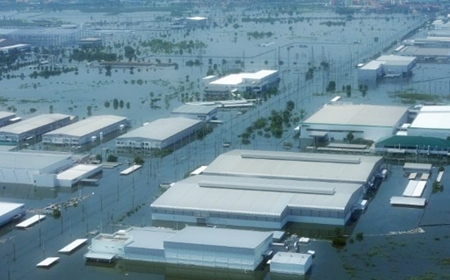
If flooding hits Bangkok’s business areas, the damage could
climb another 120 billion baht per month, as the capital’s Gross Domestic
Product (GDP) is about one trillion baht each year.
Pornsil said he wanted to see the government manage the flood
problem systematically and build investors’ confidence by pledging a future safe
from flooding.
Meanwhile, Payungsak Chartsutipol, chairman of the Federation
of Thai Industries (FTI) said the initial damage on the industrial sector, after
seven large industrial estates were submerged, was about 300-400 billion baht
and the hardest hit industries were auto and auto parts, electrical appliance
and electronics.
Losses from a trading halt of automobile and electrical
appliance businesses and other businesses amounted to about 100 billion baht per
month. The damages also depend on how long flood will last.
The FTI planned to meet entrepreneurs from flood-hit
industrial estates, the Japan External Trade Organization, or JETRO and Japanese
Chamber of Commerce on Oct 26 to discuss assistance in draining the flood water
from industrial estates after the flood level was stable. The FTI will also set
up a team to oversee integrated rehabilitation.
Ninnart Chaithirapinyo, FTI’s honorary chairman of the
Automotive Industry Club said the current flood has more impact on the Thai auto
industry than with the tsunami in Japan in March when auto production dropped by
30 percent.
The ongoing flood has forced the auto industry to suspend
production for about two weeks so far and auto production will likely be halted
for further one and a half months, which could cause production losses of
70,000-80,000 units or about 50 billion baht in total. (MCOT)
|
|
Central bank maintains policy interest rate at 3.5%
The Bank of Thailand (BoT) last Wednesday kept its key
interest rate unchanged at 3.5 percent owing to the slowdown of the global
economy and Thailand’s ongoing nationwide floods.
The BoT’s Monetary Policy Committee (MPC) believes that
the current policy rate level is appropriate to address upcoming
inflationary pressure and supporting economic adjustments amid heightened
uncertainty in the global economy. Meanwhile, with the floods not yet over,
their impact on the economy was not fully evident, the committee said in its
statement.
Paiboon said the BoT sympathizes with the public and with
businesses affected by the flood and sees the current low interest rate
adequate to support post-flood rehabilitation. The bank gave assurances to
the public that there is sufficient liquidity for the banking system and
asked for cooperation from commercial banks to help affected customers by
applying moratorium and offering soft loans.
Regarding the ongoing floods, the MPC noted that the
severity of the floods has already caused a partial halt in some production
sectors and will substantially curtail economic growth for the rest of the
year, leaving growth lower than earlier projected. However, reconstruction
spending would provide support for domestic demands to gradually pick up in
the periods ahead.
Preliminary data for this year’s third quarter pointed to
continued growth of the economy though the effects of a softer world economy
became evident in the moderation shown in export growth. Trade and domestic
demand, particularly from forthcoming government stimulus measures, will
help limit downside risks to growth.
Meanwhile, inflationary pressure continued to be
sustained by growth in domestic demand though declines in input costs, such
as moderate oil prices from a weaker global economy as well as more stable
inflation expectations, which would lessen inflationary pressure going
forward.
However, the upside risks to inflation from higher public
and private spending as the floods recede would need to be monitored, the
bank statement said.
The BoT committee said it would remain vigilant in
monitoring developments of risks and stand ready to take appropriate policy
actions.
The Thai central bank lifted its policy interest rate
from a record low of 1.25 percent in July 2010 to fight inflation. Core
inflation in September stood at 2.92 percent. (MCOT)
|
|
|
Central bank maintains policy interest rate at 3.5%
The Bank of Thailand (BoT) last Wednesday kept its key
interest rate unchanged at 3.5 percent owing to the slowdown of the global
economy and Thailand’s ongoing nationwide floods.
The BoT’s Monetary Policy Committee (MPC) believes that
the current policy rate level is appropriate to address upcoming
inflationary pressure and supporting economic adjustments amid heightened
uncertainty in the global economy. Meanwhile, with the floods not yet over,
their impact on the economy was not fully evident, the committee said in its
statement.
Paiboon said the BoT sympathizes with the public and with
businesses affected by the flood and sees the current low interest rate
adequate to support post-flood rehabilitation. The bank gave assurances to
the public that there is sufficient liquidity for the banking system and
asked for cooperation from commercial banks to help affected customers by
applying moratorium and offering soft loans.
Regarding the ongoing floods, the MPC noted that the
severity of the floods has already caused a partial halt in some production
sectors and will substantially curtail economic growth for the rest of the
year, leaving growth lower than earlier projected. However, reconstruction
spending would provide support for domestic demands to gradually pick up in
the periods ahead.
Preliminary data for this year’s third quarter pointed to
continued growth of the economy though the effects of a softer world economy
became evident in the moderation shown in export growth. Trade and domestic
demand, particularly from forthcoming government stimulus measures, will
help limit downside risks to growth.
Meanwhile, inflationary pressure continued to be
sustained by growth in domestic demand though declines in input costs, such
as moderate oil prices from a weaker global economy as well as more stable
inflation expectations, which would lessen inflationary pressure going
forward.
However, the upside risks to inflation from higher public
and private spending as the floods recede would need to be monitored, the
bank statement said.
The BoT committee said it would remain vigilant in
monitoring developments of risks and stand ready to take appropriate policy
actions.
The Thai central bank lifted its policy interest rate
from a record low of 1.25 percent in July 2010 to fight inflation. Core
inflation in September stood at 2.92 percent. (MCOT)
|
|
|
|