Disaster struck French vineyards in the 1860’s, when hordes of tiny sap-sucking
aphids called phylloxera suddenly showed up. These microscopic insects
probably reached Europe on imported American vines, which were largely resistant
to them. Unfortunately, European vines were not. The insects multiplied
vigorously and within 25 years, they had destroyed most of the vineyards in
France and many others across Europe.
As the insects moved through France, the desperate government
offered a massive prize to anyone who could come up with a deterrent. Some wine
growers tried burying live toads under each vine, in the vague hope that they
would somehow manage to draw the poison out of the roots. In the Beaujolais
region, schoolboys were taken from their classes twice a day to urinate on the
vines. This must have caused a great deal of merriment among the schoolboys, but
it didn’t work, at least not for the vines. Neither did the buried toads. As it
turned out, the only practical solution was to uproot entire vineyards and graft
the vines on to resistant American rootstocks. To this day, every French vine
(and every European one, come to that) grows on an American root.
Bouchard A๎n้, Rouge de France (red), France (Best and
others, Bt. 360)
The label doesn’t give much away. No year, no grape variety,
no area of origin. So we can be pretty sure that this is a blend of grapes from
different years and probably from different parts of the country. However, the
name “Bouchard” on the label ensures that this is not any old plonk. The company
was established in 1750 in the splendid city of Beaune and today produces a very
wide range of wines. This is one of their entry level wines, just like those you
find in decent bistros all over France.
It has an attractive aroma of blackcurrants, redcurrants and
berries, a hint of rhubarb and a pleasing peppery taste in the background. It’s
dry and light-bodied with plenty of fruit, a good dash of tannin and an
attractive long fruity finish. This is a very well-crafted wine and very French
too. It takes me back vividly to sunny summers of bygone days; an al fresco
lunch at a French village caf้ with warm baguettes, fresh Camembert and salad,
all washed down with a pleasingly simple wine just like this.
The peppery aroma suggests that there’s some Syrah (known as
Shiraz in the New World) in the blend and probably some Gamay as well. At just
over 12% alcohol, this is light enough to go it alone, especially slightly
chilled. It would be perfect with snacks and would go equally well with grilled
red meats or cream cheeses. If you like the French style, this would make an
excellent everyday wine.
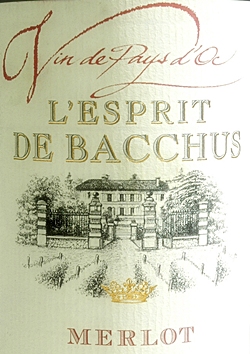
L’Esprit de Bacchus, Merlot 2009 (red), France (Foodland, Bt.
365)
From the south of France, this is an attractive ruby-red
wine. It’s a Vin de Pays d’Oc and a very pleasant one too. It has a
typical aroma of raspberries and dark fruit, nettles and dusty herbs. There’s a
very faint floral perfume in there too, possibly violets, although I wouldn’t
lay money on the violets. It’s produced by Seignouret Fr่res, a distinguished
company founded in 1830, whose wines are exported all over the world.
The wine has a good, dry medium body with mild tannins up
front and a good dose of fruit on the palette. There’s a dry finish too, with
tannic overtones. Very much in the spirit of Bacchus (the Roman God of Wine, in
case you’d forgotten), it’s a pleasant wine to glug and enjoy. It would be fine
with spicy pizza, red meats or richly flavoured cheeses. It has an attractive
traditional label too, making the wine appear rather more expensive than it
actually is.
This is the kind of easy-drinking earthy table wine that the
average French workman happily knocks back with lunch and dinner. Breakfast too,
given half a chance.