New 911 on its way
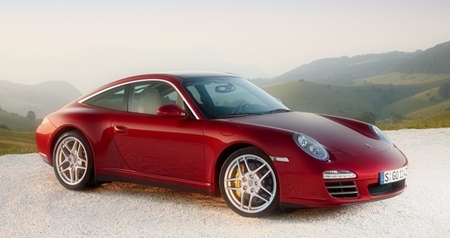
New 911 Porsche
Due to be released at the Frankfurt Motor Show in
September is the ‘new 911’ (known as the 991 series by Porsche). As you can
see from the photo, it still has the overall appearance of the original
912/911, which goes back to 1963.
Unlike the ‘new beetle’ which changed the engine position
from the rear to the front, complete with FWD, the next generation 911 keeps
the rear-engined and RWD configuration for which the entire 911 series has
had.
Extensive use of aluminium for the body panels ensures
the new 911 is slightly lighter than the outgoing 996 series, despite its
bigger dimensions. And it is a larger car, 70 mm longer, with most of that
an increase in the wheelbase.
The 911’s engine will be slightly smaller at 3.4 liters
(previously 3.6 liters) and develops 261 kW. In the Carrera S model, the
capacity is 3.8 liters and the engine develops 298 kW. The power is put to
the wheels via a seven-speed PDK dual-clutch transmission.
The suspension is new but follows the current 911’s
McPherson strut front and multilink rear, with the front end - including
steering - expected to be shared with the next-generation Boxster/Cayman due
next year.
Porsche claims that the new 911 will not only be quicker,
but also return better fuel consumption. Mind you, I do not believe that
anyone buys a Porsche for its ‘frugal’ fuel consumption, but to be
politically correct, the automakers are supposed to show how responsible
they are.
KERS, DRS and Tyres explained
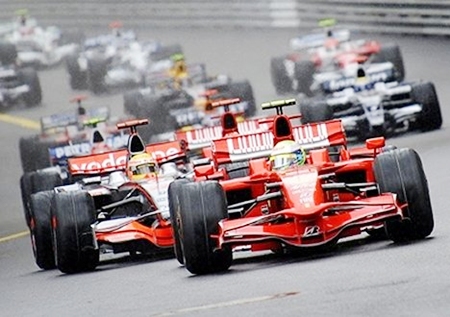
F1 2011
For the past few years the F1 races have become
processional. To try and correct this, grooved tyres were thrown out and
slicks brought back - and that did nothing. Wings at the rear were made
smaller, and that didn’t work. Wings at the front were raised up from track
level. That did nothing as far as overtaking was concerned either.
This year three new factors were introduced - Pirelli,
DRS (Drag Reduction System) and KERS (Kinetic Energy Recovery System). F1
legend Jean Alesi said, “As I see it, the biggest impact this year is
clearly the tyres. Towards the end of the race things get really intense,
and this is great from a fan’s perspective, creating some very exciting and
unpredictable racing. One thing is for sure, the racing is really
entertaining this year.”
This year the tyre supplier has changed from Bridgestone
to Pirelli, and obviously the two manufacturers were given different design
parameters. Bridgestone lasted so well, and were so consistent that drivers
could go an entire Grand Prix distance. In fact there was one race where the
driver did the entire race, minus one lap, on the prime tyres, then popped
into the pits for a change of rubber to ensure he had run on both compounds.
The Pirelli tyres are quite different, with rapid wear compounds, which also
hang on well for around 10 laps and then deteriorate so rapidly some drivers
described the feeling like “falling off a cliff”. What this has meant is
that the driver has had to think more about keeping his tyres in good shape
and the strategist in the pit lane has to juggle more variables. Get them
right and you have an advantage. Get them wrong and you have a driver
struggling on unsuitable tyres, but not enough time to pop into the pits for
a change of rubber before the race ends. (Teams are given a limited number
of tyres that can be used, so the richer teams do not have the option of
just throwing more and more tyres at their cars.)
The new Drag Reduction System (DRS) works by opening up
the rear wing to decrease drag and downforce going down the straight. This
allows a slipstreaming car a better chance of passing the lead car. This has
resulted in much more passing and repassing, but the critics say this is
“artificial” too. I’m sorry, it is the same for everyone, and the DRS cannot
be activated if the second car is more than one second adrift of the one in
front. So the answer is to stay more than one second ahead. However, I would
like to see a broad yellow line on the track to show us viewers just where
the DRS can be activated. It is a bit confusing at present.
The final item which has spiced up the racing is the KERS
button. The energy recovered during braking is stored for use to give a 60
BHP boost when the driver pushes the button. At the start, it is
sensational, launching the car past any other driver who does not have a
fully charged KERS, or whose KERS is not working.
So from my spectator point of view, the three factors of
tyres, DRS and KERS have made the races more entertaining. The more clever
drivers and teams are working out just how to use those three factors to
their advantage, just as previously drivers used to work out where and how
to attack, now this has been reintroduced and has had palpable results. Like
Jean Alesi, I’m all for it.