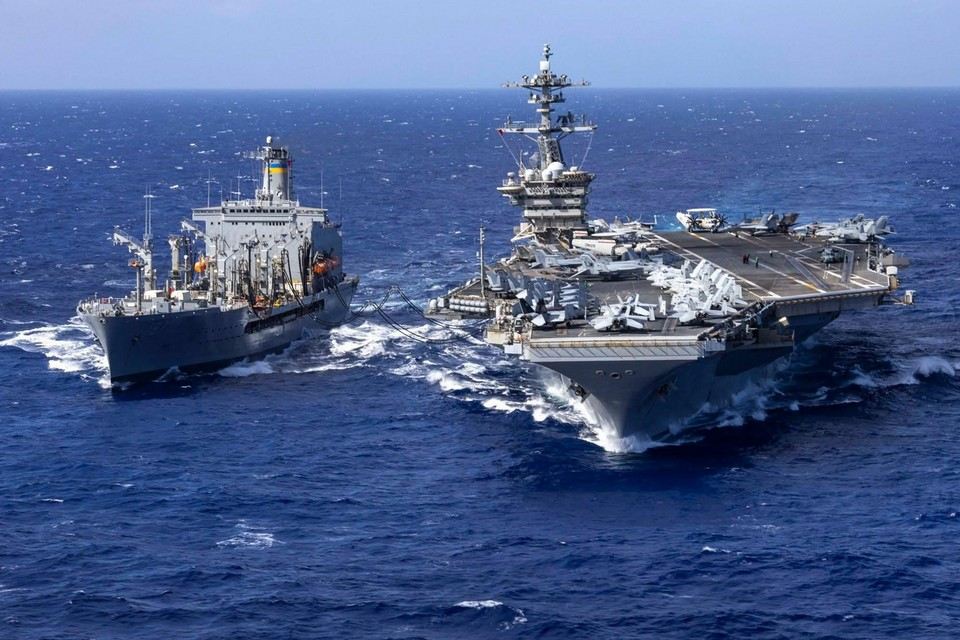
BANGKOK, Thailand – The U.S. Navy’s aircraft carrier USS Abraham Lincoln is scheduled to make a brief port visit at Laem Chabang, near Pattaya in eastern Thailand next week, giving thousands of American sailors and Marines an opportunity to rest, replenish supplies and take a break after an extended period at sea.
The Royal Thai Navy confirmed on Wednesday, Aug. 26, that the USS Abraham Lincoln is part of a U.S. Carrier Strike Group making a routine port call under existing bilateral defense cooperation arrangements.
Rear Adm. Parat Rattanachaiphan, spokesperson for the Royal Thai Navy, said three vessels from the U.S. strike group are scheduled to visit Thailand. He stressed that the visit is strictly for replenishment and crew rest and does not involve joint military exercises or relate to any specific regional security situation. Details including the names of the three vessels, their anchorage locations and the exact schedule have not been disclosed for security reasons.
The planned visit comes after international media reported that the USS Abraham Lincoln had spent an unusually long period at sea during its current deployment. According to reports cited by international media, the carrier has been operating for many months without a conventional port call. The reports described concerns about crew fatigue and morale, although U.S. defense officials have disputed some of the claims concerning the ship and its crew.
The USS Abraham Lincoln departed San Diego, California, last November before being ordered toward the Middle East amid escalating tensions and military operations involving Iran. It subsequently operated in the U.S. Central Command area before heading toward the Indo-Pacific region. The carrier is now operating under the U.S. 7th Fleet, part of the U.S. Indo-Pacific Command.
The planned Thai port visit has also generated considerable interest among the carrier’s crew and their families. U.S. media reported that one sailor sent a message to relatives on Aug. 18 asking for recommendations for good hotels in Thailand ahead of the ship’s expected arrival. Another sailor reportedly expressed excitement about finally having the opportunity to visit Thailand, saying a trip to the country had been a long-standing dream.
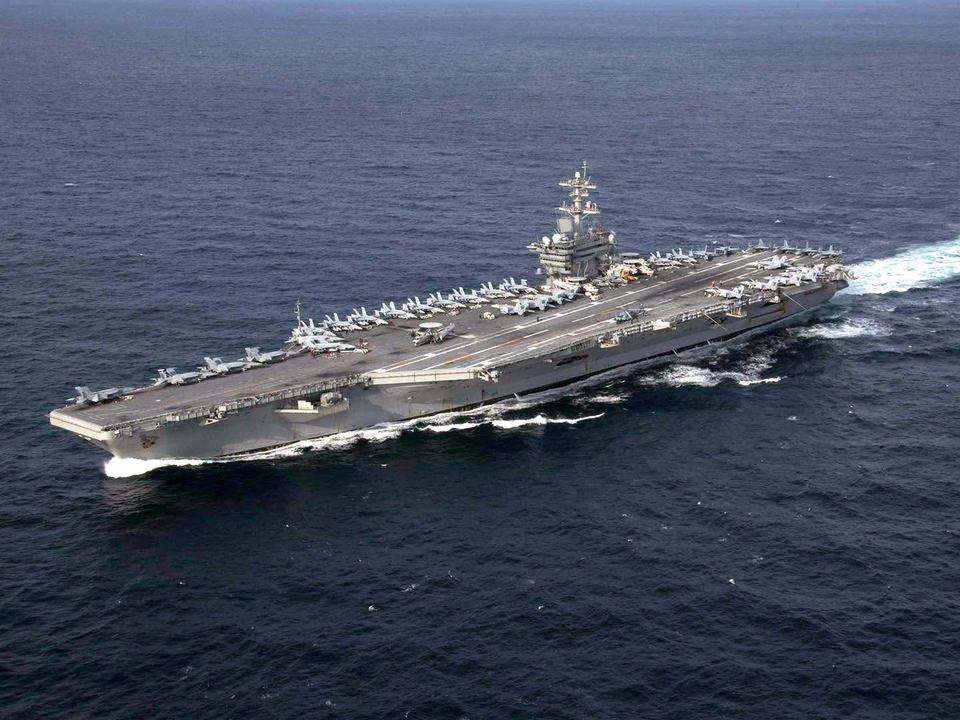
The USS Abraham Lincoln is a Nimitz-class nuclear-powered aircraft carrier capable of carrying thousands of personnel and a large complement of aircraft. A carrier strike group normally operates with accompanying surface ships and support vessels, allowing it to conduct extended operations far from its home port.
The planned stop in Thailand is therefore expected to provide an important opportunity for personnel to rest and for the strike group to receive logistical support before continuing its deployment. Recent reports about conditions aboard the carrier have attracted attention in the United States.
Military publications including Navy Times and Stars and Stripes have reported allegations involving crew morale and mental-health concerns, including an attempted suicide involving a sailor. U.S. Defense Secretary Pete Hegseth has rejected what he described as inaccurate reporting concerning the USS Abraham Lincoln.
Another recent story involving the carrier concerned sailor Joshua Aviles, who reportedly learned while deployed that his father had been detained by U.S. Immigration and Customs Enforcement. Aviles spoke publicly about the situation, describing the emotional difficulty of dealing with the family matter while remaining deployed at sea. The planned Thai visit comes against the backdrop of a long-standing military relationship between Thailand and the United States.
Thailand has been a U.S. treaty ally since 1954 and was designated a major non-NATO ally in 2003. The two countries regularly cooperate through military training, humanitarian assistance and regional security activities. One of the most prominent examples is Cobra Gold, the annual multinational military exercise hosted by Thailand.
Thailand, the United States and Japan also participated in Cobra Gold 2026, including engineering and rapid-mobility training designed to assist local communities in Nakhon Ratchasima. The exercise has traditionally been described by both countries as an expression of their longstanding alliance and commitment to a free and open Indo-Pacific. However, Thai authorities have recently rejected reports suggesting that the government planned to use military cooperation, including Cobra Gold, as leverage in negotiations with Washington over trade and tariffs.
The USS Abraham Lincoln’s upcoming port call is separate from those exercises. The Royal Thai Navy has emphasized that no joint military training is planned during the carrier strike group’s visit. For the sailors aboard the USS Abraham Lincoln, however, the visit could provide something much simpler: a chance to step ashore, rest, enjoy Thailand and recharge before returning to sea.