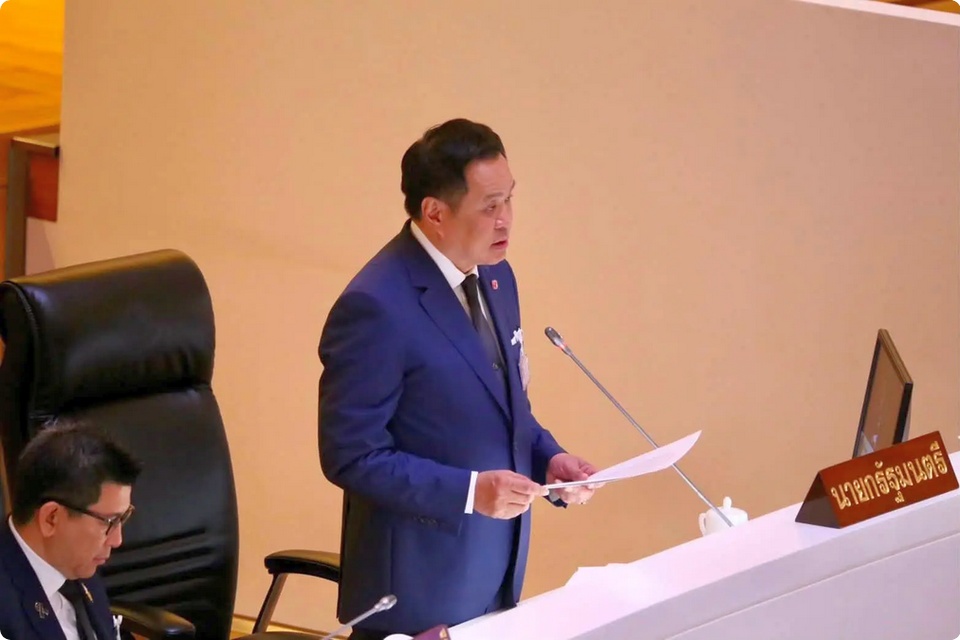
BANGKOK, Thailand – Prime Minister Anutin Charnvirakul has urged the House of Representatives to approve an emergency decree authorizing up to 400 billion baht in borrowing to ease the impact of rising energy costs and accelerate Thailand’s transition away from imported fossil fuels. Addressing lawmakers on August 26, Anutin cited disruptions to energy production and transportation routes around the Strait of Hormuz, which have tightened global oil supplies and driven up prices.
Thailand imports nearly half of its oil from the Middle East, increasing pressure on household expenses and business costs. The government says existing fiscal resources cannot meet the scale and urgency of the situation. About 72% of the fiscal 2026 budget has already been spent, while central funds are also needed for disaster response, border security, and other obligations. A supplementary budget would take at least two months to prepare, and the fiscal 2027 budget will not take effect until October.
The borrowing would be divided equally, with 200 billion baht allocated to assistance for households, farmers, and businesses affected by the energy crisis. The other 200 billion baht would go toward energy efficiency, renewable and alternative energy, workforce skills, and energy innovation. The Finance Ministry could borrow or issue debt instruments through September 30, 2027, subject to Cabinet approval, with public debt expected to remain below 70% of GDP.
Premier Anutin described the borrowing as a last resort after existing financial mechanisms proved insufficient. Projects seeking funding would face screening for urgency, cost-effectiveness, readiness, and duplication with existing programs, with the government seeking to provide near-term economic relief while reducing Thailand’s vulnerability to future global energy disruptions. (NNT)