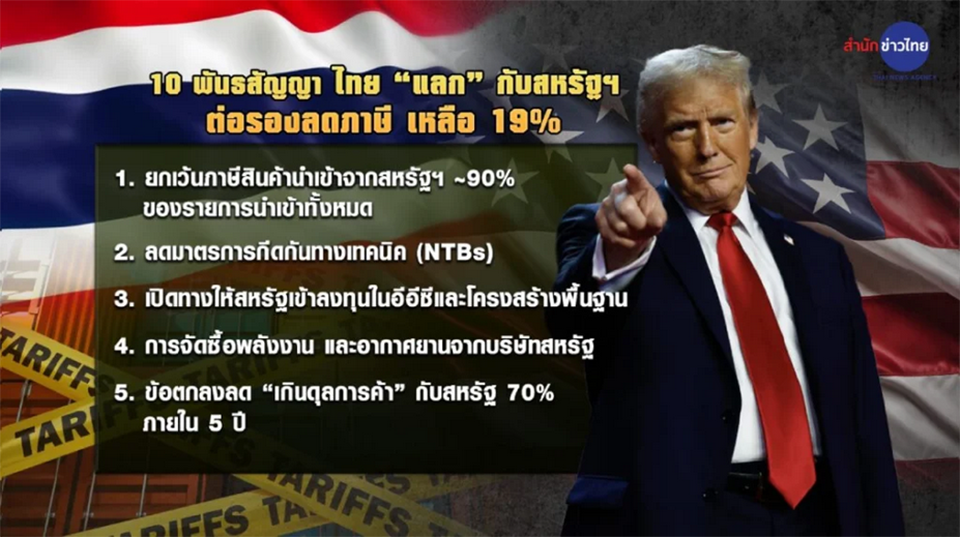
BANGKOK, Thailand – Thailand has revealed its final set of concessions made during trade negotiations with the United States, which led to a significantly reduced import tariff rate of 19%, down from the initial threat of 36%. Here are the 10 key proposals from “Team Thailand” that helped seal the deal:
Zero Tariff on 90% of U.S. Imports:
Thailand offered to set zero tariffs on over 10,000 U.S. products—about 90% of the total—mostly items not produced domestically or in insufficient quantities, such as medical devices, high-end auto parts, and specialized food products.
Easing of Non-Tariff Barriers (NTBs):
Thailand agreed to reduce technical and procedural obstacles like customs checks and sanitary regulations. It introduced “post-clearance audit” procedures to expedite imports and reduce costs for U.S. exporters.
U.S. Investment Access in EEC & Infrastructure:
Thailand offered fast-track access and Board of Investment (BOI) incentives for U.S. firms in clean energy, semiconductors/ICT, and logistics—highlighting Thailand as a regional investment hub.
Purchases of U.S. Energy and Aircraft:
Both Thai public and private sectors committed to buying U.S. LNG and new Boeing aircraft, contributing to a more balanced bilateral trade.
Trade Surplus Reduction Roadmap:
Thailand pledged to reduce its trade surplus with the U.S. by 70% within 5 years, from over 120 billion baht/year to a targeted 30% surplus by 2030.
Stricter Rules of Origin Compliance:
To prevent transshipment of Chinese goods, Thailand agreed to adopt stricter origin verification procedures, ensuring goods labeled “Thai” meet U.S. requirements.
Temporary Digital Service Tax Waiver:
Thailand offered a 2-year tax exemption (5% VAT) for digital/cloud services from U.S. tech firms like AWS and Google Cloud to encourage their investment and expansion in the Thai market.
Expanded Agricultural Import Quotas:
Thailand agreed to increase quotas on U.S. corn, barley, and soybeans—supporting its domestic animal feed industry and satisfying American agricultural lobbies.
Exemptions for Strategic Thai Sectors:
Despite wide tariff cuts, Thailand retained duties on sensitive sectors like rice, sugar, processed fruits, and high-value Thai food exports to protect domestic producers and farmers.
De-escalation Along the Thai–Cambodian Border:
While not explicitly written in the deal, Thailand’s move to ease tensions on the Cambodian border was seen as a diplomatic gesture that helped secure a favorable U.S. response. (TNA)