BANGKOK, Thailand – The Second Army Region has revealed its newly tested high-energy laser weapon system to counter drone incursions amid rising Thai-Cambodian tensions. Meanwhile, citizens in the northeast are rallying to support border troops—donating everything from food to slingshots and glass pellets.
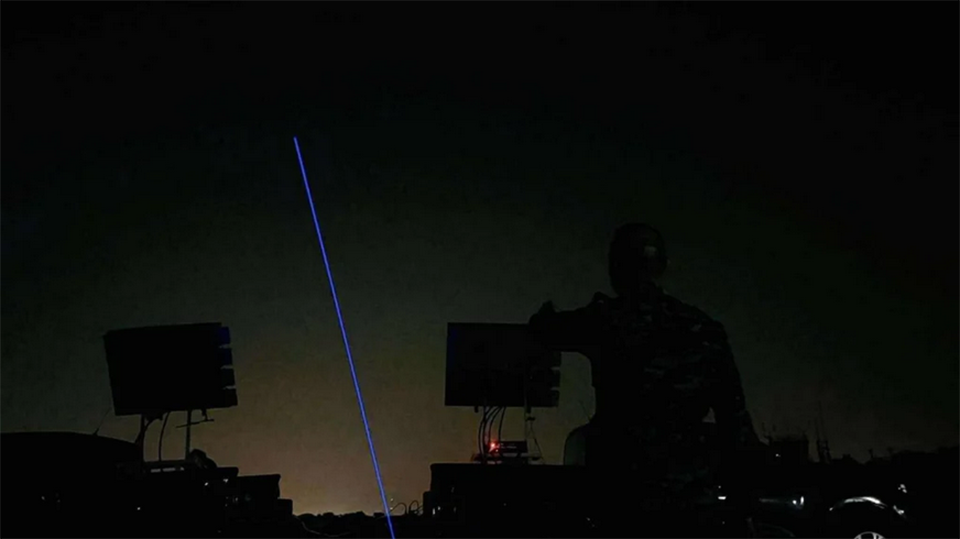
In response to increasing incidents of unidentified drones flying over Thai military zones—especially near border areas with Cambodia—the Royal Thai Army’s Second Region Command has publicly shared information about its newly operational anti-drone weapon system. The technology, known as a Directed Energy Weapon (DEW), was recently tested at Air Force Base 1, part of Thailand’s Air Weapons Testing Center.
The Army’s official Facebook page posted dramatic footage and a statement reading, “If the enemy hides in the shadows, we will be the light that sees them first.” The post described the DEW system as a high-energy laser capable of destroying drone targets with precision during night operations. Officials emphasized this was not a mere trial, but a “clear warning” to any hostile forces attempting to breach Thai airspace or threaten national security.
Nationwide Drone Ban Enforced
The Royal Thai Army Public Relations Center also reaffirmed a national no-fly order on all drones—in effect from July 30 to August 15, 2025—as per the Civil Aviation Authority of Thailand (CAAT). The ban targets all unmanned aerial vehicles (UAVs), particularly those suspected of espionage, surveillance, or potential sabotage. Military sources stated that drones observed near border outposts may be linked to ongoing provocations by Cambodian forces.
Under Thailand’s Internal Security Act and Criminal Code (Section 122), unauthorized drone use in sensitive zones—especially for espionage or military interference—can result in life imprisonment or even the death penalty, depending on intent and severity.
A viral clip posted in the Facebook group “This is Khon Kaen” showed a mysterious glowing aerial object hovering near Sri Patcharin Camp. Users questioned whether it was a foreign drone, despite the nationwide ban. Army sources confirmed an investigation was underway to verify the nature of the object.
Slingshots and Solidarity from Udon Thani
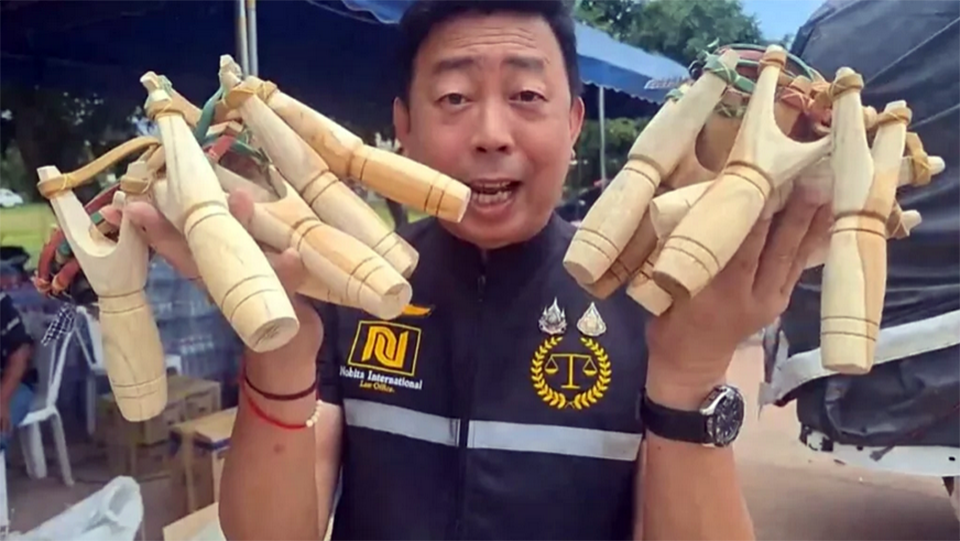
Meanwhile, in Ban Dung District, Udon Thani, a unique form of civilian support emerged. At a donation event near the Pu Sri Sutho Shrine, locals donated water, food, and unexpectedly—slingshots and glass pellets—to frontline soldiers.
Ban Dung Mayor Veerapol Raksamornwong confirmed that soldiers along the Surin, Sisaket, and Ubon Ratchathani borders had specifically requested these non-lethal weapons. The request came after reports of Cambodian soldiers allegedly throwing rocks and flying drones over Thai positions, prompting Thai troops to seek a way to respond without escalating to gunfire.
“If guns can’t be fired, at least they can defend themselves with slingshots. It’s practical—and symbolic support from the people,” the mayor said. (TNA)