BANGKOK, Thailand – Thailand is linking seven key business sectors with the government-private sector mechanism known as the Joint Public and Private Sector Consultative Committee (KorKorRor) to turn private-sector proposals into concrete measures under the “Reinvent Thailand” initiative.
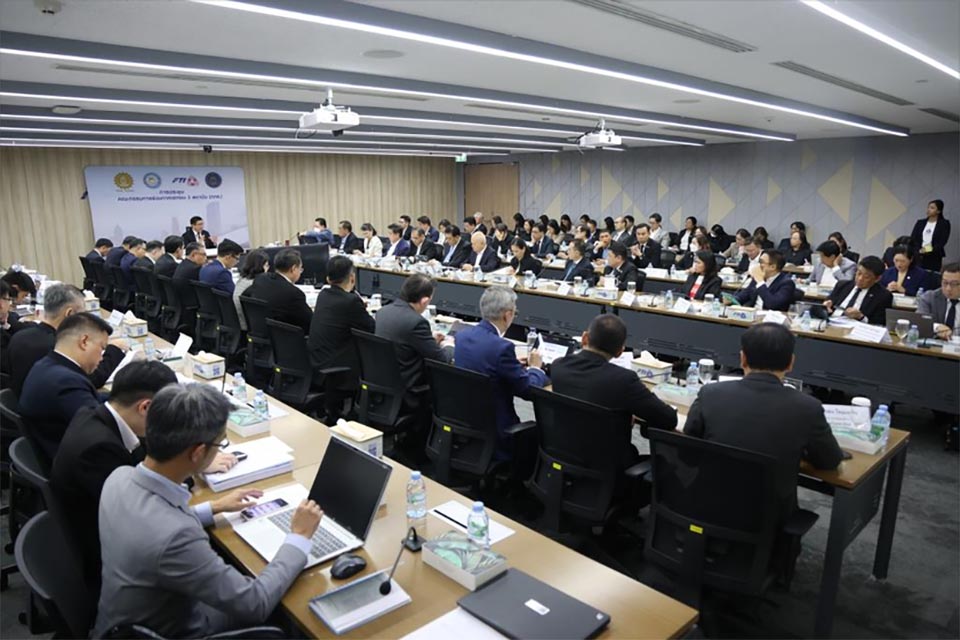
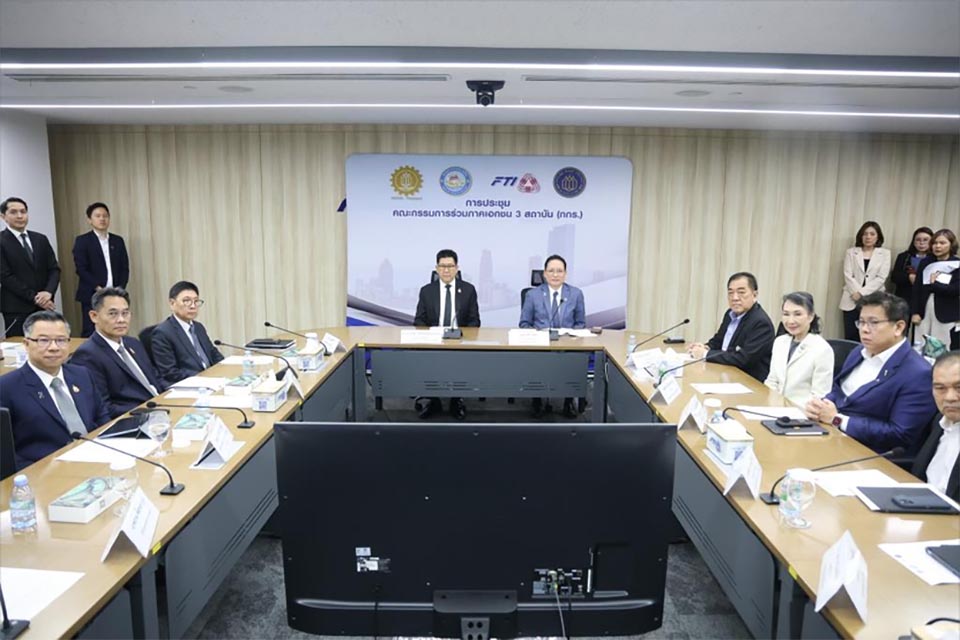
Deputy Prime Minister and Finance Minister Ekniti Nitithanprapas held talks with the Joint Standing Committee on Commerce, Industry and Banking (JSCCIB), represented by its chairman Payong Srivanich, Thai Chamber of Commerce chairman Phoj Aramwatananon and Federation of Thai Industries chairman Pimphat Leeissaranukul.
The meeting followed the Bangkok Business Summit 2026, which brought together views and proposals from government, business and international organisations. These were developed into policy proposals covering seven priority business sectors: agriculture and food processing, automotive, retail and trade, smart electronics, medical and wellness, tourism, and the creative economy.
Ekniti said the government aims to prepare Thailand to become a high-income country by 2037, with KorKorRor seeking annual economic growth of at least 3% through an investment-led growth strategy. The government also aims to raise investment to at least 30% of GDP and improve Thailand’s competitiveness to rank among the world’s top 20 economies. “Private business is the frontline of Thailand’s economic team,” Ekniti said, referring to its role in investment, employment and income generation. He said the seven priority sectors must work alongside four key supporting areas — infrastructure, digital technology and AI, energy, and finance — while the government focuses on removing regulatory obstacles and creating conditions that support competition.
The initiative also seeks to connect global investment and market opportunities with domestic businesses, develop local champions and bring Thai SMEs into emerging supply chains. The government and private sector say this could help create jobs, restructure the economy and broaden economic opportunities.
From proposals to implementation
The meeting agreed to connect the seven Reinvent Thailand working groups with KorRor subcommittees responsible for addressing economic issues. The aim is to give private-sector proposals a formal process for consideration, assign responsible agencies and establish mechanisms for monitoring progress. The work will be divided into three stages.
-Stabilize Today will focus on urgent problems, reducing costs and removing obstacles affecting businesses.
-Transition Now will support businesses adapting to new technologies, business models and standards.
-Invest for Tomorrow will focus on long-term investment, future industries, skills development and infrastructure.
Payong said the private sector wants Reinvent Thailand to become a practical mechanism connecting businesses with government rather than simply another forum for exchanging views.
He said the key next step is to move proposals into implementation with clear agencies responsible, defined timelines and continuous progress monitoring. The three private-sector organisations will provide information, personnel and networks to support the development of new economic growth engines.
Phoj said the initiative must ensure that Thai businesses, particularly SMEs and companies outside Bangkok, can participate in emerging value chains. He highlighted the need to reduce costs, improve productivity, create greater value and open larger markets for Thai goods and services, including through stronger connections with ASEAN markets of more than 600 million people.
Pimphat said Thailand needs growth from both high-tech and high-touch industries, identifying smart electronics as a new growth engine while encouraging the transformation of the automotive manufacturing base and further development of the country’s creative industries.
She said new investment should be connected with existing production bases and Thai businesses, while increasing local content, developing advanced skills and ensuring reliable, clean and competitively priced energy.
Preparing for global investment spotlight
Reinvent Thailand also forms part of preparations for Thailand to host the IMF–World Bank Group Annual Meetings 2026 in October. The event is expected to provide an opportunity for Thailand to present its economic reform direction, investment potential and development priorities to the international community.
The government and JSCCIB will now work together to prioritise proposals from the seven business groups while considering the readiness of the four supporting areas. Measures will be divided between urgent actions and longer-term structural reforms, with relevant agencies brought into the process to support investment, productivity, employment and higher national income. The initiative marks a shift from consultation towards implementation, with the government and private sector seeking to turn proposals into projects and measures that can have a direct impact on Thailand’s economy.