BANGKOK, Thailand – Deputy Prime Minister Phumtham Wechayachai has emphasized the urgent need to reform Thailand’s monastic law, following a string of high-profile scandals involving senior monks. He stated that both the government and the Sangha must take decisive and coordinated action to restore public trust in the monastic institution.
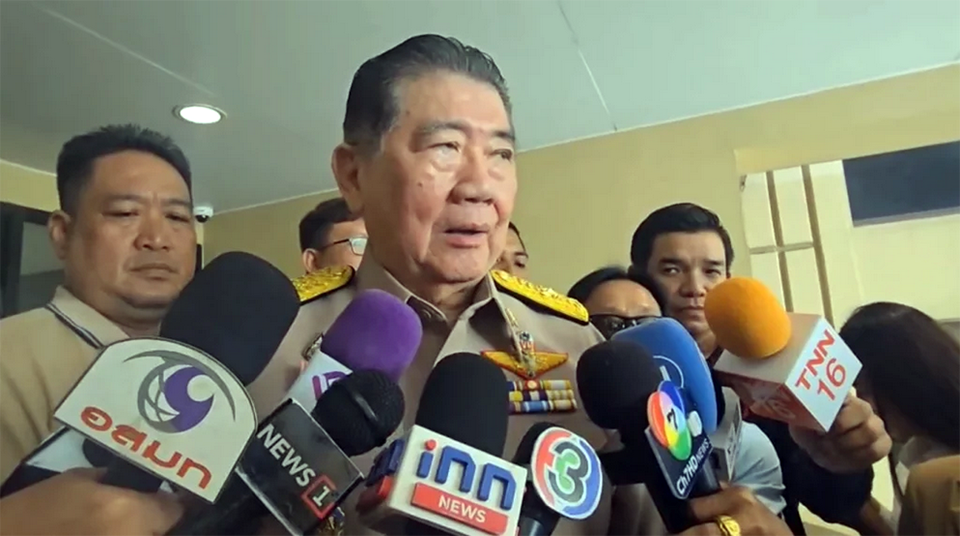
Speaking at Government House on Wednesday, Phumtham, who also serves as Minister of the Interior and Acting Prime Minister, revealed that he had visited two of Thailand’s most senior Buddhist leaders earlier that morning to offer ceremonial respects for the annual Buddhist Lent observance. He met with the Supreme Patriarch, Somdet Phra Maha Veerawong, at Wat Ratchabophit, and with Somdet Phra Maha Ratchamangalamuni (Somdet Thongchai), a member of the Sangha Supreme Council and Chief Ecclesiastical Governor of the Central Region, at Wat Traimit.
During the visit, the Supreme Patriarch expressed grave concern over the recent misconduct allegations against monks and stressed that the religious discipline is already clear — serious violations such as sexual misconduct can result in Parajika, the highest offense under Buddhist monastic rules, leading to permanent expulsion from the monkhood.
Phumtham said he assured the Supreme Patriarch that the government is prepared to review and strengthen monastic regulations to give religious and civil authorities more enforcement power. “I told His Holiness that we may need to amend the monastic law to address these issues more effectively,” he said.
He also disclosed that he had spoken with Somdet Phra Maha Veerawong on July 16, who agreed that swift and firm action must be taken, regardless of the rank or status of those involved. “This is not just a matter of individual misconduct — it affects the entire religion,” Phumtham said. “We must treat this as a full reform process.”
Although existing laws governing the Sangha are considered robust, Phumtham noted that adjustments may be needed to increase penalties, expand administrative powers, and ensure stricter oversight. Once proposed revisions are finalized, he pledged to present them formally to the Sangha Supreme Council for review.
Phumtham also confirmed that he has coordinated with Minister Attached to the Prime Minister’s Office Suchart Tancharoen, who oversees the National Office of Buddhism. Both officials are working closely with senior figures in religious governance to address the issue holistically.
Addressing reports that some Buddhist officials may be hesitant to cooperate with law enforcement due to the involvement of high-ranking monks, Phumtham denied this, saying, “There will be no exceptions. His Holiness has made it clear — those who violate the discipline must be dealt with decisively.”
He also acknowledged concerns over the role of social media in amplifying scandals. The Supreme Patriarch had remarked that while the internet now brings widespread exposure, some content can be overly aggressive or misrepresentative. Nevertheless, Phumtham said, this highlights the importance of strengthening public trust through transparency and accountability.
“The people are watching,” he said. “This is not just about punishing wrongdoing — it’s about restoring faith in the institution. This moment is an opportunity for a true cleansing of the system.” (TNA)