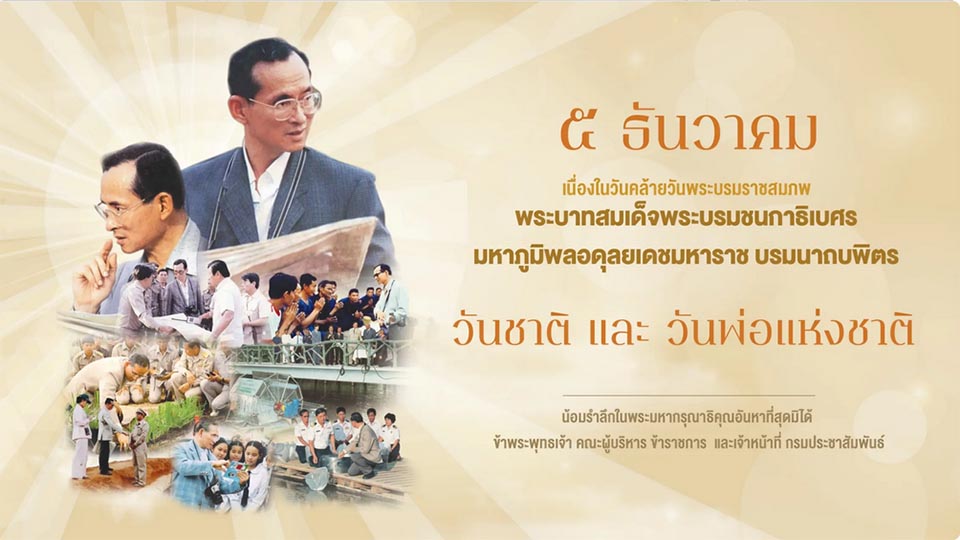
BANGKOK, Thailand – Father’s Day in Thailand carries a unique meaning, observed each year on December 5 to honor the birthday of His Majesty King Bhumibol Adulyadej The Great. Recognized as a national holiday since 1960, the day is marked by tributes not only to fathers and father figures, but also to the legacy of a monarch remembered for his lifelong dedication to public service and national development.
Many Thais also wear yellow, the color associated with Monday, the day of King Bhumibol’s birth. In Thai culture, each day of the week is linked with a color, and yellow has become synonymous with loyalty to the late King. The public holiday often brings families together for merit-making at temples or shared time at home.
King Bhumibol’s reign was defined by a hands-on approach to development, with numerous royal projects aimed at improving the lives of farmers and rural communities. These efforts ranged from soil conservation and irrigation techniques to education and self-sufficiency programs. His Majesty’s ability to translate scientific knowledge into practical solutions helped transform rural livelihoods and continues to influence national policy.
December 5 is also recognized internationally as World Soil Day, following a proposal supported by Thailand and later adopted by the Food and Agriculture Organization (FAO) of the United Nations. The observance pays tribute to King Bhumibol’s pioneering work in soil management and environmental sustainability. This year’s campaign—“Soils: Where food begins”—highlights the critical role soil plays in supporting ecosystems and food systems, especially in the face of rising salinity and degradation.
Since its launch in 2014, World Soil Day has expanded into a global movement, growing from 42 observances in its first year to more than 780 events in over 120 countries by 2021. For Thailand, the day carries dual significance: it honors the memory of a revered monarch while underscoring the ongoing national commitment to sustainable development, blending personal reverence with a collective responsibility to uphold and sustain King Bhumibol’s enduring legacy. (NNT)