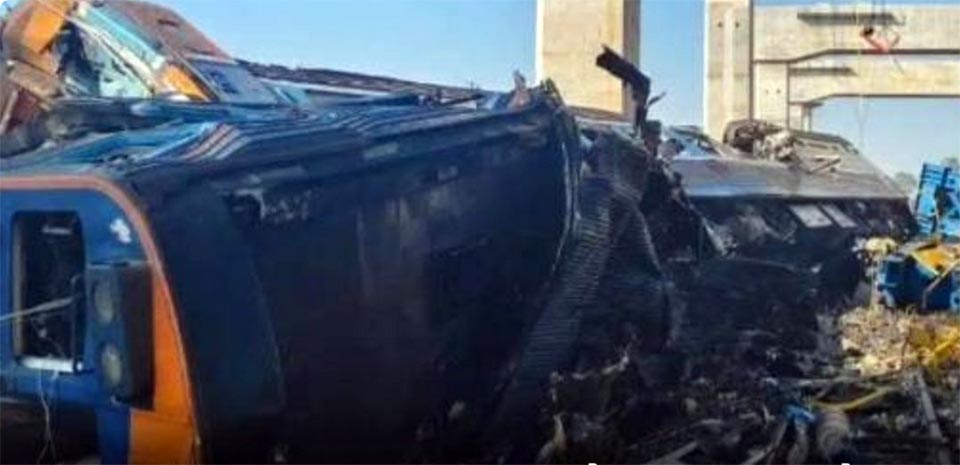
BANGKOK, Thailand – The Ministry of Transport has revealed investigation findings into two major infrastructure construction accidents, attributing both to systemic safety and operational failures rather than structural material or machinery breakdowns. Jirapong Thepphitak, Deputy Permanent Secretary of the Ministry of Transport and chairman of the fact-finding committee, detailed the conclusions of investigations into a fatal crane collapse on Rama 2 Road and a high-speed railway incident in the Sikhiu district in January 2026.
The committee concluded that the collapse of a multi-hundred-ton construction gantry crane and precast concrete pieces on Rama 2 Road, which killed two motorists and injured two others, was caused by unstable, tilted support structures and unauthorized modifications. According to the report, Italian-Thai Development PCL, the contractor, placed heavy crane legs on an inclined surface, stabilizing them by stacking steel plates over 80 centimeters high on top of a sand bedding layer.
Furthermore, the contractor modified the crane’s anchoring system from the approved “Pin-Roller” configuration to a rigid “Pin-Pin” system to expedite work. Morning thermal expansion from an 8-degree Celsius temperature rise caused the locked structure to exert lateral pressure, causing the stacked plates to slide and leading to the collapse. The safety certificate for the crane had also expired more than two months prior to the incident. The Department of Highways, as the project supervisor, was cited for systemic oversights, including approving the unvetted design modifications and failing to maintain technical safety checklists or verify the equipment’s certification.
The 45-day investigation into the high-speed rail construction accident in Sikhiu found that the incident occurred within a span of 1.88 seconds while operating at a speed of 115 kilometers per hour. The committee stated the accident was not caused by mechanical failure but represented a total failure of safety control systems. Contributing factors included staff operating without proper authorization, a lack of machinery inspections, and an absence of on-site supervisors.
The Ministry of Transport has ordered immediate safety audits on all active heavy machinery certifications across state projects. Unauthorized machinery modifications have been banned.
Over the next 30 days, the Department of Highways must establish specialized safety standards for gantry cranes and introduce independent third-party equipment inspections. Future elevated bridge projects will require real-time tilt and tension sensors. Italian-Thai Development PCL has provided initial compensation of 150,000 baht to the families of each deceased victim, with an additional compensation plan of 1,000,000 baht per family under highway department oversight. (TNA)