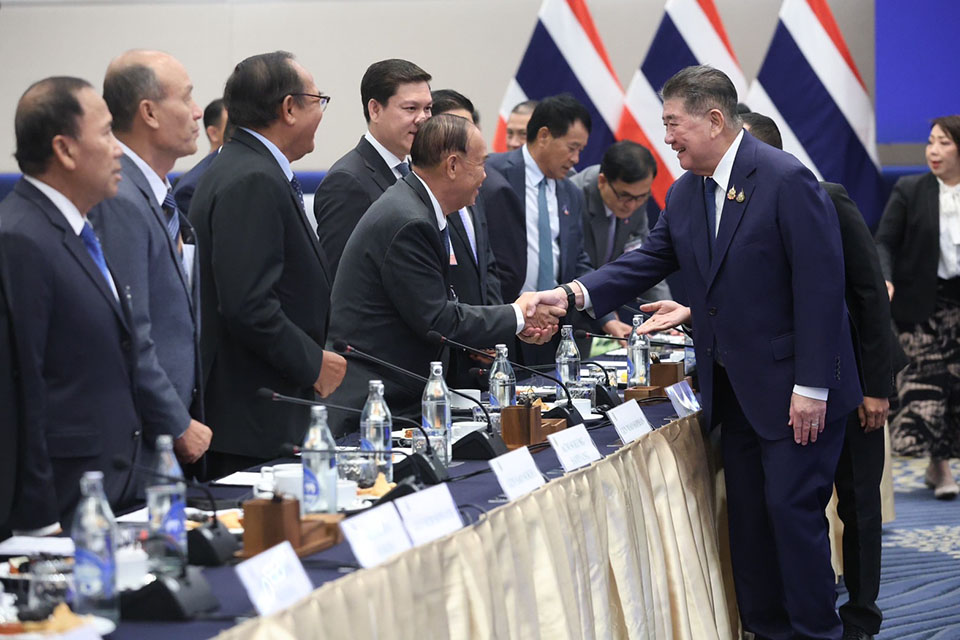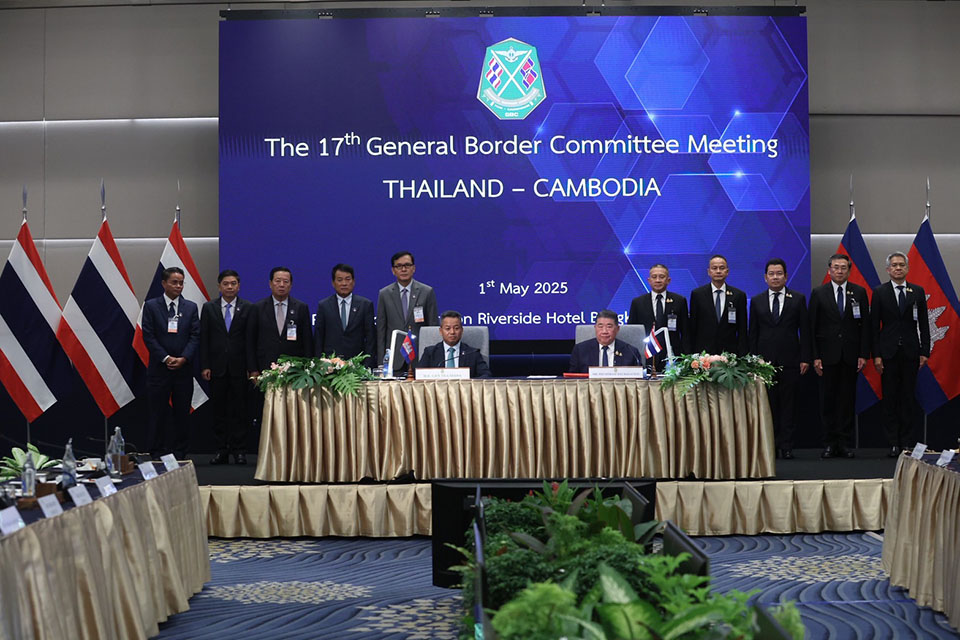
BANGKOK, Thailand – At the Royal Orchid Sheraton Riverside Hotel in Bangkok, Deputy Prime Minister and Minister of Defense Phumtham Wechayachai announced the outcome of the Thai-Cambodian General Border Committee (GBC) meeting regarding the ongoing tensions at Ta Muen Thom Temple, on May 1. Both nations have agreed to de-escalate by pulling their troops back to previously agreed positions to avoid confrontation and possible clashes.
Phumtham emphasized that both governments, including the respective Armed Forces Commanders and Army Chiefs, have already held discussions at the policy level. Local commanders have been tasked with coordinating withdrawal efforts, maintaining discipline, and reinforcing the principle of returning to prior positions.
When asked if the agreement allows both sides to jointly occupy the area around the temple, Phumtham explained that the details will be handled at the local operational level, and both sides may agree to withdraw entirely from the elevated temple site to avoid misunderstandings. The government remains committed to peaceful negotiation and cooperation.
In response to concerns that Thailand may be conceding ground, Phumtham stressed that this is not a matter of territorial loss but a proactive move to de-escalate tensions. “Let’s not think of this as being at a disadvantage. We are stepping back to reduce conflict and will revisit details at the division or regional level later,” he said.
When asked whether Thai troops must vacate their current position atop Ta Muen Thom Temple, Phumtham reaffirmed that the aim is to return to the agreed-upon original position—not to redraw borders—and to avoid incidents while talks continue. The current agreement is in line with past understandings and aims to prevent either side from making unilateral advances.
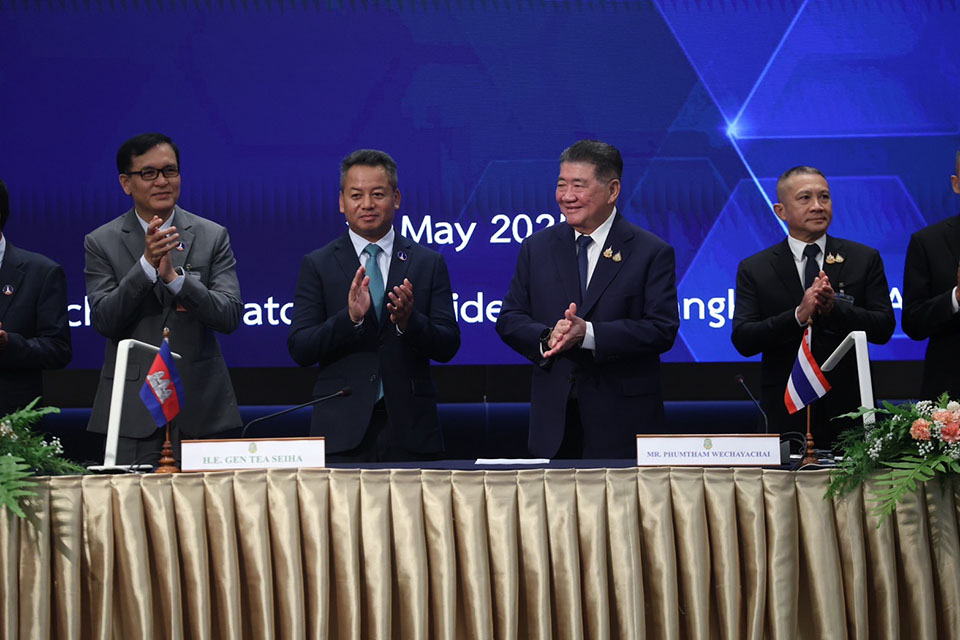
As for tourism at the temple, particularly Cambodian visitors, Phumtham stated that this would be part of future discussions. He confirmed that the recent closed-door meeting included himself, Deputy Defense Minister General Natthaphon Nakpanich, and Cambodian Deputy PM and Defense Minister General Tea Seiha. Meanwhile, Thai and Cambodian military commanders held a separate private dialogue to ensure united coordination in addressing modern challenges.
When asked to clarify whether troops should return to positions held before 2011 or directly at the temple site, Phumtham reiterated: “Return to the previously agreed point—whatever that was during earlier talks where both sides coexisted peacefully.”
Regarding heavy military equipment such as tanks in the area, Phumtham said those details will also be handled through direct talks. He remains confident the two nations can coordinate, noting that as long as both refrain from entering unclear zones, no problems should arise.
Phumtham concluded that other border areas with past standoffs are now stable following open dialogue, and at the three key conflict points, both sides have agreed to step back and restore normal conditions.