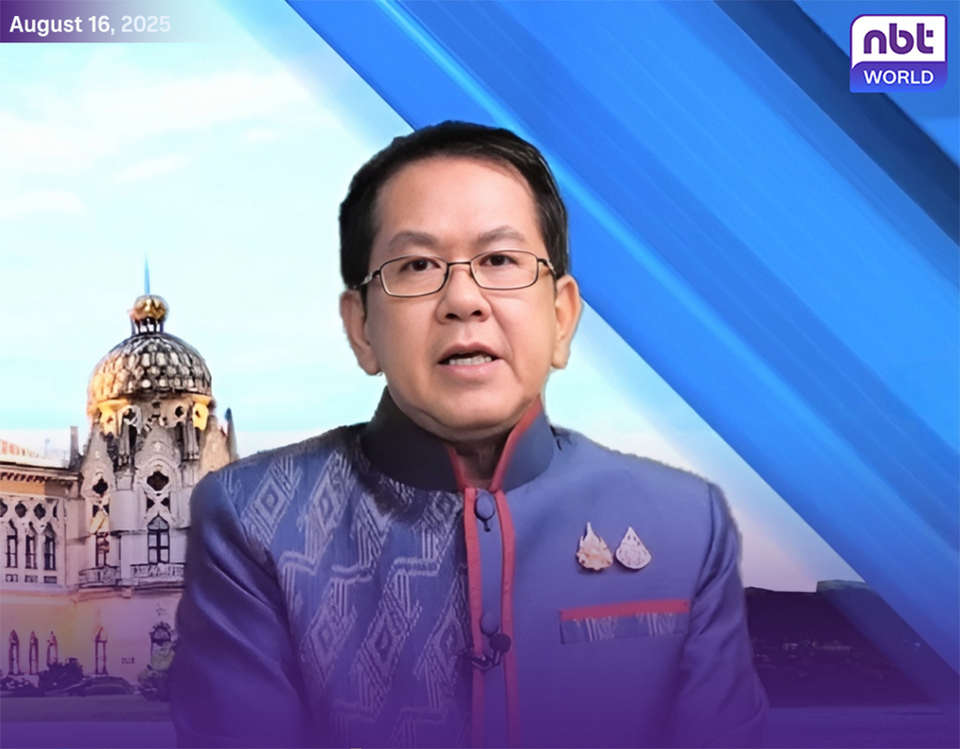
BANGKOK, Thailand – The weekly “Voices from Thai Khu Fah” program, hosted by Government Spokesperson Jirayu Houngsub on August 16, covered Thailand’s efforts to address the border situation with Cambodia, as well as updates on economic stability, agriculture, energy, labor, narcotics control, foreign investment, and farmer support. The program noted that while security concerns along the border remain serious, the government is moving forward with key policies to support the economy and citizens’ livelihoods.
One of the main issues was the Thai–Cambodian General Border Committee (GBC) meeting held on August 7 in Putrajaya, Malaysia. The meeting resulted in 13 agreements, including a ceasefire that froze troop positions from July 28 at midnight. Cambodia accused Thailand of using advanced jets and chemical weapons, but inspections by ambassadors and military experts showed the munitions were decades-old Vietnam War–era bombs, disproving Cambodia’s claims. Thailand reiterated its requests for cooperation on joint landmine clearance and action against call center gangs operating from border casinos, but Cambodia has yet to respond.
The program also addressed Cambodia’s accusations that Thailand used MK84 bombs, which the Royal Thai Air Force dismissed as false. Thai authorities stressed that military procurement is transparent and treaty-compliant, rejecting misinformation from Cambodia. Meanwhile, repeated landmine incidents within Thai territory have raised alarm, with Thai officials saying Cambodia’s denials lack credibility. Thailand criticized Cambodia’s refusal to sign the August 7 GBC agreement on landmines and urged it to show good faith in addressing the issue.
On the domestic front, Jirayu addressed confusion about funding for barbed wire. The Second Army Area briefly solicited donations for barbed wire, raising concerns about resources. Deputy Prime Minister and Acting Prime Minister Phumtham Wechayachai later clarified that the government has ample budget to cover urgent supplies, including barbed wire for border defense, and instructed the armed forces to submit requests directly. The donation drive has since ended, with officials confirming that resources for border security are available.
The Ministry of Foreign Affairs continues to escalate the landmine issue internationally. Foreign Minister Maris Sangiampongsa has raised the matter with the United Nations and Japan, which currently chairs the Ottawa Convention. He also personally informed the UN Secretary-General of Cambodia’s violations, stressing that they breach the UN Charter, international law, and the Ottawa Convention. The Foreign Ministry led a delegation of ambassadors and international organizations to Sisaket and Ubon Ratchathani provinces on Saturday (Aug 16) to observe mine clearance operations and hear directly from personnel in the field.
Despite these tensions, the government said tourism remains unaffected. From January to August 10, Thailand welcomed 20 million foreign visitors, with Japan now leading as the top source market, followed by Malaysia and China. Russian arrivals are expected to increase during the winter high season. Officials project total arrivals this year will surpass 37 million, exceeding last year’s figures.
On labor, the government announced that Cambodian workers already in Thailand will be allowed to stay an additional six months without repeated border pass renewals. The measure was introduced after many workers who returned to Cambodia found no jobs and attempted to re-enter Thailand. Security forces continue to monitor illegal crossings through natural routes while balancing humanitarian considerations with national security.
The program also highlighted new safety standards for solar panels. Deputy Spokesperson Sasikarn Wattanachan reported that the Ministry of Industry will designate solar panels as controlled products subject to mandatory standards. The move follows fires linked to poor installations and substandard equipment. The Ministry of Industry and the Ministry of Energy are also advancing a law to simplify household solar panel installations, expanding access to clean energy while ensuring safety.
On narcotics control, the Office of the Narcotics Control Board (ONCB) announced that five Thai drug suspects were repatriated from Laos after being arrested there. They were handed over to Thai authorities at the Nong Khai border checkpoint and will face prosecution. Officials said the operation represents ongoing cooperation between Thailand and regional partners to combat drug trafficking.
Foreign investment remains strong, with 111 billion baht flowing into Thailand in the first half of 2025. Japan accounted for the largest share, followed by the United States, China, Singapore, and Hong Kong. Much of this investment has been concentrated in the Eastern Economic Corridor provinces of Chonburi, Rayong, and Chachoengsao, showing continued confidence in Thailand as a hub for manufacturing and exports.
The program concluded with approval of a 44-billion-baht support package for rice farmers. The plan will provide 1,000 baht per rai of land, up to 10 rai, to offset falling rice prices caused by India’s increased exports that have depressed global markets. Officials said the program will help farmers manage the price downturn and stabilize rural incomes.
Jirayu closed the broadcast by affirming that Thailand continues to defend its sovereignty while advancing the economy and protecting its people. He urged the public to stay informed and united, assuring them that the government will continue to address both security and economic challenges with urgency and resolve. (NNT)