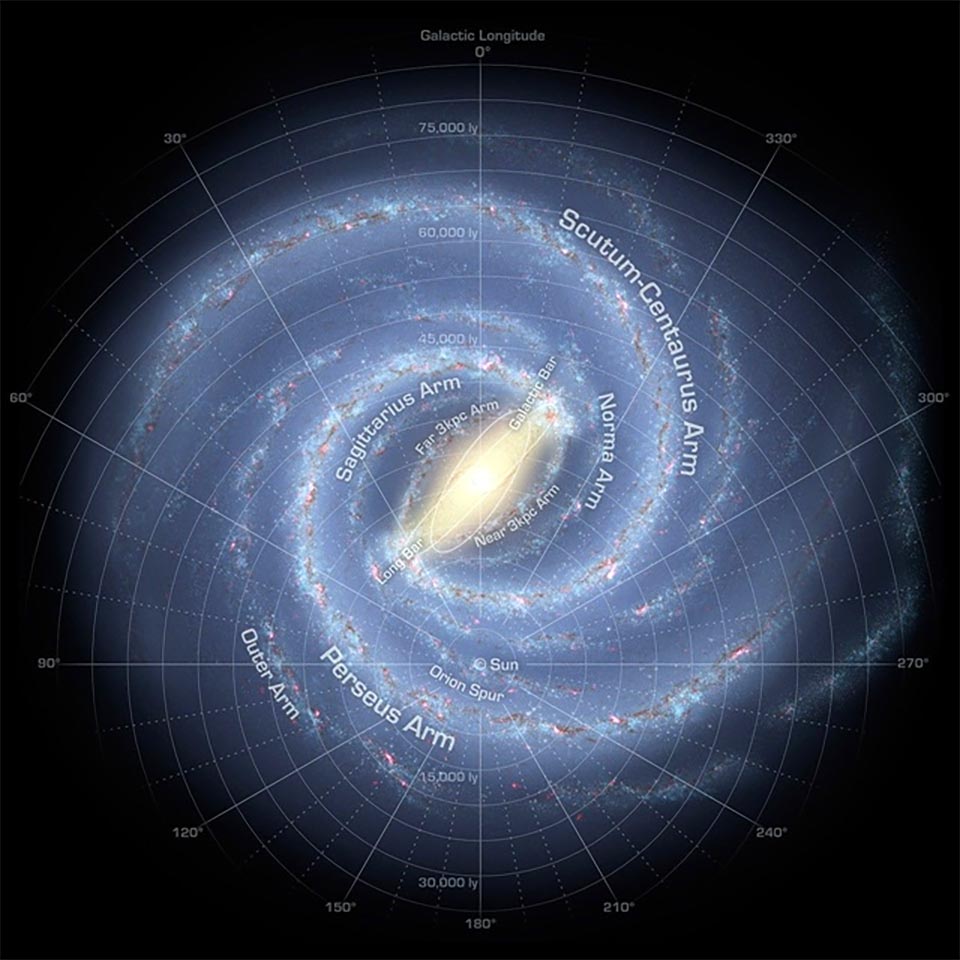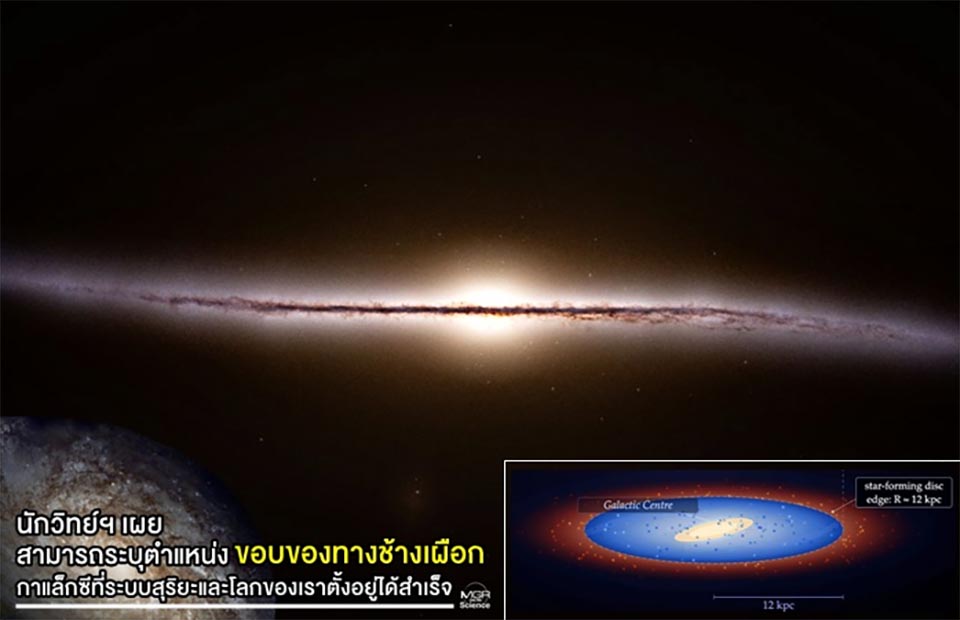
BANGKOK, Thailand – Scientists have successfully identified the outer boundary of the Milky Way, the galaxy that contains our Solar System and Earth, offering new insight into the structure and limits of our cosmic neighborhood.
Because Earth lies within the Milky Way, determining its true shape and extent has long posed a challenge for astronomers. Star density gradually decreases with distance from the galactic center, making it difficult to define a clear edge.
However, a research team from the University of Malta has now developed a method to identify that boundary. Their findings, published in the journal Astronomy & Astrophysics, estimate the galaxy’s edge to lie between 11.28 and 12.15 kiloparsecs — roughly 40,000 light-years — from the center.
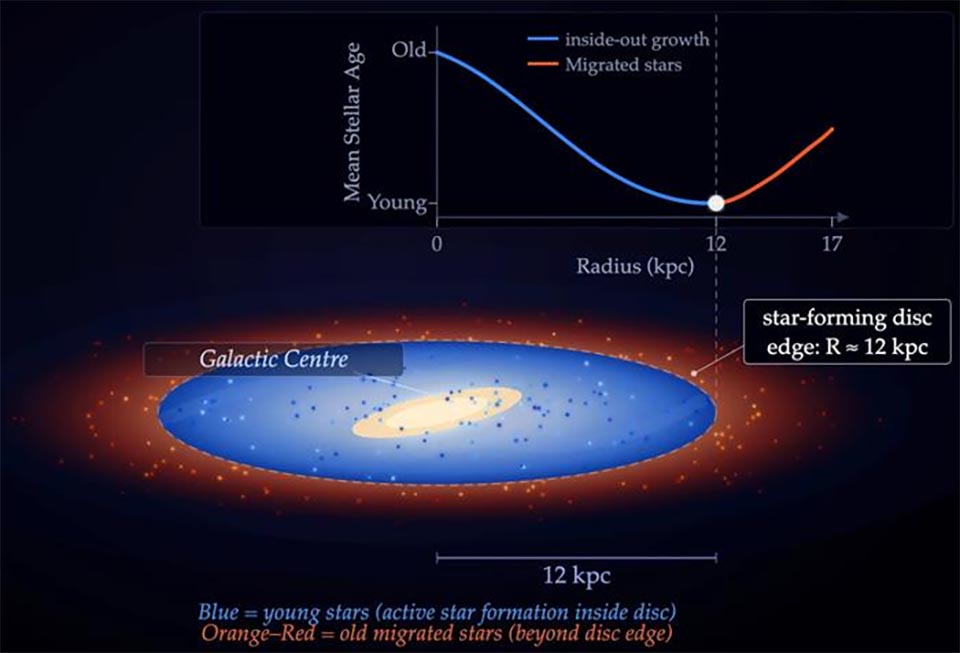
To reach this conclusion, scientists analyzed the ages of more than 100,000 giant stars using data from major sky surveys, including APOGEE-DR17, LAMOST-DR3, and Gaia.
Their analysis revealed a distinctive U-shaped relationship between a star’s age and its distance from the galactic center. Stars near the center tend to be older, while those farther out are younger—up to a point where star formation effectively stops. This transition zone marks what researchers define as the galaxy’s “edge.”
The study also explains that the central region of the Milky Way contains denser gas and dust, leading to faster star formation and older stars. In contrast, the outer regions have more diffuse material, slowing star formation and resulting in younger stellar populations.
Interestingly, older stars found near the galaxy’s outskirts are believed to be “migrant stars” — originally formed closer to the center but later pushed outward by gravitational forces from spiral arms or the galaxy’s central bar.
Researchers identified three key factors that likely halt star formation beyond this boundary: resonance effects that trap gas in inner regions, distortions in the galactic disk, and gas density becoming too low to collapse into new stars.
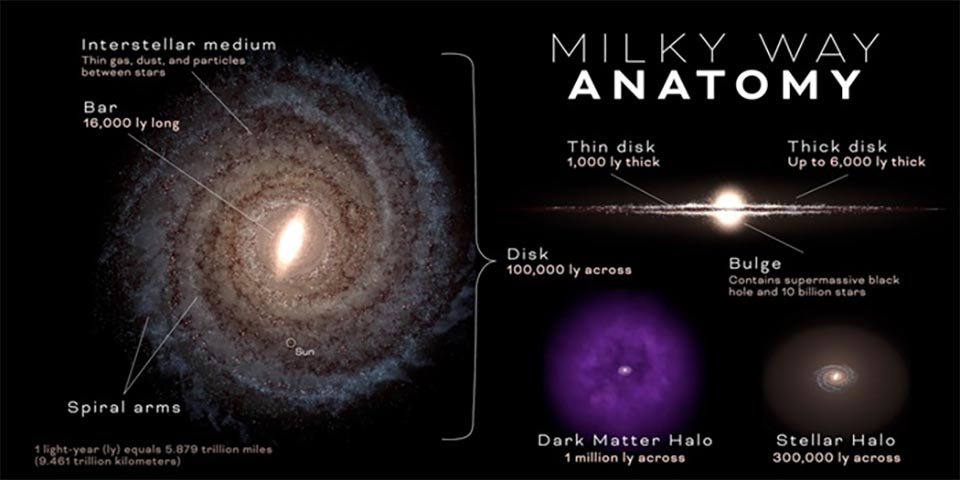
This breakthrough not only clarifies where the Milky Way effectively “ends,” but also helps classify it as a Type II exponential disk galaxy—one whose brightness declines with distance from the center, a defining feature of spiral galaxies.
Sources & Photos: universetoday.com (“Astronomers Find the Edge of the Milky Way’s Star-Forming Disc”); sciencealert.com (“Astronomers Think They’ve Finally Found The Edge of The Milky Way”)