BANGKOK, Thailand – Prime Minister and Minister of Interior Anutin Charnvirakul reaffirmed the government’s commitment to equitable health services during his meeting with the 2025 Prince Mahidol Award recipients.
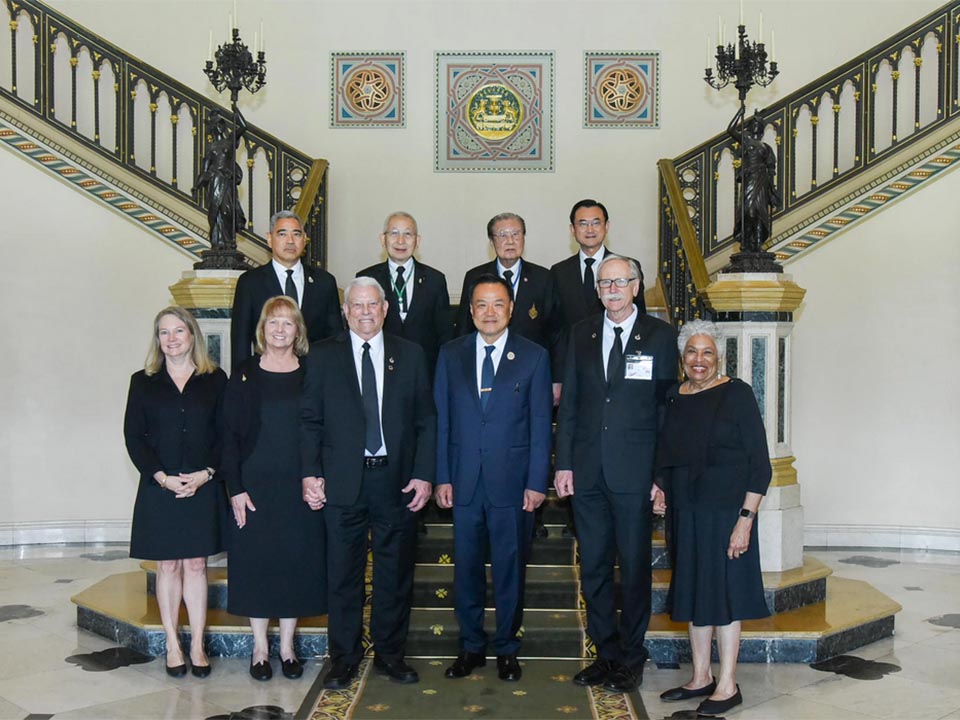
On January 29, 2026, the Prime Minister welcomed Dr. Terry Dean King, MD, and Professor Walter C. Willett, MD, MPH, DrPH, recipients of the 2025 Prince Mahidol Awards. They were accompanied by Professor Apichat Asavamongkolkul, MD, Dean of the Faculty of Medicine Siriraj Hospital, Mahidol University, and Vice Chairman of the Prince Mahidol Award Foundation under Royal Patronage.
The Prime Minister congratulated the 2025 award recipients and praised their contributions to medicine and public health, which have benefited people worldwide. He emphasized Thailand’s commitment to advancing medical knowledge and international cooperation, noting that the country’s public health system is based on the royal legacy of Prince Mahidol, the father of modern medicine and public health in Thailand. This foundation has allowed Thailand to expand universal health coverage from limited age groups to comprehensive protection for all ages.
Dr. Terry Dean King expressed appreciation for Thailand’s public health achievements, describing the system as a model for other countries. He noted that a strong health system depends on skilled personnel and consistent policy. He also discussed modern health challenges, particularly the impact of sugar- and caffeine-rich beverages on non-communicable diseases among young people.
Professor Walter C. Willett commended Thailand’s universal health coverage for its community-level reach and highlighted the importance of preventive policies, such as sugar taxes and health education, in reducing non-communicable diseases over time. He emphasized the need for international cooperation and the World Health Organization’s role in addressing global health challenges.
Both sides agreed that rapid global change requires continuous learning and international exchange. The Prime Minister reaffirmed Thailand’s readiness to support cooperation in education, research, and academic exchanges to address future health and social challenges. (NNT)