BANGKOK, Thailand – Air pollution surged across Thailand on Tuesday, with toxic smog exceeding safe limits in 34 provinces and prompting Bangkok authorities to recommend work-from-home measures through Jan. 13.
The Bangkok Air Quality Information Center reported that PM2.5 levels reached an average of 43.3 microgrammes per cubic meter (µg/m³) as of 7:00 a.m., categorized as “Orange” or “unhealthy for sensitive groups” across 46 districts.
The highest concentrations were recorded in Bang Rak 62.5 µg/m³, Pathum Wan 60.1 µg/m³, and Chatuchak 52.9 µg/m³.
Weather forecasts indicate “poor” air ventilation and a stagnant atmosphere will persist through Jan. 14, leading to further pollutant accumulation before conditions are expected to improve between Jan. 15-21.
Regional Crisis
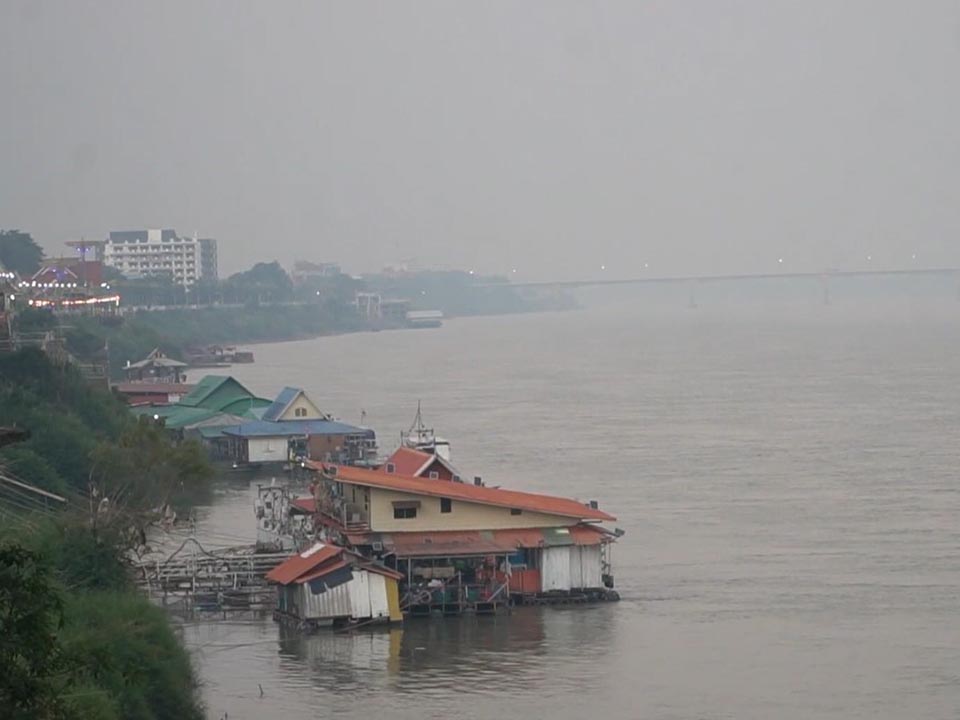
The situation is more acute in the northeast. In Nong Khai province, heavy morning fog and stagnant air pushed the Air Quality Index (AQI) to a “Red” level of 236, with PM2.5 hitting 100.4 µg/m³.Local officials attributed the spike to industrial activity and agricultural burning in neighboring areas.
Nationwide data from the Air Pollution Coordination Center showed the Northeast suffering the highest concentrations. Central and Western regions also reported widespread exceedances.
Government Response
Pollution Control Department (PCD) Director-General Surin Worakijthamrong stated that the current crisis is driven by low ventilation and an increase in “hotspots” both domestically and in neighboring countries.
Satellite data from Nov. 1, 2025, to Jan. 11, 2026, identified 8,127 hotspots, with 3,561 located in rice fields. These fires are concentrated primarily in the lower North, Central, and Northeastern plains.
Minister of Natural Resources and Environment Suchart Chomklin has ordered a high-alert surveillance phase through Jan. 16. Provincial governors have been instructed to strictly enforce “no-burn” bans, deploying rapid-response units to intercept illegal agricultural clearing.
Health officials have advised the public to wear PM2.5-rated masks outdoors and avoid strenuous physical activity in affected areas. -819 (TNA)