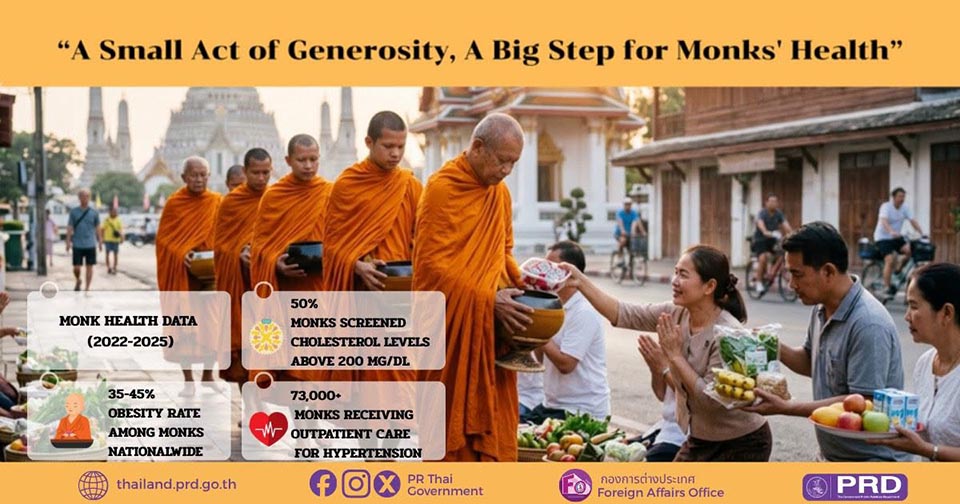
BANGKOK, Thailand – A Small Act of Generosity, A Big Step for Monk’s Health
In Thailand, almsgiving, offering food to Buddhist monks during their early-morning rounds, is a centuries-old tradition practised by millions of Thais. But a growing health concern is prompting a fresh look at what’s in those offerings.
New data shows that 78% of Thai monks are at risk of non-communicable diseases (NCDs) such as heart disease and diabetes, largely because monks rely entirely on donated food and cannot choose what they eat.
- Key health findings (2022–2025):
■ ~50% of monks screened had cholesterol levels above 200 mg/dL
■ 35–45% obesity rate among monks nationwide
73,000+ monks receiving outpatient care for hypertension
That’s why ThaiHealth has launched the “Almsgiving with Monks’ Health in Mind” campaign — encouraging Buddhists, food vendors, and communities to choose offerings that are lower in sugar, fat, and sodium.
The initiative includes a pilot project along Kraisi Road in Bangkok’s historic Bang Lamphu neighbourhood, working with donors, food merchants, and local temples — with plans to scale the model nationwide.
How you can help:
If you’re in Thailand and participate in almsgiving, consider offering fresh fruit, vegetables, or lightly seasoned dishes. Small choices add up — and can meaningfully improve the health of monks who serve their communities every day.
- Learn more:
creativehealthcampaign.thaihealth.or.th
www.sonkthaiglairok.com (PRD)