NAKHON PHANOM, Thailand — Water levels in the Mekong River have begun falling in Nakhon Phanom, offering some relief after widespread flooding, but more than 80,000 rai of farmland and rice fields remain underwater ahead of another spell of heavy rain forecast for August 18-21.
The Mekong stood at 11.63 metres on August 16, down 18 centimetres from 11.81 metres the previous day. Provincial authorities said the river has been falling by more than 10 centimetres a day on average.
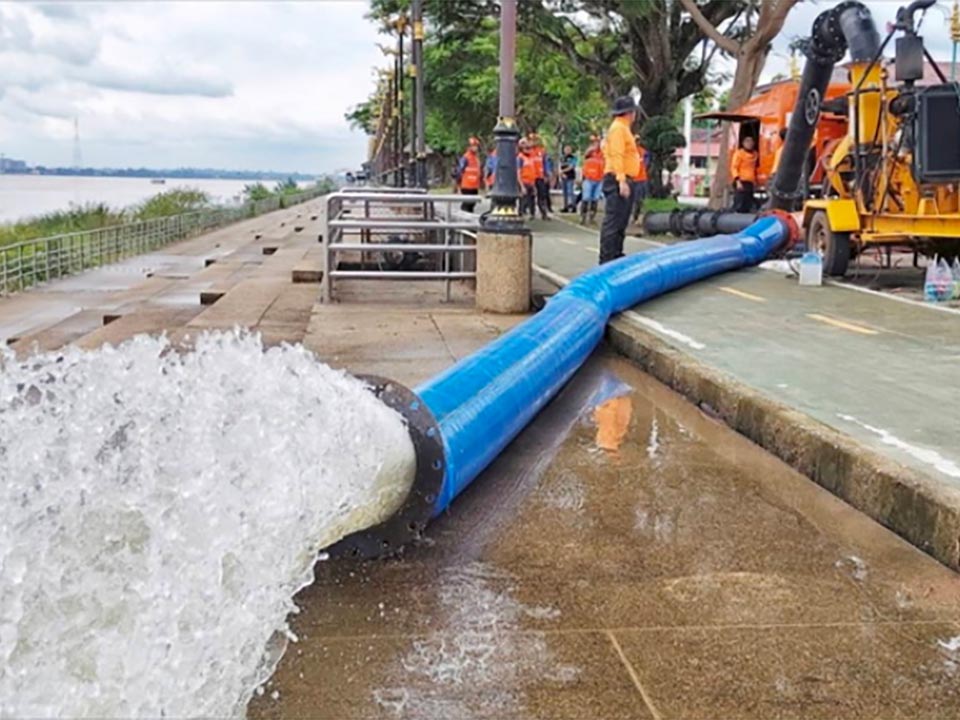
Despite the improvement, authorities are maintaining flood preparations and pumping water out of urban areas to create additional capacity ahead of the next round of heavy rainfall. Nakhon Phanom Governor Adisak Noisuwan said officials were working with the provincial disaster prevention and mitigation office and other agencies to accelerate drainage in the municipal area. Pumps are operating along drainage canals near the market, Apiban Banchao Road and the provincial hall, sending water directly into the Mekong near the Nakhon Phanom post office. The measures aim to reduce accumulated water in the city and limit the risk of renewed flooding if heavy rain arrives between August 18 and 21.
Outside the city, flood impacts remain severe, particularly in low-lying areas and the Songkhram River basin. More than 80,000 rai of agricultural land and rice fields remain affected by flooding, with farmers continuing to face risks to their crops. Authorities are surveying damage and coordinating assistance for affected communities and farmers.
The provincial government and livestock officials have also distributed 500 compressed straw bales to livestock farmers whose pasture and animal feed supplies have been affected by flooding.
Officials warned that falling Mekong levels do not mean the threat has passed. Prolonged heavy rain could cause renewed waterlogging, flash flooding and rising levels in tributary rivers. Residents in low-lying areas, along waterways and in flood-prone agricultural zones have been urged to monitor official weather and water warnings and move valuables to higher ground.