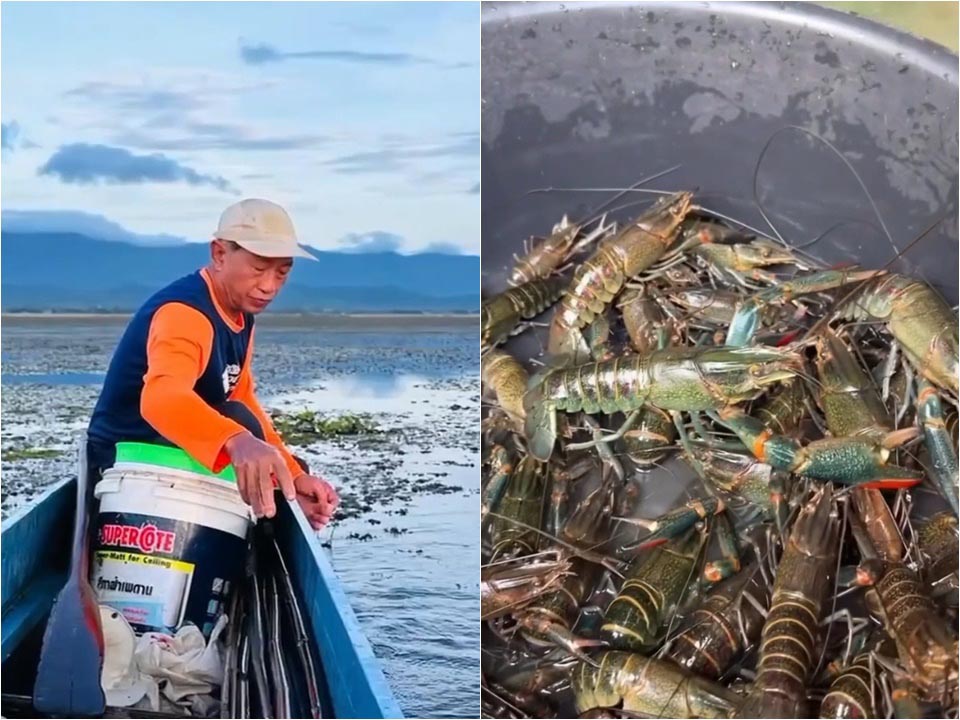
PHAYAO, Thailand – Local fishermen at Kwan Phayao have expressed concern over a decline in local freshwater shrimp following reports of non-native crayfish being caught in the area, prompting calls to monitor the species before it spreads widely. Kwan Phayao is the largest freshwater lake in Northern Thailand and the fourth-largest in the country, serving as a vital natural resource and fishing ground for the region. Fishermen reported catching redclaw crayfish, also known as freshwater crayfish, raising questions about whether the species is impacting other native aquatic life. Pisit Phumikhong, Phayao provincial fisheries officer, said the issue gained attention after images and information were shared online by fishermen using folding shrimp traps along the banks of Kwan Phayao. A fisheries inspection revealed that one fisherman setting 15 to 20 overnight traps caught an average of 1.5 to 2 kilograms of crayfish daily, selling them for 200 to 250 baht per kilogram. However, other local fishermen in the area reported catching only three to five crayfish.
The Phayao provincial fisheries office has implemented measures to regulate crayfish farming since designating it a controlled aquaculture zone in 2016, conducting regular farm inspections. Department of Fisheries records show that of the 550 registered crayfish farming businesses in Phayao since 2016, 549 have ceased operations. Only one certified operator remains active under close supervision to prevent leaks into natural waterways. The fisheries office initially assessed that the crayfish found in the lake may have originated from aquarium pets released into the wild by the public, allowing them to reproduce in certain areas. Authorities stated they will increase public awareness regarding the impact of alien aquatic species and seek cooperation from the public and private sectors to monitor the situation to protect the lake’s long-term ecosystem. (TNA)