PATTTAYA, Thailand – Duncan Foster, company director of Mots Services, told members of the Pattaya City Expats Club during their meeting on August 5 that foreigners living in or visiting Thailand should expect continuing changes in immigration, banking and driving license procedures, and should prepare documents carefully before dealing with government offices or financial institutions.
Speaking in a presentation titled “Year in the Life of an Expat,” Duncan said the past year had been frustrating not only for expats but also for visa and administrative service providers as rules and enforcement practices shifted repeatedly. He said requirements can vary by office, branch and individual official, making preparation essential.
Duncan opened by discussing entry into Thailand, including uncertainty over whether the 60-day visa exemption would be reduced back to 30 days. He said the change had been announced but was still awaiting official publication, meaning travelers could face sudden implementation with little warning. He urged visitors to complete the Thailand Digital Arrival Card before arrival and to be ready to show proof of funds if asked.
He said tourists may be asked to show 20,000 baht in cash per person, or 40,000 baht per family, when entering the country. Although the rule is aimed at tourists, Duncan advised long-term residents returning to Thailand to consider carrying cash and supporting documents as well because immigration officers have discretionary authority.
The presentation also covered TM30 address reporting, which Duncan described as important for immigration services such as 90-day reporting. He said hotels, landlords or property owners are generally responsible for filing the notification, while retirees returning to the same registered residence may not need to file a new report unless they change address.
On long-term stay options, Duncan compared retirement and marriage visas. He said marriage visas require less money in the bank but involve far more documentation and scrutiny, including possible home visits. For those able to meet the retirement visa financial requirements, he said remaining on a retirement visa is often simpler.
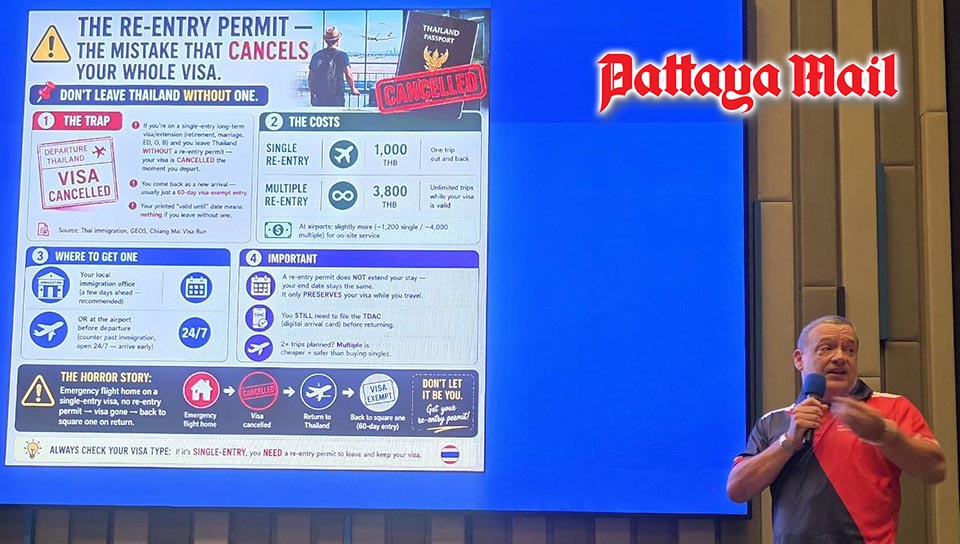
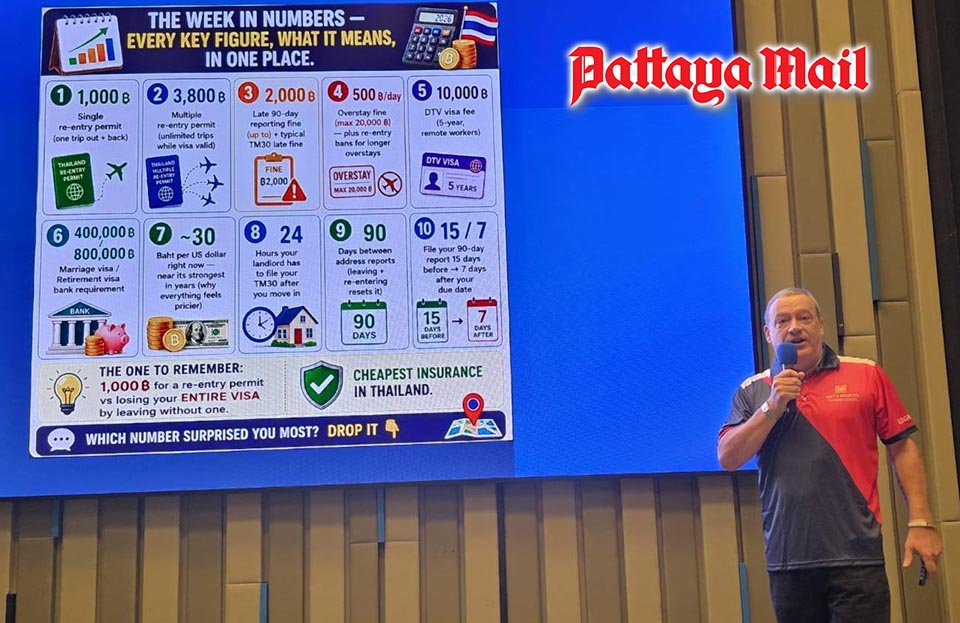
Duncan strongly cautioned retirees not to leave Thailand without first obtaining a re-entry permit. He said failing to do so can cancel a retirement visa, resulting in the person being stamped back into Thailand as a tourist and having to restart the visa process.
Banking was another major theme. Duncan said opening accounts has become much more difficult following enforcement actions connected to alleged money laundering and scam activity. Requirements now differ widely among banks and branches, and applicants may be asked for proof of residence, proof that their phone number belongs to them and a second form of identification.
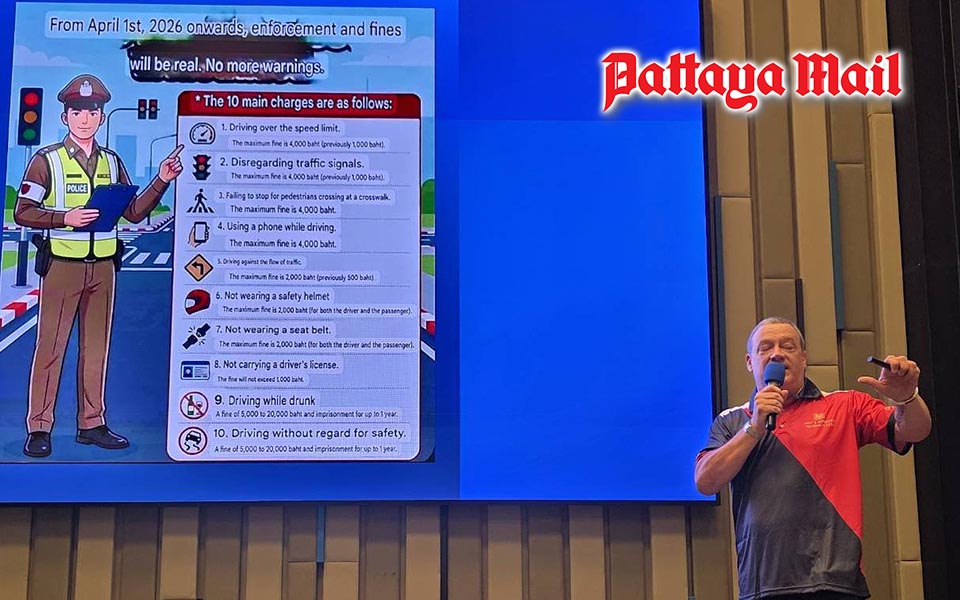
He also outlined differences among transport offices for Thai driving licenses. Banglamung, he said, still requires applicants to book appointments in person and was running about six weeks ahead, while other offices may allow online bookings but require more tests. Duncan noted recent changes including a minimum remaining visa validity requirement and longer validity for residency certificates.
Addressing Destination Thailand Visas, Duncan said the DTV can be attractive for people under 50 but warned that banks and transport agencies increasingly treat it like a tourist visa. He said DTV holders may face difficulty opening bank accounts and may be limited to shorter-term driving licenses.
Duncan concluded by warning against overstaying and advising anyone already on overstay to surrender voluntarily rather than risk being caught. During the question-and-answer session, audience members asked about DTV-to-retirement visa conversion, border runs, driving license renewal timing, LTR and elite visas, tax concerns, same-day bank letters for retirement renewals and agency service fees.
His overall message was that expats should not rely on past practice alone. Duncan urged residents and visitors to keep paperwork current, check requirements before acting and expect some inconsistency as officials apply changing rules in different ways.
Following the presentations, MC Ren Lexander brought everyone up to date on upcoming Club events followed by the Open Forum portion of the meeting where questions are asked and comments made about Expat living in Thailand, especially Pattaya. To learn more about the PCEC, visit their website at https:/pcec.club. A video of the presentation will be uploaded to the PCEC’s YouTube Channel at https://www.youtube.com/@pcecclub6255/videos.