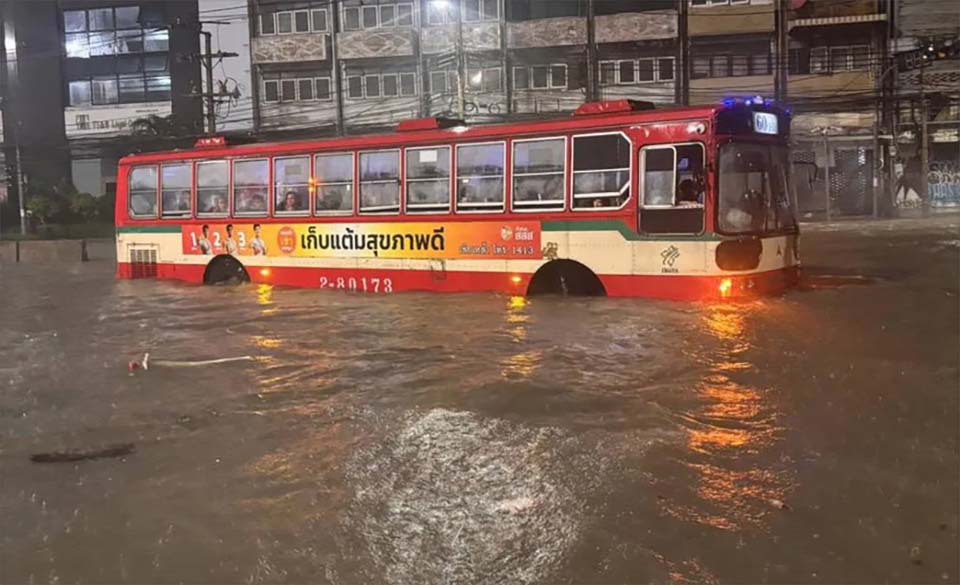
BANGKOK, Thailand – Bangkok’s ageing red-and-cream Hino AK176 buses have found an unexpected new audience in Japan after dramatic footage of one powering through floodwater in Bangkok went viral, with Japanese viewers praising the legendary durability of a bus originally designed with Thailand’s flood-prone conditions in mind.
The attention came after the Bangkok Mass Transit Authority (BMTA) deployed its high-floor red-and-cream buses to help passengers stranded at bus stops along routes 510 and 522 during severe flooding on Vibhavadi Rangsit and Phahon Yothin roads.
Low-floor blue Bonluck buses were unable to pass through the deep floodwater, leaving the older Hino buses to continue operating where smaller buses could not. The scene has prompted social media users to describe the veteran buses as unexpected heroes during the flooding, even though the fleet is scheduled to be gradually retired and replaced by electric buses by 2027.
A Facebook page, Pichakaya, highlighted the reaction from Japanese social media, where a video of the red bus reportedly attracted nearly one million views. Japanese viewers were particularly interested after learning that the bus shown was a Hino AK176, a model produced by Japanese manufacturer Hino. One post described it as one of Hino’s greatest bus designs and lamented that buses with such amphibious-like flood capability were unlikely to be built again.
The red-and-cream buses have also developed a strong following among Japanese visitors to Thailand. Following news of their planned retirement, some Japanese travellers have reportedly included riding one of the buses among their Bangkok travel plans before the vehicles disappear from regular service. Comments highlighted the bus’s ability to power through deep water and its distinctive experience for passengers.
One Japanese commenter compared the bus to a river ferry and praised the quality of Japanese engineering. Another recalled the low fares and joked that passengers had to hold onto the handrails to avoid being thrown around, comparing the ride to an amusement-park attraction.
Another commenter, who said they had been involved in designing the model, claimed that the buses were equipped with waterproof plugs on transmission and differential ventilation pipes, waterproof air filters and raised air-intake pipes because flooding is common in Thailand.
The commenter described the model as exceptionally tough on rough roads and noted that some vehicles have been operating for nearly 40 years, making their impending retirement particularly difficult for enthusiasts. However, the Japanese reaction also included criticism of the ageing fleet.
A Japanese resident working in Bangkok reportedly acknowledged the buses’ durability but said their retirement was understandable because some older red buses produce black smoke, break down frequently and have been associated with driving-behavior problems that can contribute to traffic disruption.
The debate therefore reflects two sides of the same story. The Hino AK176 has demonstrated remarkable longevity and flood resilience, but its age and environmental and operational problems have also increased pressure for a transition to electric buses.
Another Facebook page, Ejieb Leab Duan, highlighted the response from BMTA bus enthusiasts, saying the flooding had demonstrated that the red buses still had an important role to play.
The page praised BMTA drivers who continued taking the buses through floodwater to transport passengers, with social media users searching for and thanking the drivers involved. Some also recalled earlier generations of red-and-cream buses that continued operating during past floods and helped keep Bangkok moving.
The veteran Hino buses may be approaching the end of their working lives, but their performance during the latest floods has given the iconic red-and-cream fleet an unexpected final chapter — and attracted attention from admirers thousands of kilometers away in Japan.