BANGKOK, Thailand – The Royal Irrigation Department increased water discharge from the Chao Phraya Dam in Chai Nat from 1,950 to 2,000 cubic metres per second from noon on September 28, prompting renewed concern across the lower Chao Phraya basin as more water flows south from the North.
The increase follows a rise in water levels at the C.2 monitoring station in Nakhon Sawan, together with additional water flowing into the Chao Phraya system from tributaries. Royal Irrigation Department Director-General Witthaya Kaewmee said the discharge was being increased gradually in stages to manage the incoming water while reducing impacts downstream.
The additional water is expected to take about 17–18 hours to reach Ang Thong province. Authorities estimate that water levels in the Chao Phraya and Noi rivers through Ang Thong could rise by about 30 centimetres.
The situation in Ang Thong is already being closely watched. At monitoring station C7A in front of Ang Thong Provincial Hall, the river level stood at 7.92 metres, just 8 centimetres below the critical level of 8 metres. The flood barrier in the area stands at 10 metres, while more than 2,000 cubic metres of water per second was flowing through the area.
Floodwater has already entered homes in four Ang Thong districts — Mueang Ang Thong, Pa Mok, Wiset Chai Chan and Chaiyo. Some affected communities are located in low-lying areas outside flood protection barriers and are being affected by rising levels in both the Chao Phraya and Noi rivers.
Authorities are also monitoring water levels across 10 central provinces — Uthai Thani, Chai Nat, Sing Buri, Ang Thong, Suphan Buri, Phra Nakhon Si Ayutthaya, Lopburi, Pathum Thani, Nonthaburi and Samut Prakan — together with Bangkok. Particular attention is being given to low-lying communities and areas outside flood barriers.
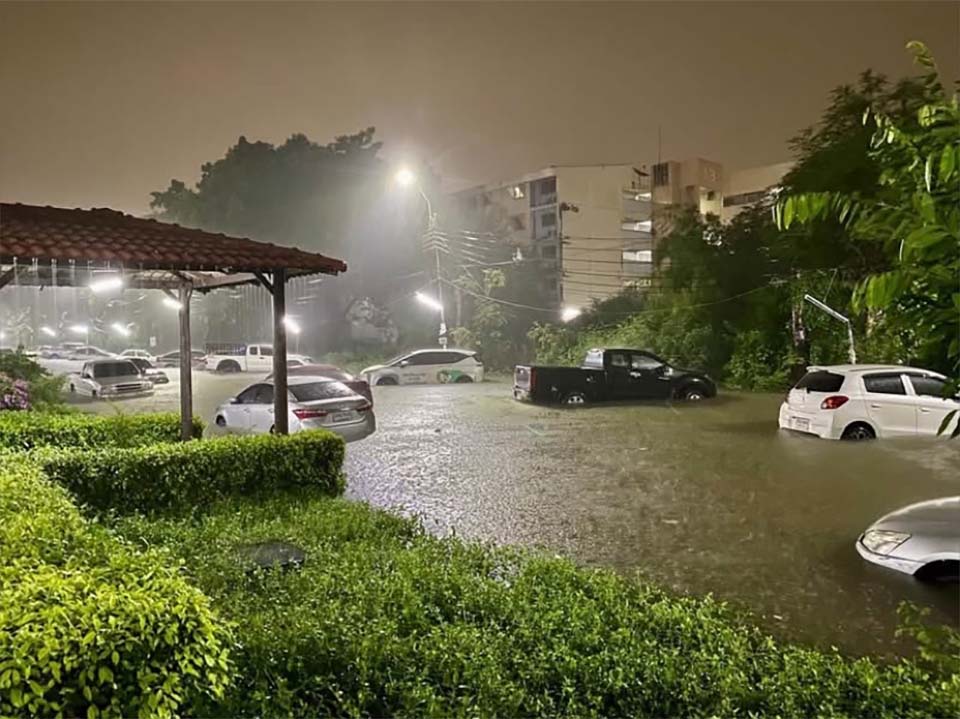
For Bangkok, the timing is concerning because some major roads have begun to see floodwater recede, while several low-lying communities remain severely affected. Areas including Khlong Chan flats, Rom Klao housing estates and Lat Krabang continue to face high water levels, with residents potentially needing several more days before conditions return to normal or near-normal.
The arrival of additional water from the North could put further pressure on Bangkok if drainage systems cannot move existing floodwater into the Chao Phraya quickly enough and onward toward the Gulf of Thailand. The immediate concern is therefore whether Bangkok can continue draining water faster than new water arrives, particularly if rainfall continues over the next several days.
The latest developments place renewed attention on the city’s flood-management capacity. With floodwater already affecting communities in parts of the central region and more water moving downstream through Ang Thong and toward Ayutthaya, Pathum Thani and Nonthaburi, Bangkok faces another critical test of its drainage and flood-control systems.