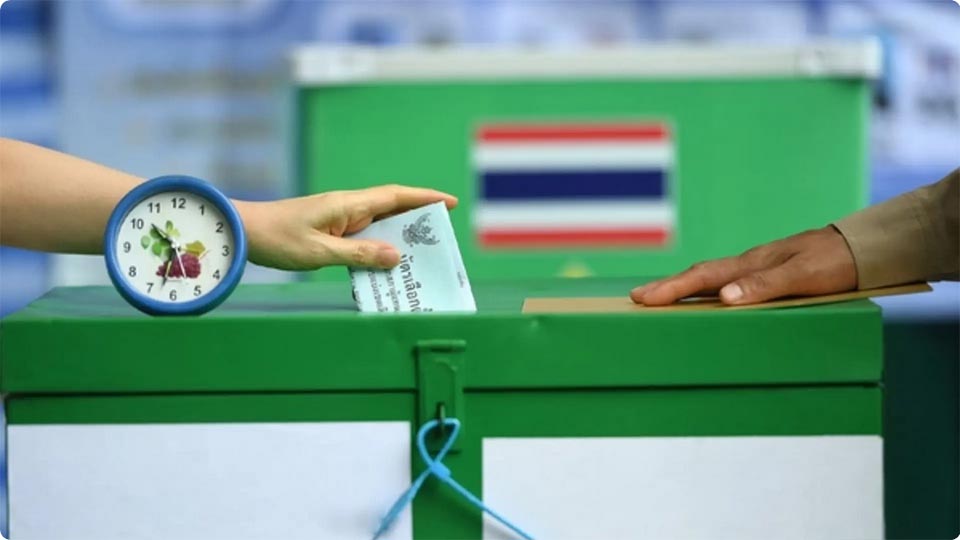
BANGKOK, Thailand – The Election Commission (EC) has released details of the upcoming election process, including the composition of the House of Representatives, the method for allocating party-list seats, and the referendum scheduled for February 8. The information was provided to improve public understanding ahead of advance voting on Feb. 1, the general election of MPs, and the first of three referendums related to constitutional change.
The House of Representatives will consist of 500 members, comprising 400 constituency MPs and 100 party-list MPs. Constituency MPs will be elected from 400 single-member constituencies under a single-ballot system. Voters may select one candidate or choose not to vote. The candidate receiving the highest number of votes, and more votes than the no-vote option, will be declared elected. In the event of a tie for first place, a lot drawing will be conducted under EC rules. If no candidate receives more votes than the no-vote option, the EC must organize a new election in that constituency, with all previous candidates barred from reapplying.
Political parties that field constituency candidates may submit a single party list of up to 100 names, with no overlap between the party list and constituency candidates. Party-list seats will be allocated by aggregating all nationwide party-list votes and dividing the total by 100 to determine the average number of votes required per seat. Each party’s total party-list votes will then be divided by this average to determine its initial seat allocation. If fewer than 100 seats are assigned, the remaining seats will be distributed one at a time to parties with the largest fractional remainders. In cases where equal remainders would result in the total exceeding 100 seats, the EC will conduct a drawing of lots. Successful candidates will be selected in order from each party’s list, up to the number of seats allocated and not exceeding the number of candidates nominated. If fewer than 100 party-list MPs are elected, the House will consist only of those chosen.
The EC also detailed the referendum to be held on Feb. 8, which will ask voters whether they agree that a new constitution should be drafted. Voters will be able to choose approve, disapprove, or no opinion. The result will be considered conclusive when the number of votes cast for one option exceeds the number of no-opinion votes. This referendum follows a Constitutional Court ruling issued in September 2025, which confirmed that Parliament may proceed toward drafting a new constitution only after receiving public approval through a referendum.
Under the current constitutional framework, drafting a new constitution requires three referendums. The first seeks approval to begin drafting; the second, approval of the draft constitution; and the third, approval for its adoption. The upcoming vote is the first step in this process and does not, in itself, result in the drafting of a new charter.
The EC outlined both the benefits and drawbacks of the referendum approach. Benefits include broader public participation in constitution-making and the opportunity to revise provisions of the 2017 Constitution, which was drafted during a period without an elected government and has faced implementation challenges. Potential drawbacks include the risk of increased political conflict compared with targeted amendments and the higher costs associated with holding multiple nationwide referendums. (NNT)