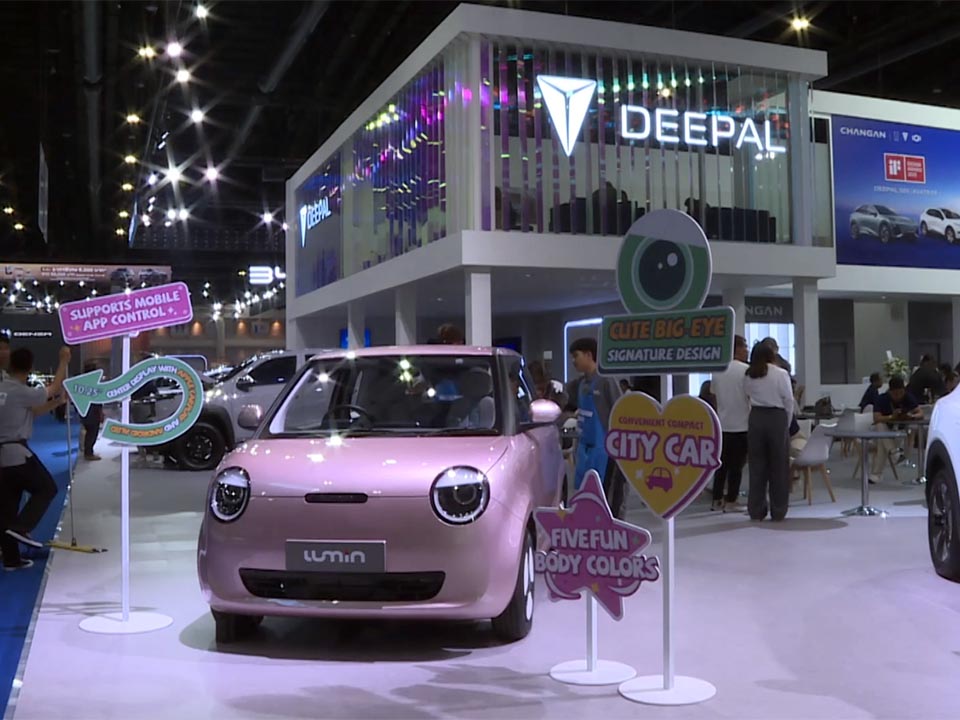
BANGKOK, Thailand – The 47th Bangkok International Motor Show has officially launched, with automakers rolling out a heavy lineup of electric vehicles (EVs) and budget-friendly models despite geopolitical headwinds.
Among the highlights are entry-level battery electric vehicles (BEVs) priced under 400,000 baht (about $12,000), such as the Changan Lumin L DC, which starts at 399,000 baht. The event also features a range of hybrid and plug-in hybrid vehicles, alongside electric pickup trucks such as the Isuzu D-Max EV.

Automakers admit that escalating tensions between the United States, Israel, and Iran are weighing heavily on the global economy and consumer sentiment. Coupled with stringent lending criteria from local financial institutions, car brands are bracing for another difficult year, with several projecting annual sales to remain flat compared to last year.
South Korean automaker Hyundai noted that while it initially projected a market recovery in Thailand early this year, Middle East tensions forced it to pivot toward risk-mitigation strategies. Escalating energy and shipping costs could drive up vehicle prices if global oil prices and auto-part costs continue to climb.
Hyundai, which is set to open its Thai manufacturing plant this July, noted that the current window remains an ideal time for consumers to purchase new vehicles before potential price hikes take effect.
Meanwhile, Japanese automaker Isuzu debuted the D-Max EV, its first 100% electric pickup truck manufactured in Thailand. The model is positioned as a strategic alternative for drivers grappling with rising diesel prices.
Isuzu executives stated that their production is shielded from immediate supply shocks, as plastic and parts inventories are secured for the next 12 months due to long-standing advance orders.
However, Isuzu flagged severe logistics delays due to ongoing disruptions in global shipping lanes. The brand is also navigating a sharp contraction in domestic demand`.
Previously, Isuzu’s sales were split evenly between domestic and export markets, but the Thai domestic market share has now dropped to just 30%. (TNA)