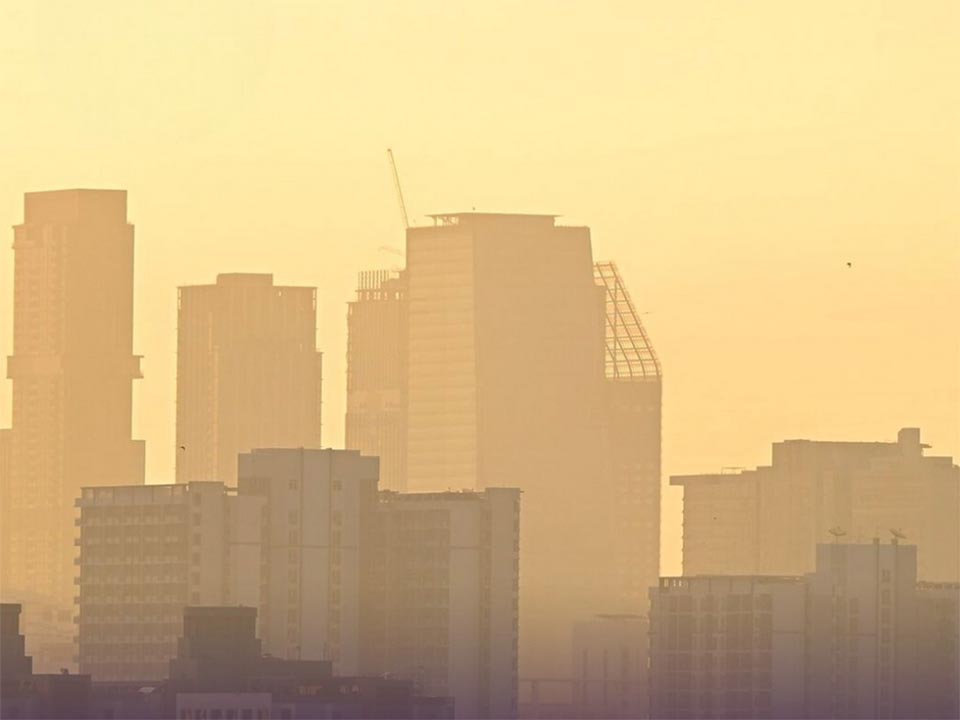
BANGKOK, Thailand – The Bangkok Metropolitan Administration (BMA), together with Prachin Buri and six upwind provinces, has requested a temporary suspension of open burning from January 24 to 28, 2026, to help reduce PM2.5 pollution in Bangkok.
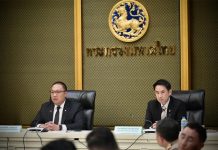
Pornphrom Vikitsreth, Advisor to the Governor of Bangkok and Chief Sustainability Officer of BMA, and Woranuch Suaykakaow, Director of the Environment Department, held an online meeting with Thongchai Butwong, District Chief of Mueang Prachin Buri, and representatives from the Provincial Office of Natural Resources and Environment. The discussion centered on coordinated measures to reduce open and rice stubble burning in upwind areas to mitigate air quality impacts on Bangkok.
Porphrom stated that air quality assessments by BMA and the Pollution Control Department indicate poor ventilation conditions from January 26 to 28, 2026. Low atmospheric dispersion and easterly and northeasterly winds are expected to carry pollutants from neighboring areas into Bangkok and nearby provinces. He emphasized that cooperation from Prachin Buri and other upwind provinces in suspending burning during this period is essential to reducing PM2.5 levels in both Bangkok and the source areas. He also noted that previous coordination has proven effective as a model for cooperation.
Thongchai stated that Prachin Buri has announced a province-wide ban on all forms of open burning from January 1 to April 30, 2026, covering all seven districts. Violations are subject to legal penalties, including fines and imprisonment. Rapid-response teams have been deployed to monitor, enforce, and advise against burning.
Prachin Buri has also launched pilot projects in five districts to utilize agricultural residues, including baling rice straw for animal feed and coordinating private-sector purchases. In areas with deep-water rice straw, microbial decomposition technology from Thammasat University has reduced burning by 30 percent in three districts.
The BMA welcomed Prachin Buri’s cooperation and reiterated its request to suspend all agricultural burning during the critical period to help reduce PM2.5 levels in Bangkok. (NNT)