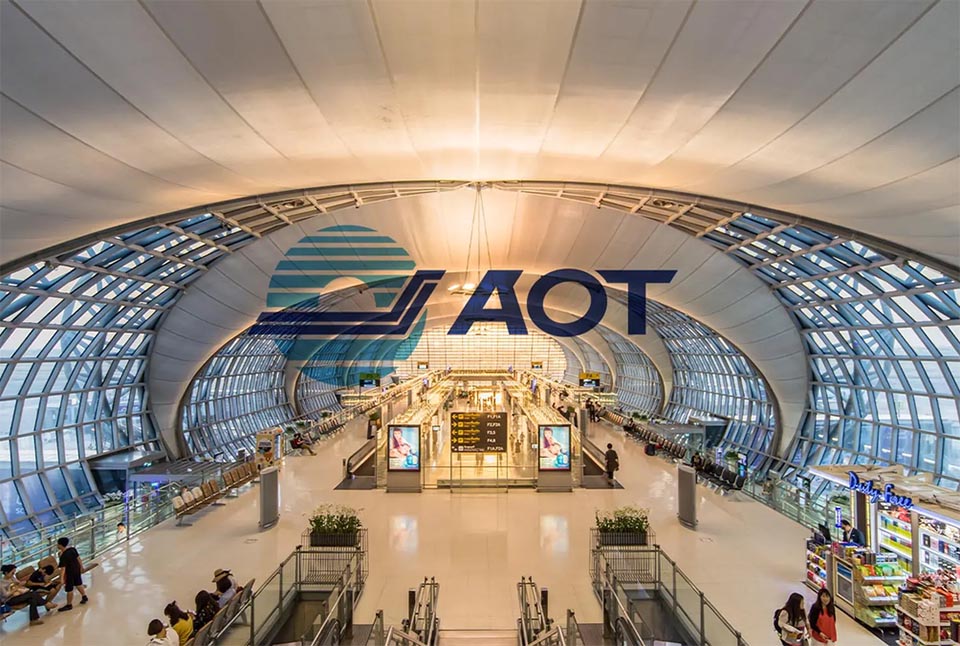
BANGKOK, Thailand — Airports of Thailand (AOT) posted a net profit of 4.44 billion baht in the third quarter of fiscal 2026, up 14.93% year-on-year, while passenger numbers across its six airports topped 99 million in the first nine months. AOT reported net profit of 4.44 billion baht for April-June, an increase of 576.88 million baht from the same period last year. Despite total revenue falling 3.70% to 15.49 billion baht, total expenses dropped 11.73% to 9.48 billion baht.
For the first nine months of fiscal 2026, AOT recorded net profit of 14.81 billion baht, up 3.86% year-on-year. Total revenue stood at 51.60 billion baht, down 1.39%, while expenses fell 2.55% to 31.17 billion baht. Passenger traffic continued to edge higher. From October 2025 through June 2026, AOT’s six airports handled 605,838 flights, up 0.61% year-on-year, and 99.03 million passengers, an increase of 1.84%. International passengers accounted for 60.24 million, while domestic passengers totalled 38.79 million. The six airports operated by AOT are Suvarnabhumi, Don Mueang, Chiang Mai, Mae Fah Luang-Chiang Rai, Phuket and Hat Yai.
AOT President Paweena Jariyathitipong said the company is looking to improve passenger services while creating new revenue streams. Plans include expanding premium services offering faster and more convenient airport access while helping reduce congestion inside terminals.
AOT is also studying the possibility of bringing back arrival duty-free shops, giving passengers entering Thailand more shopping options. The company also plans to improve aircraft parking management to accommodate rising flight volumes.
Beyond aviation revenue, AOT is developing commercial areas around its airports by inviting private-sector investment. Several projects are being explored, including logistics and warehousing development on a 723-rai site near Suvarnabhumi Airport. Three to four potential investors, mainly from the logistics, freight and warehouse sectors, have reportedly expressed interest. AOT expects the development could eventually connect land, sea and air freight networks and reduce air-import and export processing times to around three hours.