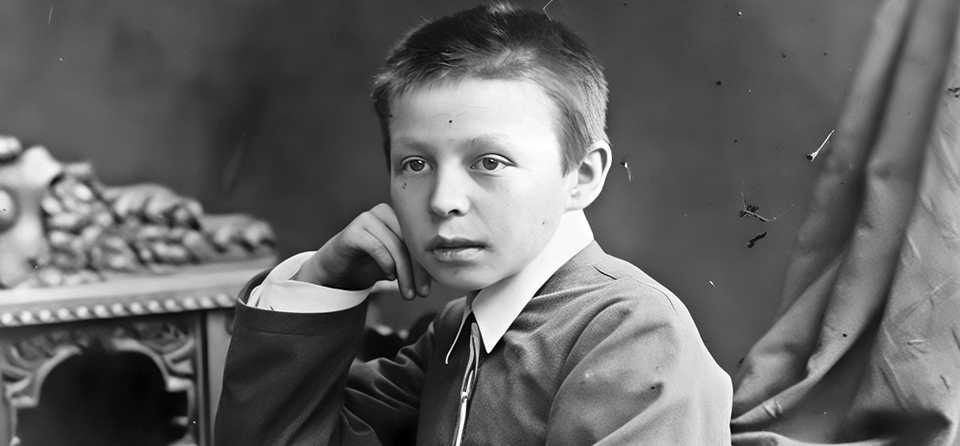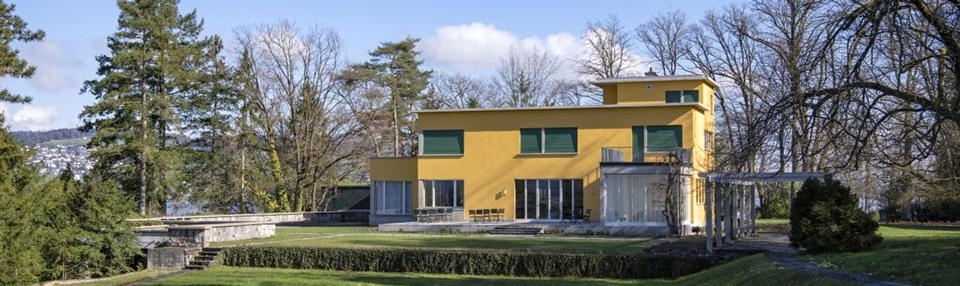
Composer and pianist Sergei Vasilyevich Rachmaninoff spent the summer of 1931 at his luxurious holiday villa on the shores of Lake Lucerne in Switzerland. He could afford to. His many concert engagements and commercial recordings had made him a wealthy musician, allowing him to enjoy a lavish lifestyle with expensive homes and luxury cars. He was also known for his generosity and he supported many artists and musicians who were in need. That year, Rachmaninoff had made extensive concert tours throughout America, which had become his home since emigrating from Russia thirteen years earlier.
The summer holiday of 1931 was meant to be a well-earned break from his busy professional life but the holiday was marred by periods of profound depression. These were probably not helped by the dismal weather, for throughout that summer, Switzerland experienced incessant heavy rain. Despite the challenging conditions, Rachmaninoff composed his Variations on a Theme of Corelli for solo piano. The style of the music is in complete contrast to that of the much-loved piano concertos and it seems likely that his depression, together with the cheerless weather contributed to the sombre mood.
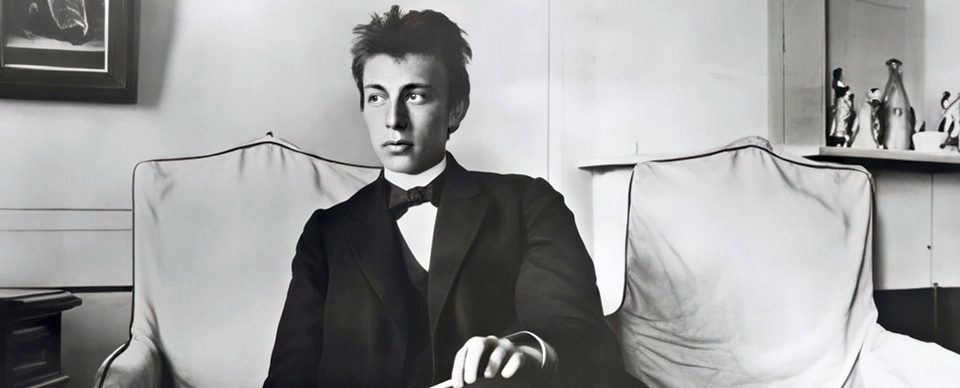
The work consists of twenty variations, some of them remarkably short. The Corelli Variations were to be his last work for solo piano, for the ever-popular Rhapsody on a Theme of Paganini and the Symphonic Dances for Orchestra were yet to come. Corelli was a distinguished baroque composer and Rachmaninov took the “theme” from a Corelli violin sonata written in 1700. Rachmaninoff assumed, wrongly as it turned out, that Corelli had written the melody himself. It was not until Rachmaninoff played the work at a concert in New York, that the musicologist Joseph Yasser explained to the composer that the theme was not by Corelli. It was actually a Portuguese folk-dance melody known as La Folía, which Corelli had simply borrowed. History does not record what Rachmaninoff said (or did) on hearing this unwelcome news.

La Folía (pronounced as lah foh-LEE-ah), had been popular throughout the Iberian Peninsula during the fifteenth-century. The name means “folly” or “madness” and it refers to the frenzied way that peasant dancers twirled to the music. However, by the eighteenth century, the once-vivacious dance melody had become gentrified over the years and resembled a stately sarabande in style. The melody became known throughout Europe and it’s been estimated that over 150 different composers used the tune in their own works. Even today, it sounds oddly familiar, perhaps because the melody and its characteristic chord progression have become embedded in popular consciousness.
Variations on a Theme of Corelli is not often played, so it was a pleasure to hear it again at Ben’s Theater Jomtien, performed by the distinguished Japanese virtuoso concert pianist Eri Nakagawa. She has appeared at Ben’s Theater on several occasions and was given a warm welcome from the enthusiastic audience. Dr Eri Nakagawa is a native of Osaka, a large port-city and commercial centre on the Japanese island of Honshu. She graduated from Osaka Kyoiku University and continued her studies at Mukogawa Women’s University in Japan, before moving to America to complete her Master’s and Doctorate degrees at Indiana’s Ball State University. She has received many notable awards not only for performance, but also for teaching. She has been on the Piano Faculty of Mahidol University College of Music since 1995. In recent years, she has given many successful concerto performances including Rachmaninoff’s Second and Third Piano Concertos.

With her vast experience of the piano repertoire and her profound understand of Rachmaninoff’s music, Eri Nakagawa was the ideal performer for the Variations on a Theme of Corelli. The work opens, not surprisingly with the theme of La Folía. Eri played this elegant opening melody with notable sensitivity and perfect phrasing and the first two variations were fluent and competently performed. In the 3rd variation, Eri made the distinctive La Folía melody sound even more plaintive and I was impressed by her “placing” of the notes, a rare musical skill which comes from years of experience. In the 5th and 6th variations, Eri seemed to bring out the unsettling anger deep within the music and played with a tremendous sense of rhythm. I enjoyed her virtuosic performance of the wild and passionate 7th variation and the way she brought out the curious hesitant quality of the 8th variation. The 9th variation contains chromatic writing with waves of profound sadness that Eri expressed beautifully.
I was impressed with the way that she played the technically challenging 10th variation, a kind of spiky scherzando in which she demonstrated splendid articulation. After the dance-like 13th variation there’s a virtuosic Intermezzo which sounds rather like an improvised cadenza, yet the dark emotions are never far away. Eri provided a thoughtful and expressive performance with fine and precise playing. Her performance of the reflective 14th variation was profound and moving. I especially enjoyed the liquid free-sounding rhythms of the 15th variation which seemed to reflect the musical style that made Rachmaninoff famous. Eri brought a lively dynamic drive to the 18th variation and kept up the relentless pace to the end of the work, when the La Folía theme was hinted at for the last time, expressively and reflectively played. After the relentless musical energy, the work ends peacefully on two quiet chords of D minor, and Eri perfectly captured the profound emotional quality of the final moments.
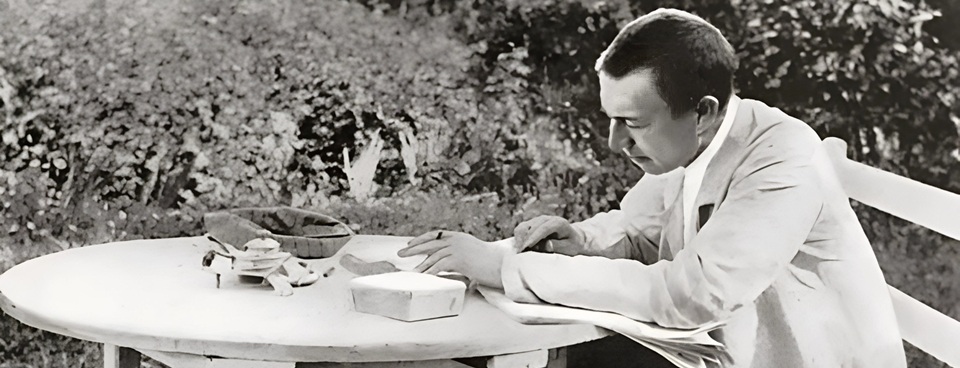
In many ways, Variations on a Theme of Corelli is challenging music for the listener. Some of the variations are surprisingly short and with a few exceptions it’s relentlessly melancholic music. It often feels awkward and unsettled and there are curious wayward harmonies and chromaticism and unexpected changes of metre, which were becoming more common in the composer’s style. Perhaps this is why the work is not frequently performed, but it repays careful listening and Eri gave a compelling performance that seemed to bring out much of the emotion behind the music.
Eri Nakagawa then performed the suite of piano pieces entitled Kreisleriana, composed by Robert Schumann in 1838. Contrary to popular belief, the title doesn’t refer to the violinist Fritz Kreisler, to whom Rachmaninoff had dedicated his Corelli Variations. It would have been impossible anyway, because Fritz Kreisler was born almost twenty years after Schumann had died. No, the title refers to one Johannes Kreisler, a fictional composer created by the German writer E. T. A. Hoffmann who specialized in fantasy and gothic horror. Hoffmann was also a composer and music critic and was the eponymous author in Jacques Offenbach’s opera The Tales of Hoffmann. The character known as Kreisler is a peculiar and somewhat eccentric musical genius whose creativity is hindered by his own incurable sensibilities, a trait that surely would have appealed to the insecure and unstable Robert Schumann.
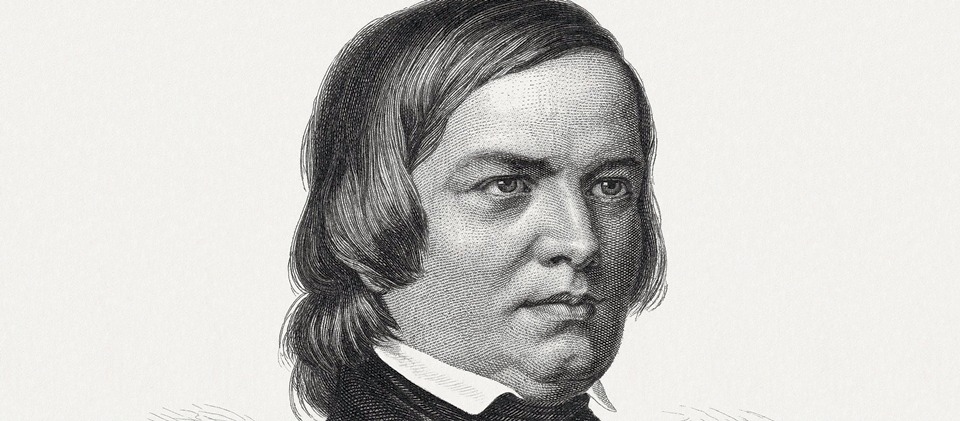
Kreisleriana is a suite of eight pieces for piano solo and among Schumann’s most psychologically complex works, written during one of his characteristic periods of emotional unrest. The first movement really does seem like the music of an angry mind and it showcased Eri’s brilliant piano technique. The quieter middle section revealed her ability to play with remarkable expression. Eri really caught the magic of the lovely second movement which is so typical of Schumann: on the surface a gentle melody but with that bittersweet quality that the composer could create so well. I enjoyed her sparkling rendition of the third movement and the expressive qualities that she brought to the slow and thoughtful fourth movement. Other highlights of the work were the fifth movement, to which Eri brought a technically brilliant lightness of touch; the sixth movement in which she played with expressive rubato and lovely phrasing. In the penultimate movement, Eri highlighted the profound emotions in the music and made the music sound poignant, almost spiritual in character.
The final movement ends in a typically paradoxical manner. It almost skips along at first but there’s an ominous, threatening melody deep in the bass beneath the playful phrases in the right hand, which perhaps represent Schumann’s darker emotions. There is a furious middle section in which Eri brought out spectacularly the composer’s sense of anger and frustration. Finally, there are hints of the previous playful mood though with a touch of uncertainty, giving an impression of a ghostly child skipping along an empty road into the dark, misty distance. It was an impressive performance and I especially appreciated the various ways Eri heightened the dual-personality of the music which is so characteristic of the composer’s troubled mind.
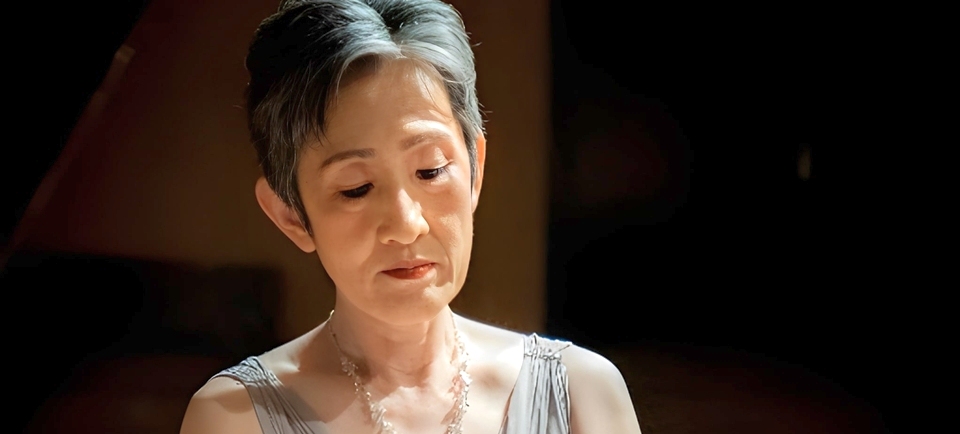
After the interval, Eri returned to the stage to provide a compelling performance of another work by Rachmaninoff, his Variations on a Theme of Chopin. As a pianist, Rachmaninoff was considered one of the supreme interpreters of Frédéric Chopin’s music. He emulated Chopin by writing twenty-four preludes in all the major and minor keys and he created a further link by choosing Chopin’s well-known Prelude in C minor, Op. 28, No. 20 as the basis for this set of variations. This short but expressive chorale-like piece is probably known to every piano student. Completed in 1903, the Variations take the form of a continuous sequence of twenty-two movements which reveal the composer’s skill at harmonic and stylistic diversity. Some of the early variations are remarkably short and last less than half a minute, but from the tenth variation onwards they tend to increase in duration.

The work opens with the Chopin Prelude as it was originally written. Eri played with a great sensitivity to the dynamics and throughout the challenging work impressed the audience with her technical skills and musical insight. Particularly stirring was her sparking playing in the fleeting 7th variation and the heroic character that she brought to the 9th variation. The 11th variation seems to visit a quieter musical landscape with chromatic music shifting through different harmonic colours. Eri brought a compelling sense of vision to the music and the bell-like effects at the end were beautifully played. In the 12th variation, the composer demonstrates his composing skill by writing in a style reminiscent of a baroque fugue with rich deep sonorities in the bass part. Eri performed the movement with excellent sense of forward movement and brought out clearly the strands of melody. I was also impressed with her reading of the 13th and 14th variations in which she demonstrated a sense of line and brought out the dramatic elements in the music.
The expressive 16th variation has that timeless lyrical quality that only Rachmaninoff could create. It could have been taken from the slow movement of a piano concerto and was a showcase for Eri’s thoughtful and lyrical playing. She brought a sense of joy to the optimistic 19th variation and in the lively 20th variation she created a sprightly feeling enhanced by technical brilliance. Throughout the work, elements of Chopin’s Prelude are omni-present; sometimes we hear it hidden deep in the bass part, sometimes fragments of it elsewhere. In the 21st variation, the theme takes on a magical quality when the theme is heard high in the piano part with rippling arpeggios beneath. The final variation ends with the repeated note C dying away before a thrilling brief passage brings the work to a triumphant close. Eri provided a brilliant performance of the entire work and to my mind, seemed to bring out the essential musical qualities. Throughout, I was impressed with her superb technical skills and with her innate musical understanding of the music, a quality which transforms an excellent performance into a memorable one.