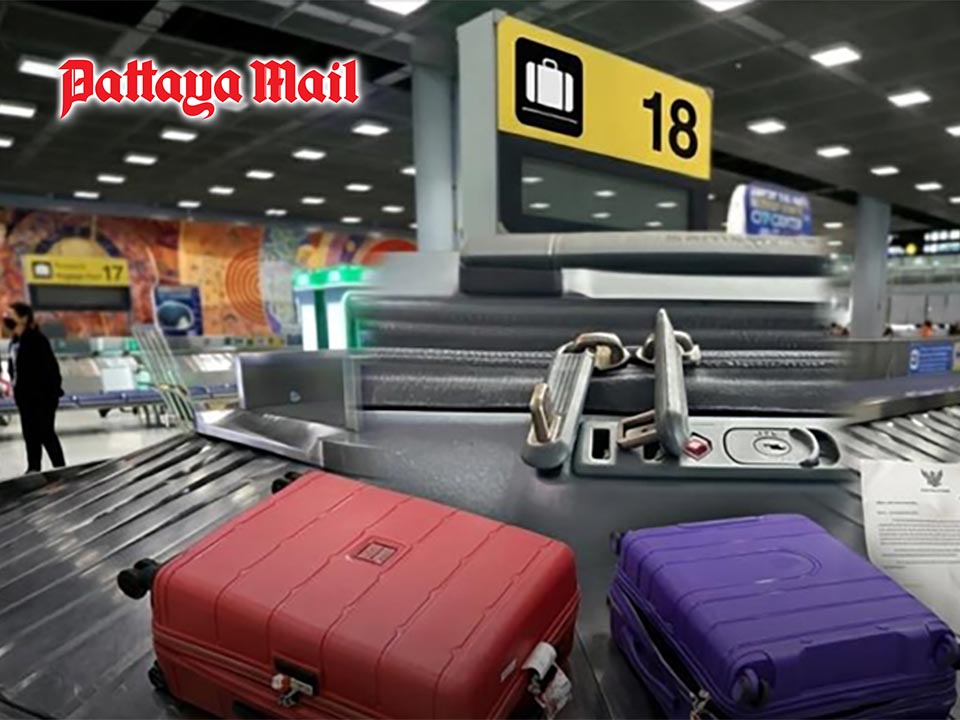
PATTAYA, Thailand – Imagine arriving at your destination only to discover that your checked suitcase has been opened, your lock cut off, and your belongings searched. No prohibited items are found. Instead of an explanation or compensation, you receive only a notice informing you that your bag was inspected. This is the question many travelers are asking after the Civil Aviation Authority of Thailand (CAAT) announced new regulations, effective October 16, allowing airport security officers to open checked baggage without the passenger being present if screening systems detect suspicious items. Under the new rules, officers may inspect luggage without first locating the owner. They are required only to record the inspection and leave a written notice inside the bag afterward.
The regulation has quickly divided public opinion.
Supporters argue that the measure brings Thailand closer to international aviation security standards. In an era of increasingly sophisticated security threats, they say officers must be able to respond immediately when baggage screening identifies a potential risk. Waiting to locate a passenger could delay flights or, in the worst-case scenario, compromise the safety of everyone on board. Few people dispute the importance of preventing explosives or other dangerous items from reaching an aircraft. The real debate lies elsewhere. The concern is not whether authorities should have the power to inspect suspicious luggage, but how that power is exercised and what protections exist for passengers when no wrongdoing is found.
One of the most controversial aspects of the regulation is that officers are permitted to cut locks or otherwise damage luggage if necessary to conduct an inspection. However, the regulation does not establish any requirement to compensate passengers for damage caused during a search, even if the inspection ultimately finds nothing illegal. That raises an important question: if a bag is opened because of a false alarm or an error in the screening process, should the passenger alone bear the cost of the damage? Transparency is another issue. Although inspections must be recorded, questions remain about what happens if passengers later report missing property or dispute the condition of their belongings. Will they be allowed to access the recorded footage? Who safeguards the evidence? What oversight exists to ensure inspections are conducted properly and honestly?
Many countries already allow airport authorities to inspect checked baggage without the owner’s presence. What often distinguishes those systems, however, is not the inspection power itself but the safeguards surrounding it. Clear complaint procedures, independent oversight, transparent review mechanisms, and compensation policies help reassure travelers that security measures are balanced by accountability. Ultimately, aviation security and passenger rights should not be viewed as opposing goals. Strengthening airport security is both necessary and expected. But as governments grant greater authority to security officials, mechanisms for oversight, transparency, and accountability should expand in equal measure.
The more important question, therefore, may not be whether officers should have the authority to open checked baggage—many countries have already answered that. Rather, it is whether passengers have sufficient guarantees that their property, their rights, and their trust in the system will be protected when that authority is exercised. Because if one day your suitcase is opened, your lock is cut, and nothing illegal is found, what most travelers will want is not simply a small inspection notice left inside the bag. They will want to know who is responsible for the damage—and whether a system designed to keep them safe is equally committed to treating them fairly.