PATTAYA, Thailand – Visitors to Pattaya are finding their travel budgets stretched tighter this week, as the Thai baht unexpectedly strengthened, giving them less value when exchanging foreign currency.
As of Wednesday morning (May 21), the baht opened at 32.88 per U.S. dollar, a noticeable gain from Tuesday’s close at 33.07. Analysts expect the currency to stay within the range of 32.75–33.00 per dollar over the next 24 hours, following global economic shifts including a weakening U.S. dollar and rising gold prices.
“This looks like trouble for tourism-driven cities like Pattaya,” said a local hotel operator. “When tourists exchange money and get fewer baht than they expected, they naturally spend less—on food, tours, even basic shopping.”
The stronger baht comes amid broader concerns about the fiscal health of the U.S. government, uncertainty over peace talks between Russia and Ukraine, and tensions in the Middle East. These factors have pushed gold prices close to $3,300 per ounce, indirectly strengthening the baht due to Thailand’s close ties to gold trading.
Financial analysts say the baht’s rally was stronger than expected, driven partly by safe-haven flows into gold and emerging market currencies. However, they caution that this appreciation might be short-lived, especially if gold prices correct or the U.S. Federal Reserve sends a more hawkish signal.
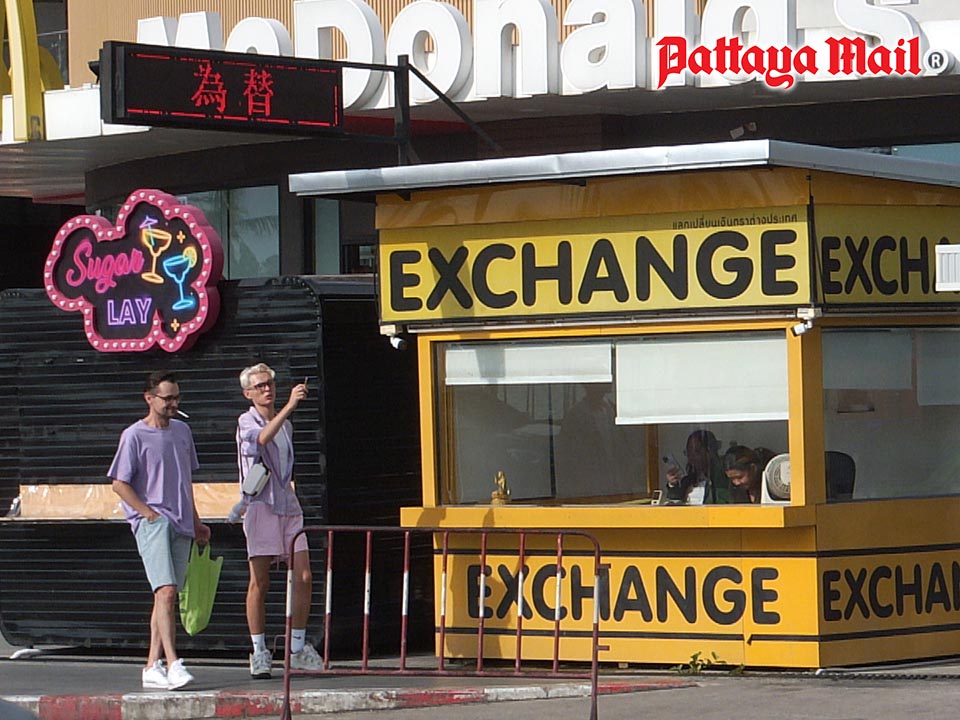
For now, the effect is being felt on the ground. Exchange booths along Beach Road and in local malls report lower conversion values, and many tourists are already trimming non-essential spending.
While the baht may still test support levels around 32.50–32.60, some market participants are already looking to buy dollars again, which could curb further appreciation.
For travelers and the businesses that rely on them, a stronger baht means one thing: less spending, less impulse buying, and a leaner tourism economy—at least for now.