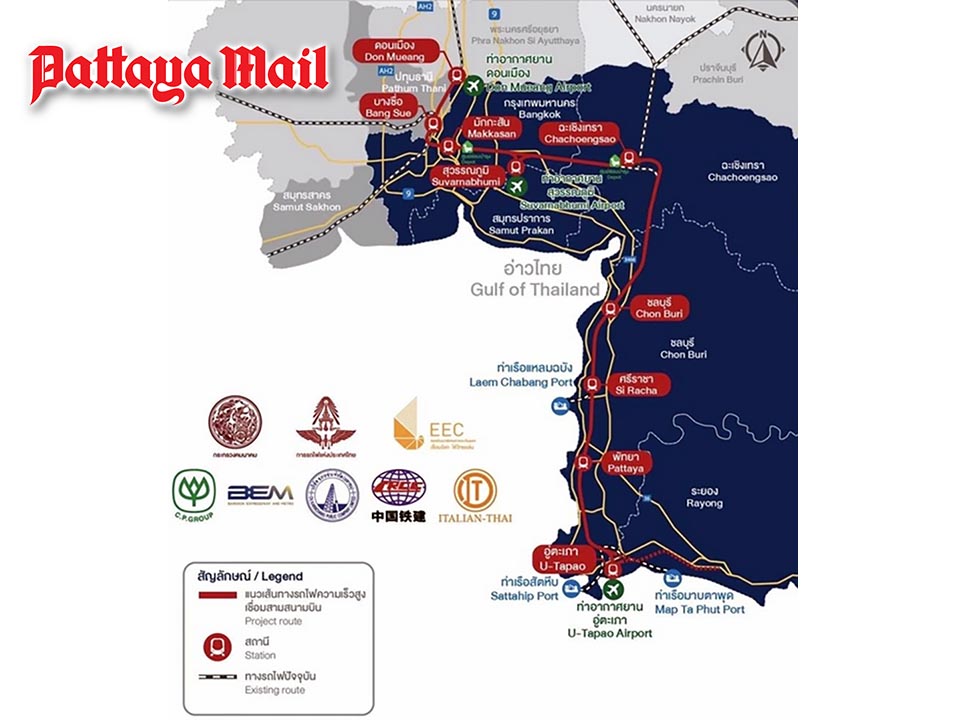
PATTAYA, Thailand – Thailand’s long-delayed high-speed rail project linking Don Mueang, Suvarnabhumi, and U-Tapao airports has entered a critical phase after the government refused to amend key contract terms demanded by the private sector consortium led by CP Group.
The 224-billion-baht megaproject, signed between the State Railway of Thailand and Asia Era One in 2019, has remained stalled for more than six years without construction beginning due to ongoing disputes over financing conditions and payment structures.
Deputy Prime Minister and Transport Minister Phiphat Ratchakitprakarn recently made clear the government will not revise the core agreement, particularly proposals allowing the state to make payments progressively during construction instead of after project completion.
Officials warned that continued delays are now threatening several other major national infrastructure projects, including the Thai-Chinese high-speed rail line, Bangkok’s Red Line “Missing Link” rail expansion, and development plans around U-Tapao International Airport.
The State Railway of Thailand has now signaled it may reclaim and directly manage overlapping construction sections if the private consortium cannot confirm a construction timeline soon. Those overlapping works include shared rail structures with the Thai-Chinese railway project and underground tunnel sections connected to Bangkok’s Red Line expansion.
Authorities are also reviewing possible route changes near U-Tapao Airport after runway expansion work by the Royal Thai Navy advanced ahead of the stalled high-speed rail construction. If delays continue, the rail line may be rerouted around the runway instead of tunneling beneath it, while the future U-Tapao station location could also shift several hundred meters to avoid disrupting the planned aviation city development.
The report said pulling overlapping construction sections back under state management could reduce private investment obligations by nearly 50 billion baht, lowering financing pressure on the consortium. However, banks reportedly remain reluctant to provide loans because of concerns over repayment risks and the long delay before state compensation payments would begin.