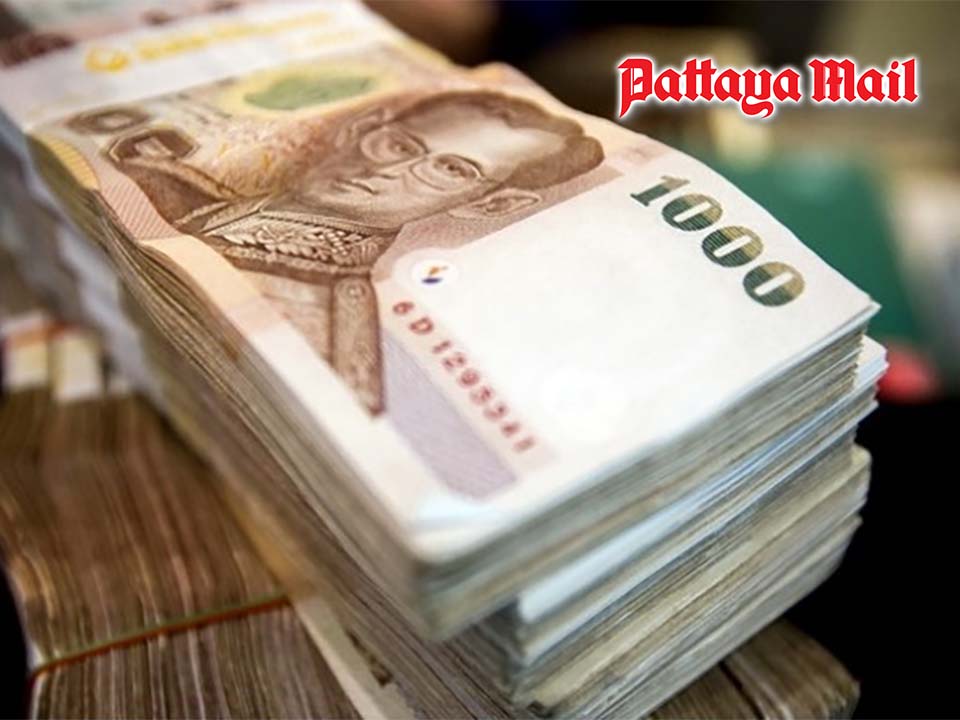
PATTAYA, Thailand – Thailand’s currency showed heightened volatility as the baht weakened to its lowest level in two weeks before recovering slightly, highlighting ongoing pressures from global uncertainty and capital flows, while also raising fresh concerns over competitiveness in key tourism destinations such as Pattaya.
According to Kasikorn Research Center, the baht touched 32.51 per US dollar before closing at 32.45, compared with 32.43 the previous day. The movement reflected regional currency weakness amid geopolitical tensions in the Middle East, before later strengthening on better-than-expected Thai export data.
Thailand’s March exports grew 18.7%, significantly above market expectations, helping the currency recover in afternoon trading. However, foreign investors remained active, recording net equity sales of 1.3 billion baht while purchasing 599 million baht in bonds, reflecting mixed sentiment in capital markets.
Economists noted that while a stronger export performance supports fundamentals, persistent baht strength over time can reduce price competitiveness for export industries and tourism-related businesses. In cities like Pattaya, where international arrivals and long-stay visitors are a key economic driver, a strong currency can make Thailand relatively more expensive compared to regional destinations.
Market analysts expect continued volatility in the coming week, with key global events including central bank meetings in the US, Japan, UK, and Europe, as well as Thailand’s Monetary Policy Committee meeting on April 29. The baht is forecast to trade within a range of 31.70–32.70 per dollar.
While policymakers continue to monitor financial stability, businesses in tourism-heavy areas are closely watching exchange rate movements, as currency strength remains a critical factor influencing visitor spending, hotel occupancy, and overall competitiveness.
Officials are expected to maintain a close watch on capital flows and external risks, balancing macroeconomic stability with the need to support export and tourism-driven growth.