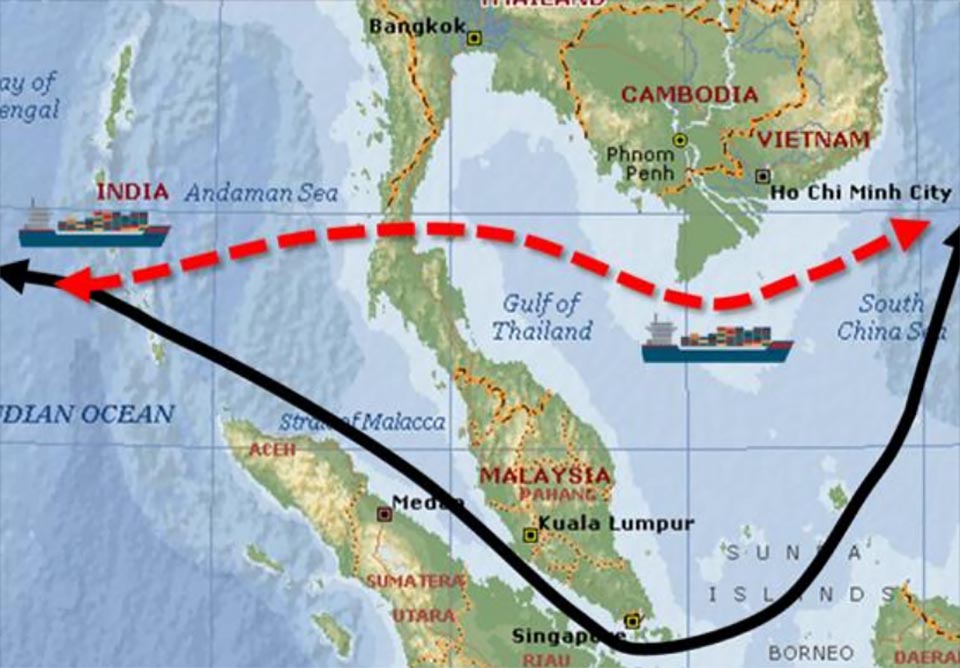
PATTAYA, Thailand – Deputy Prime Minister and Transport Minister Phiphat Ratchakitprakarn is accelerating plans to push forward Thailand’s long-delayed Land Bridge megaproject, positioning it as a strategic alternative to some of the world’s most congested and vulnerable maritime routes.
The project, valued at nearly 1 trillion baht, aims to link the Gulf of Thailand and the Andaman Sea via a new logistics corridor under the Southern Economic Corridor (SEC) framework. Speaking on April 29, Phiphat said the government will fast-track the proposal for Cabinet consideration between June and July, calling the current global situation a “window of opportunity” for Thailand to step into a larger role in global shipping.
A Strategic Gamble Amid Global Turmoil
The renewed urgency comes as geopolitical tensions in the Middle East continue to disrupt key shipping lanes, including risks around the Strait of Hormuz and the Red Sea. At the same time, the Strait of Malacca—one of the world’s busiest trade routes—remains heavily congested and physically constrained.
Phiphat said these pressures highlight the risks of relying on a single maritime corridor and strengthen the case for Thailand’s Land Bridge as a viable alternative. “Thailand has debated projects like the Kra Canal for over 50 years without concrete progress,” he said. “Now is the moment to make the Land Bridge a reality.”
SEC Law Key to Unlocking Project
A major step forward hinges on the passage of the SEC Act, which will establish a governing body to oversee development across four southern provinces—Chumphon, Ranong, Surat Thani, and Nakhon Si Thammarat.
Officials from the Office of Transport and Traffic Policy and Planning (OTP) confirmed that discussions with the Finance Ministry are scheduled for May to finalize details of a proposed SEC fund. The fund is expected to be financed by private investors operating within the corridor, rather than relying on state budget allocations. Once approved by Cabinet, the bill will proceed to Parliament.
Massive Infrastructure Plan
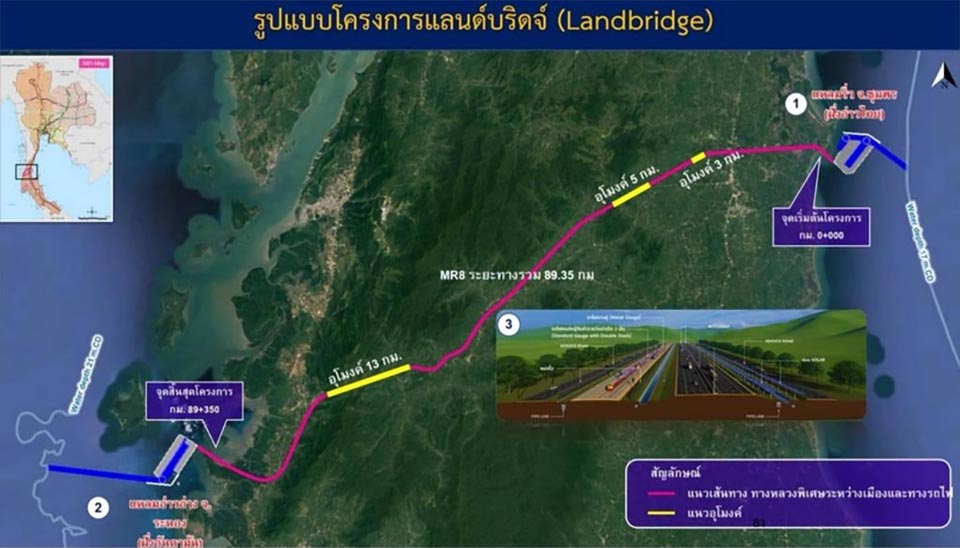
The Land Bridge project will include:
- Two deep-sea ports on both coasts (Ranong and Chumphon)
- A motorway and dual-track railway linking the two sides
- Integrated logistics systems designed to reduce shipping times between the Indian and Pacific Oceans
The railway will use standard gauge tracks, while both rail and motorway components are currently undergoing environmental impact assessments.
Authorities expect key studies—including EIA reports for rail and motorway segments—to be completed by the end of this year.
Delays Still a Risk
Despite momentum, the project remains complex and faces potential delays. Officials estimate that even under ideal conditions, construction would be rolled out in three phases, following completion of bidding documents (RFP) and investor consultations.
More than 60 public hearings have already been conducted over the past four years, with authorities emphasizing that environmental safeguards and community impact mitigation will be central to the project.
Global Ambitions, Local Stakes
If realized, the Land Bridge could reshape regional logistics, reduce dependence on chokepoints, and generate over 200,000 jobs domestically.
But the scale of investment, legal hurdles, and geopolitical uncertainties mean Thailand is still some distance from turning ambition into reality.
For now, the government is betting that global disruption may finally succeed where decades of discussion did not.