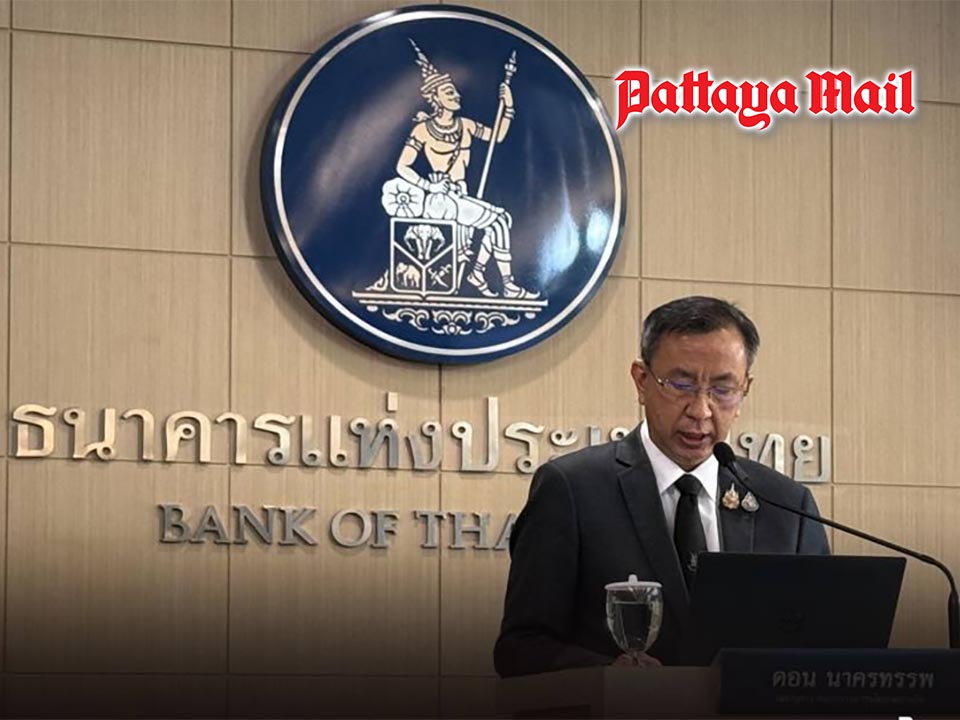
PATTAYA, Thailand – The Monetary Policy Committee (MPC) voted unanimously 6–0 to keep the policy interest rate unchanged at 1.00% per annum, while warning that Thailand’s economic growth outlook has weakened due to escalating geopolitical risks and higher cost pressures, April 29.
According to MPC Secretary Don Nakornthab, the committee assessed that Thailand’s economy is likely to expand at a slower pace in 2026 and 2027, projected at 1.5% and 2.0% respectively, down from previous estimates. The revision reflects the impact of the Middle East conflict, which is increasing energy costs, dampening household purchasing power, and raising overall economic uncertainty.
The MPC said that while pre-conflict data showed stronger-than-expected growth driven by domestic demand and exports, the war has since introduced downside risks. Private consumption is expected to remain under pressure from rising living costs and weaker income prospects, while tourist arrivals are also projected to be affected by higher travel costs and constraints.
Tourism forecasts stand at 33 million visitors in 2026 and 35.5 million in 2027. However, export growth remains relatively resilient, supported by continued global demand for technology-related goods.
The committee also noted that fiscal stimulus could partially offset the slowdown. A 300-billion-baht government stimulus package could raise GDP growth in 2026 by an additional 0.5% to 0.7%, though the effect would likely fade in the following year.
Inflation is expected to rise to an average of 2.9% in 2026, up from -0.5% in the first quarter, driven mainly by global energy prices and cost pass-through effects. It is projected to ease to 1.5% in 2027 as supply-side pressures gradually subside. Core inflation is forecast at 1.6% in 2026 and 1.5% in 2027.
Officials warned that inflation risks remain elevated, particularly from potential energy disruptions, including concerns over the Strait of Hormuz, as well as higher-than-expected cost pass-through by businesses.
Financial markets have already reacted to global uncertainty, with bond yields rising in line with international trends and the Thai baht weakening due to the country’s dependence on imported energy from the Middle East.
While lending rates in the banking system have declined following earlier policy cuts, overall credit growth remains weak as financial institutions continue to adopt cautious lending standards amid rising risk concerns.
The MPC reaffirmed that the current policy rate is appropriate to balance economic support with price stability and financial system resilience, while continuing to closely monitor inflation expectations and geopolitical developments.