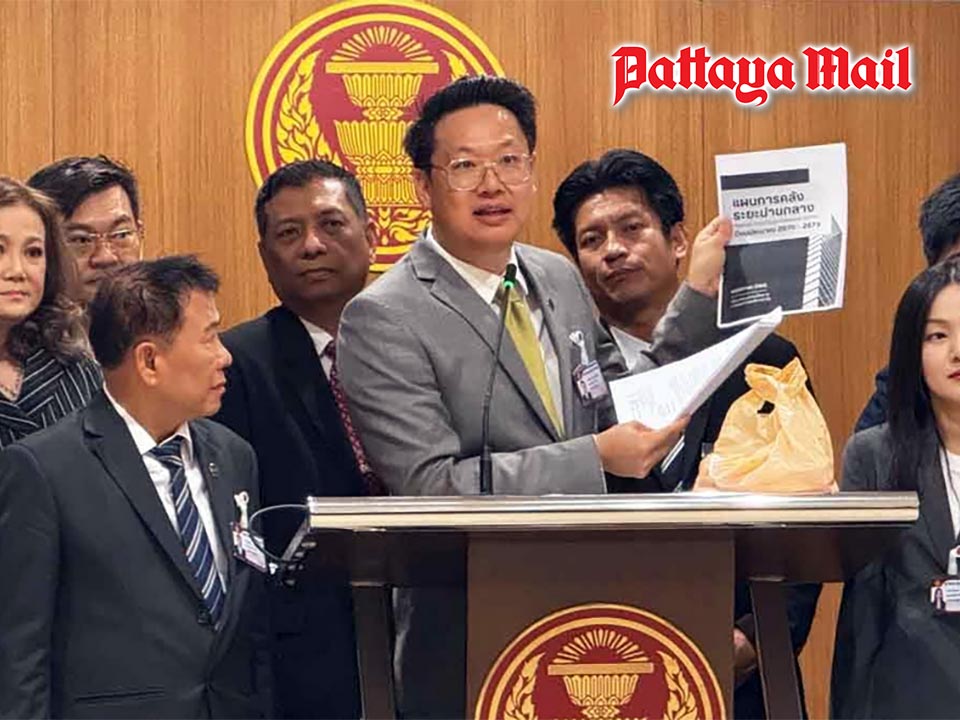
PATTAYA, Thailand – The Thai Economic Party has voiced strong opposition to a proposed increase in value-added tax (VAT) from 7% to 10%, arguing that the government should focus on expanding revenue through foreign worker taxation and tackling corruption instead of raising the tax burden on citizens.
Speaking at Parliament on April 22, party-list MP Kris Potranan said recent discussions about a VAT increase have caused public concern, despite some authorities later clarifying that related documents were only part of a study report. However, he claimed internal government documents indicate the idea has been considered in medium-term fiscal planning.
Kris warned that raising VAT would directly increase the cost of living across all sectors, as even basic goods purchased at convenience stores would become more expensive. He argued that while a 3% increase may appear small, it would broadly raise living costs and could lead to reduced consumption, lower production, job losses, and weaker economic growth.
He estimated that a VAT increase could shrink Thailand’s economy by around 1%, while also reducing purchasing power among consumers.
Kris said that instead of raising taxes on the general public, the government should first address inefficiencies in revenue collection and public spending. He cited corruption as a major issue, claiming that hundreds of billions of baht are lost annually through mismanagement and graft.
He proposed two main alternatives: introducing more systematic taxation on foreign workers to ensure fairness for Thai citizens, and intensifying anti-corruption measures to plug budget leakages and improve state revenue.
According to him, combining these measures would significantly strengthen Thailand’s fiscal position without placing additional financial pressure on the public.