PATTAYA, Thailand – The Thai Chamber of Commerce warned that U.S. trade policy remains far from settled, despite a ruling by the U.S. Supreme Court affecting earlier tariff measures, after President Donald Trump announced an immediate increase in global import tariffs from 10% to 15%.
The move signals Washington’s continued use of tariffs as a strategic economic tool, increasing pressure on global exporters and supply chains, including Thailand. The chamber cautioned that the escalation could further undermine Thailand’s export competitiveness while adding volatility to the baht.
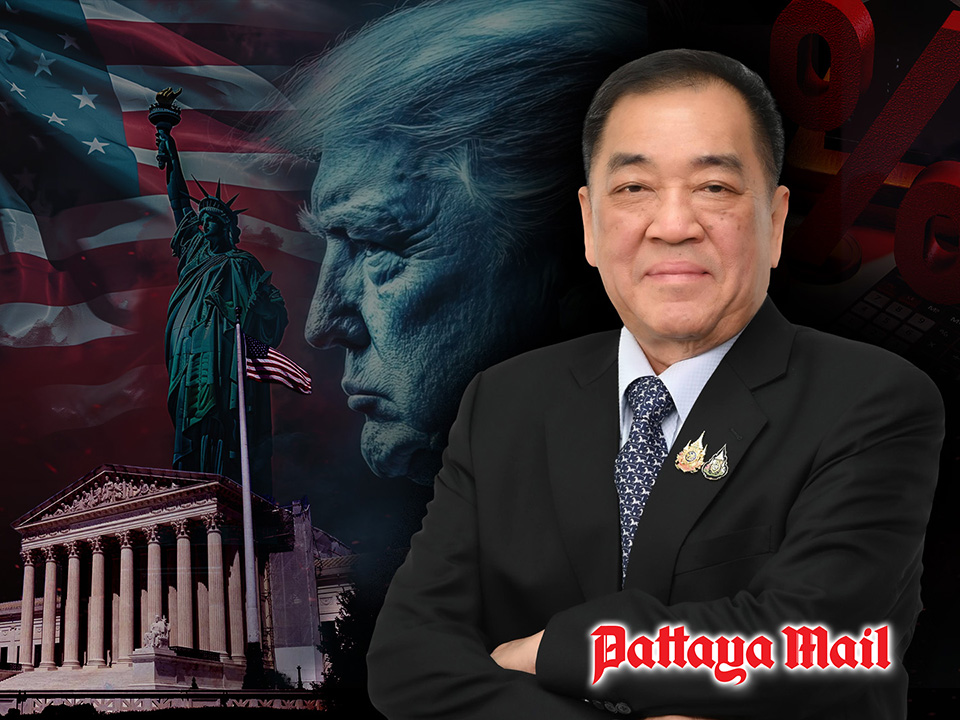
Dr. Poj Aramwattananont, Chairman of the Thai Chamber of Commerce and the Board of Trade of Thailand, said U.S. trade policy has entered a phase of heightened uncertainty. While the Supreme Court ruling may affect previously announced reciprocal tariffs, the overall direction of U.S. trade policy remains in transition, with new tariff mechanisms likely to emerge.
He noted that the immediate hike to a 15% import tariff demonstrates that the U.S. tariff strategy is ongoing, even if certain earlier measures are rolled back. The U.S. administration, he said, continues to rely on tariffs as a flexible instrument to pursue its economic and trade objectives.
The chamber emphasized that the higher tariff rate is a clear signal that trade barriers will remain a strategic policy tool, with ripple effects across global supply chains and export-dependent economies such as Thailand.
Exchange rate volatility is another major concern. Economic uncertainty in the United States could weaken the U.S. dollar, particularly if previously collected tariffs are refunded, potentially leading to a stronger baht against the dollar. As most international trade is conducted in U.S. dollars, a stronger baht combined with higher tariff costs would further erode the competitiveness of Thai exporters, especially in low-margin industries.
According to the Thai Chamber of Commerce, Thai businesses are facing three key pressures: rising export costs, regulatory uncertainty affecting business planning over the next 150 days, and accelerated restructuring of global supply chains that is intensifying competition for investment within the region.
The chamber urged the government to pursue proactive trade negotiations, provide clearer policy direction, and strengthen coordination among relevant agencies to protect the interests of Thai businesses amid the uncertainty.
“Global trade is undergoing a rebalancing,” Dr. Poj said. “Thailand should use this moment to upgrade its economy, strengthen business resilience, and advance economic diplomacy in order to turn uncertainty into long-term growth opportunities.”