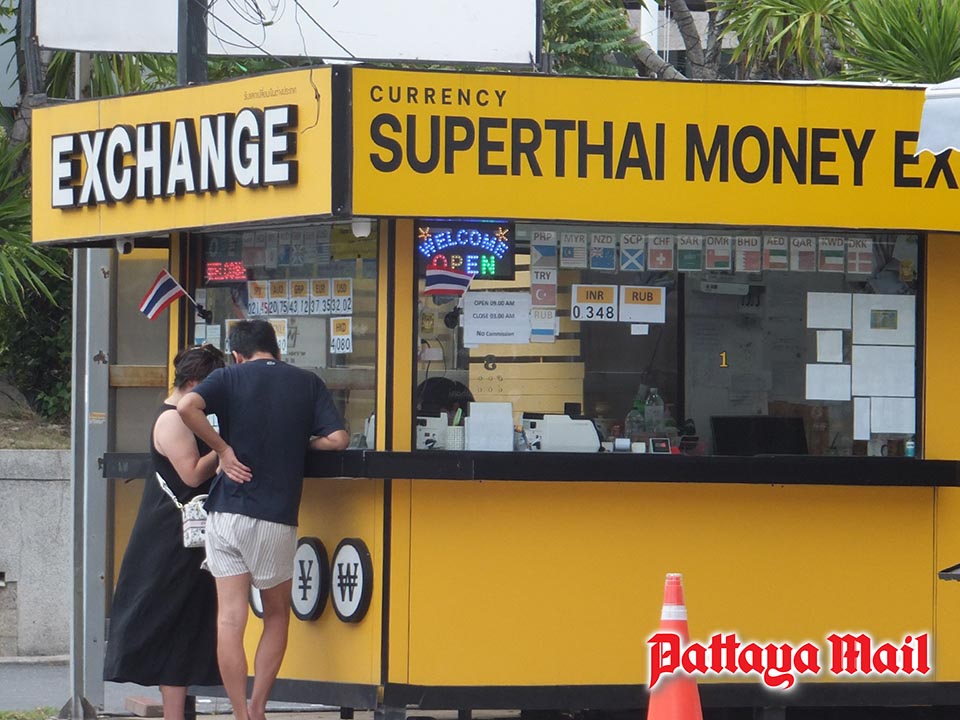
PATTAYA, Thailand — The Thai baht continued to strengthen this week, edging closer to the psychologically important 30-baht-per-dollar level, renewing concerns among tourism operators and long-term visitors in Pattaya about rising costs and weakening foreign spending power.
Krungthai GLOBAL MARKETS reported that the baht opened on December 23 at 31.12 per US dollar, slightly stronger than the previous close of 31.18. The bank expects the currency to trade within a 31.05–31.20 range over the next 24 hours, with recent movements showing a gradual “sideways-down” appreciation trend.
The baht’s strength has been supported by a softer US dollar, improved risk appetite in global markets, and renewed strength in the Japanese yen. While welcomed by importers and overseas investors, the currency’s appreciation is increasingly being viewed as a headwind for Thailand’s tourism-dependent cities — particularly Pattaya.
Local tourism operators say the stronger baht is already being felt on the ground. Foreign visitors are spending more cautiously, shortening stays, and cutting back on discretionary spending such as dining, entertainment, and excursions. For long-term visitors, the currency shift has compounded pressures from inflation, rising rents, and higher service prices.
“Tourists still come, but they think twice before spending,” said one Pattaya-based business operator. “When the baht was closer to 36 or 37, visitors felt comfortable. At 31 — and possibly heading to 30 — everything feels expensive.”
While official tourism arrival numbers remain strong, business owners argue that headline figures mask declining per-capita spending, a trend particularly noticeable among repeat visitors and retirees who rely on fixed foreign incomes.
Industry observers warn that if the baht moves decisively below 31 toward 30 per dollar, Pattaya could face a shift in visitor behaviour, with budget-conscious travelers choosing alternative destinations in Southeast Asia where currencies remain weaker and costs lower.
Tourism groups have repeatedly urged policymakers to look beyond arrival statistics and consider the broader economic impact of a strong currency on local businesses, employment, and long-stay tourism — a segment Pattaya has traditionally relied on for stability during quieter seasons.
As the year-end travel period approaches, operators will be watching currency movements closely, aware that for many visitors, the exchange rate — not marketing campaigns — increasingly determines how long they stay and how much they spend.