PATTAYA, Thailand – The Korean Association in Cambodia has urged Seoul’s Ministry of Foreign Affairs to ease its tightened travel advisory, warning that the restrictions are strangling local livelihoods and inflicting severe economic damage — even on South Korean citizens themselves.
According to a report by The Korea Herald on Friday (Nov. 28), the association submitted an official letter to the ministry a day earlier. The petition — signed by 844 South Korean nationals — was confirmed by Chung Myung-gyu, President of the Korean Association in Cambodia.
South Korea raised its travel warning for Cambodia twice in October, part of a government-wide response to a surge of South Korean citizens being lured by high-wage scam job postings and later becoming victims of serious crimes, including kidnapping and forced confinement in fenced scam compounds.
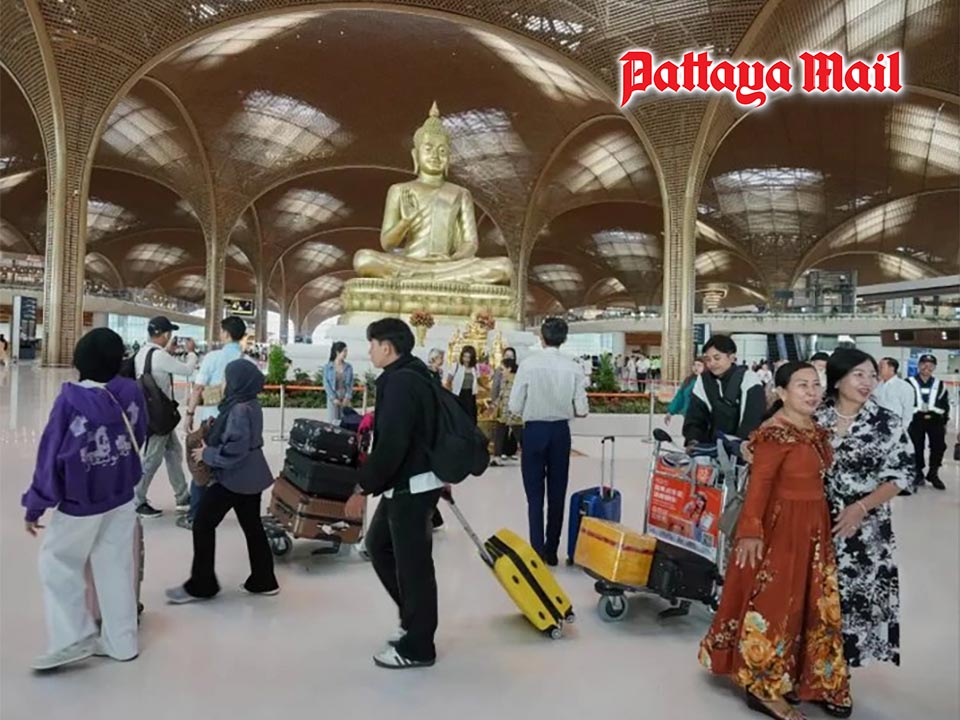
In the letter, the association described the advisory as “excessive,” saying that everyday life, business operations and educational institutions are suffering severe disruption. “The South Korean community is facing significant economic damage and a sharp downturn,” the group asserted, noting that tourism, trade, education and employment have been halted. Academic studies, overseas business transactions and corporate activities in Cambodia have been cancelled at scale.
“To protect the rights of South Korean citizens to live and to enable the recovery of our businesses, a rapid review and gradual adjustment of the travel advisory is necessary,” the statement read.
Under the current system, the entire territory of Cambodia is covered by a travel warning. The advisory includes elevated alerts for nine provinces, including Phnom Penh. Travel to Bokor Mountain in Kampot Province, as well as Bavet and Poipet, is prohibited. South Koreans have been advised to leave Sihanoukville and avoid most remaining areas.
The association argued that Cambodia is maintaining public safety and business activities in most regions, and that authorities in Seoul and Phnom Penh have already expanded joint mechanisms for tackling transnational crime targeting Korean nationals.
On November 10, the two governments formed a Korea–Cambodia special task force to combat cyber fraud and related criminal operations, which have victimized South Koreans across the country.
The push for easing restrictions has gained attention within South Korea’s National Assembly. During a parliamentary session, Foreign Minister Cho Hyun said the government would move quickly to downgrade the advisory for Phnom Penh and other “assessed safe areas.”
Democratic Party lawmaker Yoon Hoo-duk criticized the severity of the ban — which carries penalties of up to one year in prison or a fine of 10 million won (approx. 220,000 THB) for violations — calling it a disproportionate constraint on citizens’ ability to travel. “In the effort to hunt criminals, the livelihoods of South Koreans living and working there have been swept away,” Yoon argued.