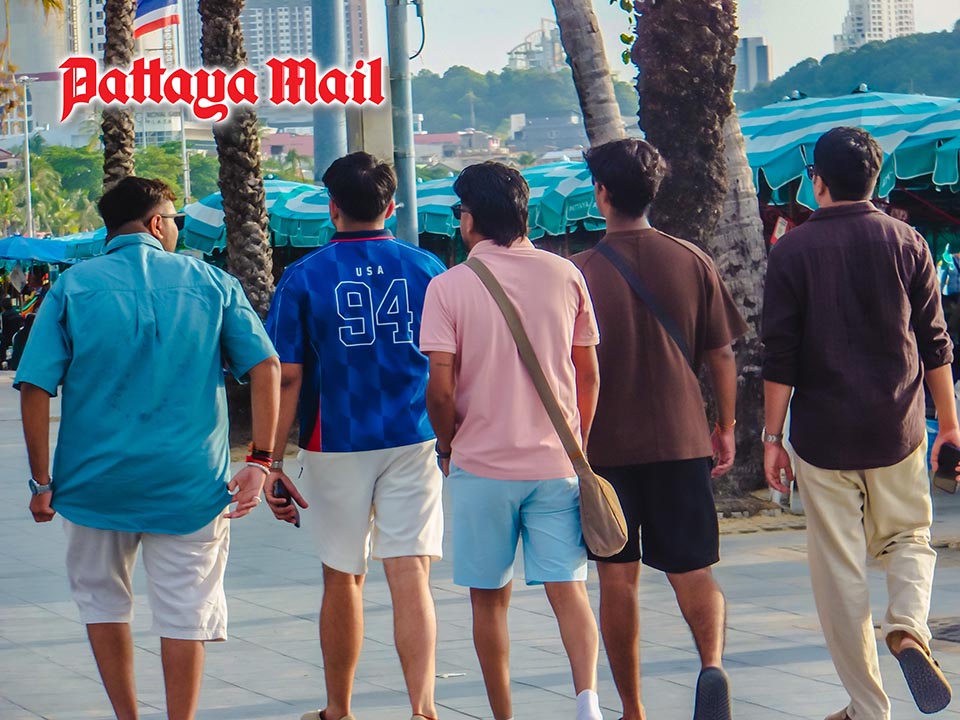
PATTAYA, Thailand – For a few nights, Pattaya looked back to the past. The arrival of thousands of U.S. sailors and Marines from the USS Abraham Lincoln brought a familiar sight to the city — American servicemen walking the streets, filling restaurants and bars, shopping and enjoying their first major break after an exceptionally long deployment at sea. But when the excitement settled, one thing became clear: Pattaya has changed. The five-day visit by nearly 5,000 U.S. personnel created a noticeable burst of activity in the city from September 2, particularly around Pattaya Beach and Walking Street. Yet the effect was far from evenly spread. Some bars reported busy periods, while others remained quiet, waiting for customers.
For some nightlife businesses, the arrival initially felt like the return of an old Pattaya story.
The city’s relationship with American servicemen dates back to the Vietnam War era, when Pattaya developed as a recreation destination for U.S. troops. That connection helped shape the nightlife industry that would eventually become one of the city’s most recognizable features.
Decades later, however, Pattaya is no longer dependent on one nationality or one type of visitor.
One Walking Street bar owner, using the pseudonym “Je Da,” said the first night generated strong interest, with businesses and social media closely watching the arrival of the sailors. Some establishments became lively, with music, customers and staff calling for drinks, while others saw little change. “Pattaya has so many bars,” she said. “When you compare the number of establishments with the number of tourists actually coming in, the customers cannot be spread everywhere.” The experience was even more noticeable in other parts of the tourism sector.
“Aoy,” who runs a massage shop in central Pattaya, said Indian tourists remained a much more visible customer group at her business. “Indian customers are still coming continuously and are much more noticeable,” she said. American sailors came in too, but not in the numbers many had expected.
Her observation reflects the increasingly diverse tourism market that has developed in Pattaya, where restaurants, attractions, shopping centers, massage shops and entertainment venues now serve visitors from many countries. The U.S. sailors themselves also appeared to be breaking away from some of the old stereotypes.
A U.S. serviceman travelling with the carrier, referred to as “Sgt. Pete,” said younger sailors do not all spend their free time in the same way as previous generations. Some walked along the beach. Others went for meals, shopping, drinks with friends or entertainment. “Everyone has different interests,” he said, adding that the sailors had come to relax and spend time with friends while respecting the rules and places they visited.
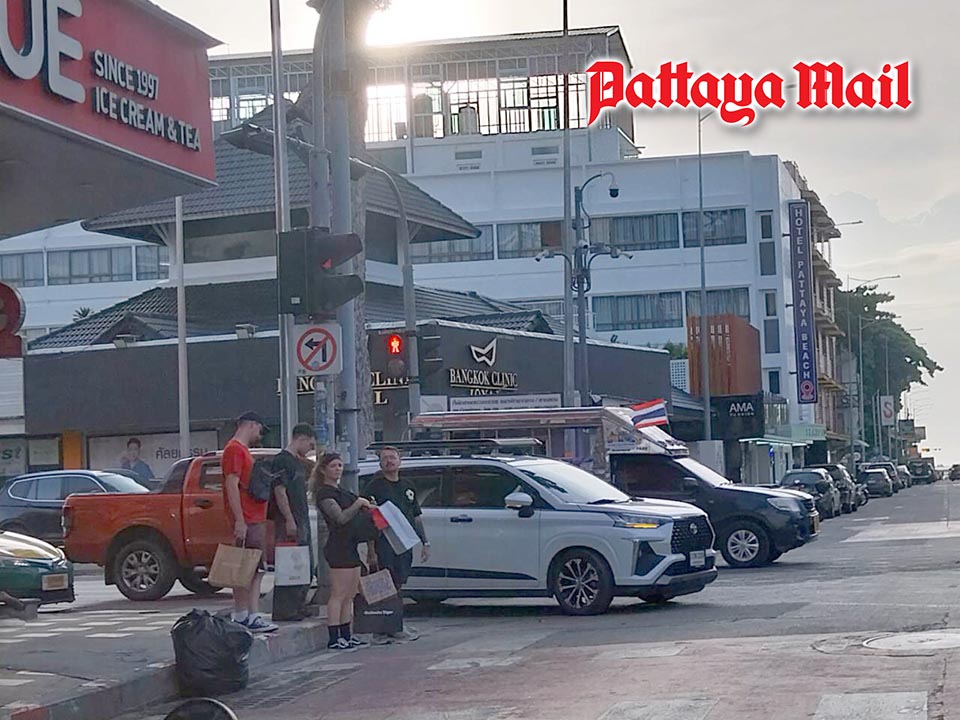
That changing behavior was visible around Pattaya during the visit. The Washington Post reported that groups of sailors could be seen shopping at Central Pattaya, with some carrying bags from major international brands, while others visited nightlife venues.
For “Min,” a Pattaya bar worker, the difference between expectation and reality was obvious.
“There are so many entertainment venues now,” she said. “One place can be packed, but a few dozen metres away another can be quiet.” Social media also played a role in creating expectations.
Videos showing groups of American sailors walking through Pattaya could make it appear that the entire city was overflowing with U.S. visitors. On the ground, however, the reality was more uneven. “You have to wait for customers one by one,” Min said.
For some older Pattaya residents, the visit also brought back memories of a very different city.
“Dao,” a former Pattaya bar worker, who now lives overseas, remembered a time when American servicemen were regular customers and some returned to the same establishments whenever they came ashore. She recalled many of them as friendly, orderly and generous with tips. “I miss the atmosphere of those days,” she said. “It was fun and colorful. But Pattaya has changed. There are customers from many countries now. It is no longer dependent on one group like it was in the past.” That may be the biggest lesson from the USS Abraham Lincoln visit.
The arrival of around 5,000 sailors and Marines certainly added colour to Pattaya during the low season, and some businesses benefited from the extra visitors. Local tourism representatives also said the sailors spread their spending across restaurants, shopping, attractions and other businesses rather than concentrating entirely on nightlife. But the visit did not transform the entire city overnight.
The Washington Post found a similar contrast between the expectations surrounding the visit and what actually happened on Pattaya’s streets, reporting that some nightlife businesses saw little impact while many sailors chose shopping and other activities.
And while American sailors may have briefly reclaimed a familiar place in Pattaya’s story, they did not displace the city’s wider international tourism market. For workers on the ground, Indian visitors remain among the most consistently visible groups, appearing across restaurants, attractions and service businesses. The Americans came with the arrival of one enormous aircraft carrier. They stayed for five days. Then the USS Abraham Lincoln sailed away. Pattaya remained — busy in some places, quiet in others, and increasingly shaped by a much wider world of visitors than the city knew during the era when American servicemen first helped put it on the international tourism map.
The sailors may have brought back a glimpse of Pattaya’s past. But the customers filling the city’s future are coming from many different places.