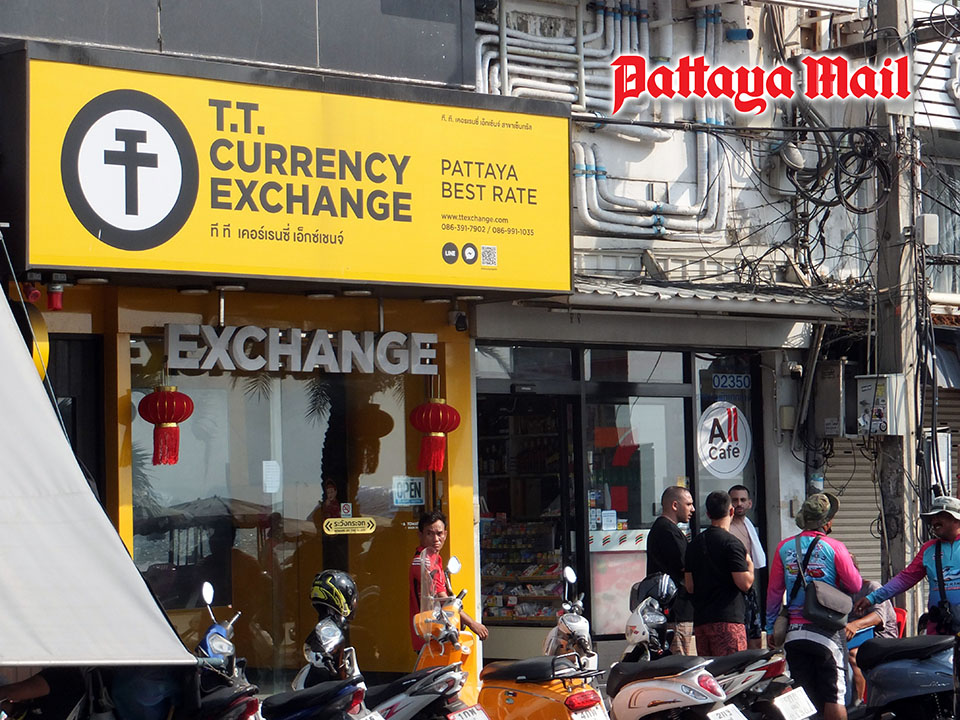
PATTAYA, Thailand – Visitors in Pattaya are closely watching Thailand’s currency movements after the Thai baht weakened in early trading on Friday, reflecting global financial uncertainty and a strengthening US dollar.
According to Krungthai Bank’s financial analysis unit, Krungthai GLOBAL MARKETS, the baht opened the morning at 31.77 per US dollar, weakening from the previous day’s close of 31.60 per dollar. Analysts expect the currency to move within a 31.55–31.95 range over the next 24 hours as global markets react to economic data and geopolitical developments.
The softer baht has drawn attention from tourists and long-term visitors in Pattaya, where exchange rates can influence daily spending on hotels, food, nightlife, and shopping. Many foreign visitors see a weaker baht as improving their purchasing power during their stay in Thailand.
Market analysts say the baht has come under pressure as the US dollar strengthened, supported by rising US Treasury yields and stronger-than-expected economic data from the United States. At the same time, investors have been reducing expectations that the Federal Reserve will cut interest rates soon, a factor that has helped the dollar gain momentum.
Gold prices also fell below $5,100 per ounce, adding further pressure on regional currencies including the baht. Global uncertainty linked to the ongoing tensions in the Middle East has also contributed to volatility in financial markets and energy prices.

Despite the recent depreciation, analysts say the baht’s decline may remain gradual. Currency traders have been selling dollars when the baht weakens toward the 31.85 level, which analysts see as an important resistance zone, while 32.00 per dollar remains a key psychological threshold.
Financial markets are now closely awaiting the release of the latest US labour market figures, including the Nonfarm Payrolls report and unemployment data, which could significantly influence expectations for US interest rate policy and the direction of the dollar.
For Pattaya’s tourism economy, currency fluctuations remain an important factor. A slightly weaker baht can encourage spending by foreign visitors, particularly those from Europe and North America, who often monitor exchange rates during their trips.
As global economic data and geopolitical tensions continue to shape financial markets, tourists in Pattaya — from beachgoers to nightlife visitors — are likely to keep a close eye on the baht as it moves against the dollar in the days ahead.