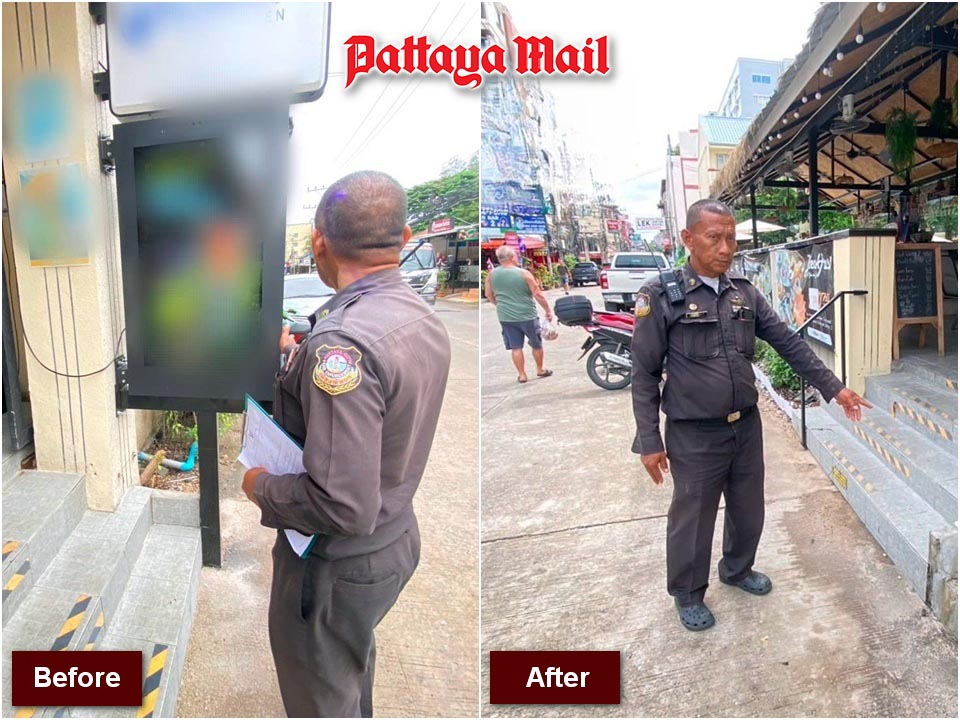
PATTAYA, Thailand – Pattaya’s streets are no stranger to cluttered signage and encroachment on public spaces, and the recent case on Soi 7, Jomtien, is a reminder that progress is often slow and piecemeal. Following complaints about a business installing a sign that extended into the public road, municipal authorities stepped in, prompting the operator to make corrections and sign a formal agreement.
While officials hailed the corrective action as a success, the episode highlights a persistent challenge: enforcing regulations consistently and proactively. Visitors may see a cleaner street this time, but such interventions often come only after complaints are filed, rather than through routine monitoring.
Critics argue that Pattaya’s image as a tourist-friendly city is undermined by recurring issues with public space management. Signage, street vendors, and construction materials frequently spill onto sidewalks and roads, creating safety hazards and detracting from the city’s aesthetic appeal. Temporary fixes like the one on Soi 7, while welcome, do not address the underlying lack of long-term oversight.
Urban planners and community advocates suggest a more systematic approach is needed: routine inspections, stricter penalties for repeat offenders, and incentives for businesses to comply voluntarily. Only with sustained enforcement can Pattaya truly project the clean, orderly environment that tourists expect and that locals deserve.
The Soi 7 incident may seem minor, but it is emblematic of a broader struggle: Pattaya is moving forward, but the city must tackle recurring small infractions before they pile up and compromise both safety and its reputation as a modern tourist destination.