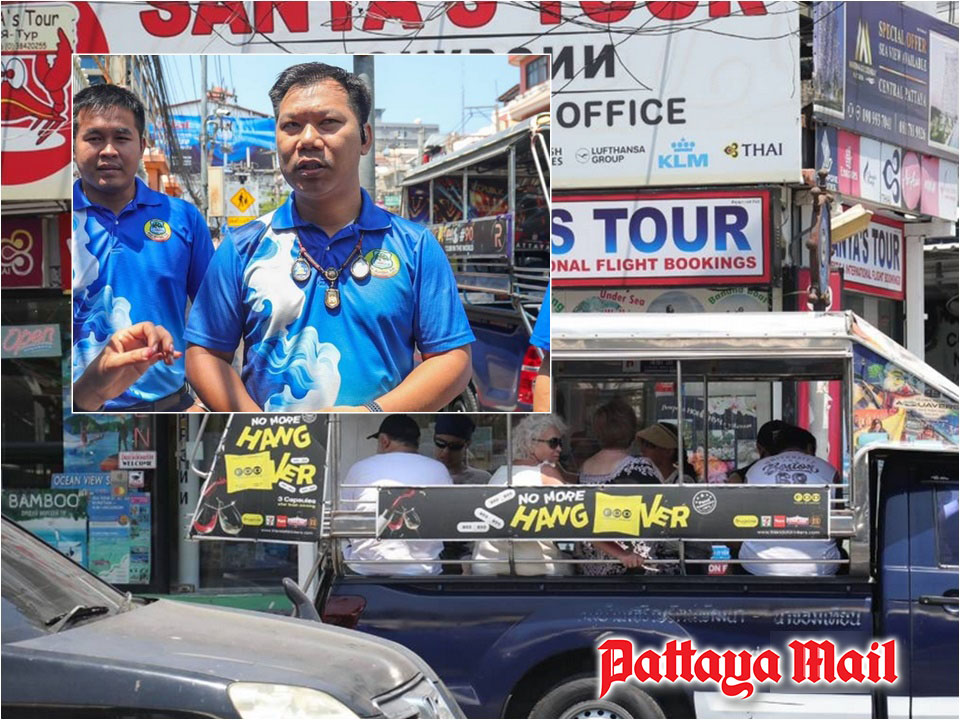
PATTAYA, Thailand – Public transport in Pattaya has seen a major adjustment as local “songthaew” (shared pickup truck taxis or baht-buses) raise fares for the first time in more than 30 years, with passengers largely expressing understanding while hoping for improved service quality.
The new fare structure sets prices at 15 baht for distances of 1–10 kilometers, rising to a maximum of 20 baht for longer routes. The revised rates came into effect on April 10.
Surveys of passengers in Pattaya show that most commuters accept the increase, citing rising fuel costs and living expenses as key factors. Some also noted that the previous 10 baht fare had remained unchanged for decades and was no longer sustainable under current economic conditions.
However, some members of the public have also called for fairness in the new system, urging clearer pricing practices, safer designated stopping points, and more disciplined driving behavior to reduce sudden stops and aggressive maneuvers on busy roads.
Thongchai Sukhakojai, Chairman of the Pattaya Songthaew Operators Cooperative, said this is the first fare increase in over 30 years, during which time operating costs—especially fuel—have risen steadily. He said operators had long absorbed these costs but could no longer maintain the previous fare level.
He added that the cooperative is committed to improving service standards alongside the fare increase, including safer driving practices, proper passenger pick-up and drop-off, and more polite communication with commuters to build public confidence.
Drivers also said the adjustment will help align income with rising expenses, particularly fuel costs, while assuring that service quality will remain a priority during the transition period.
Currently, more than 712 songthaew vehicles operate across Pattaya, forming a key part of local public transport.