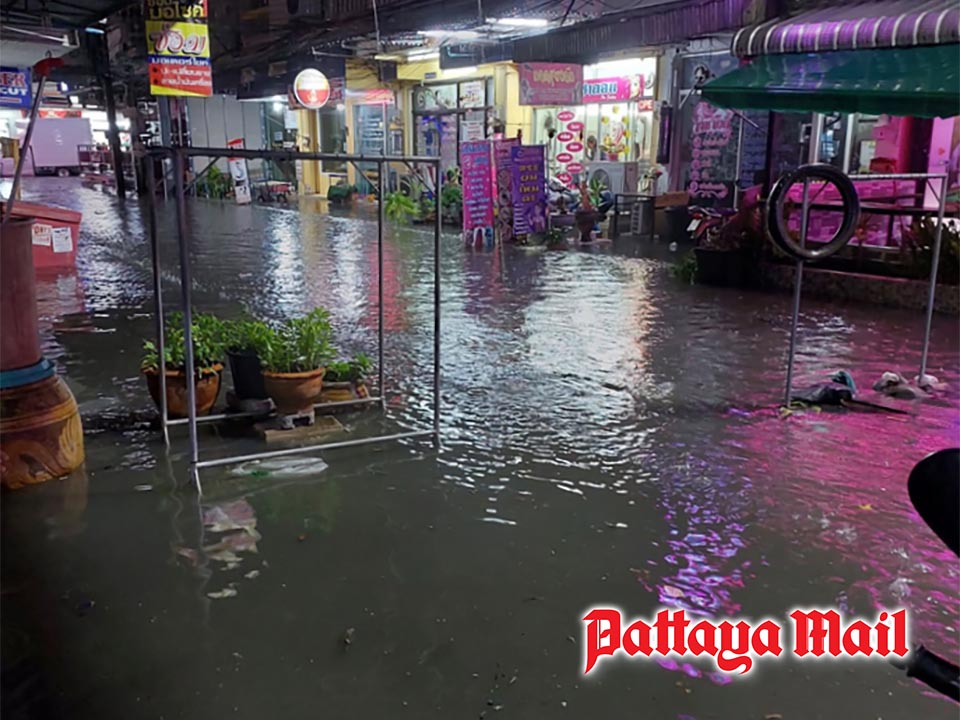
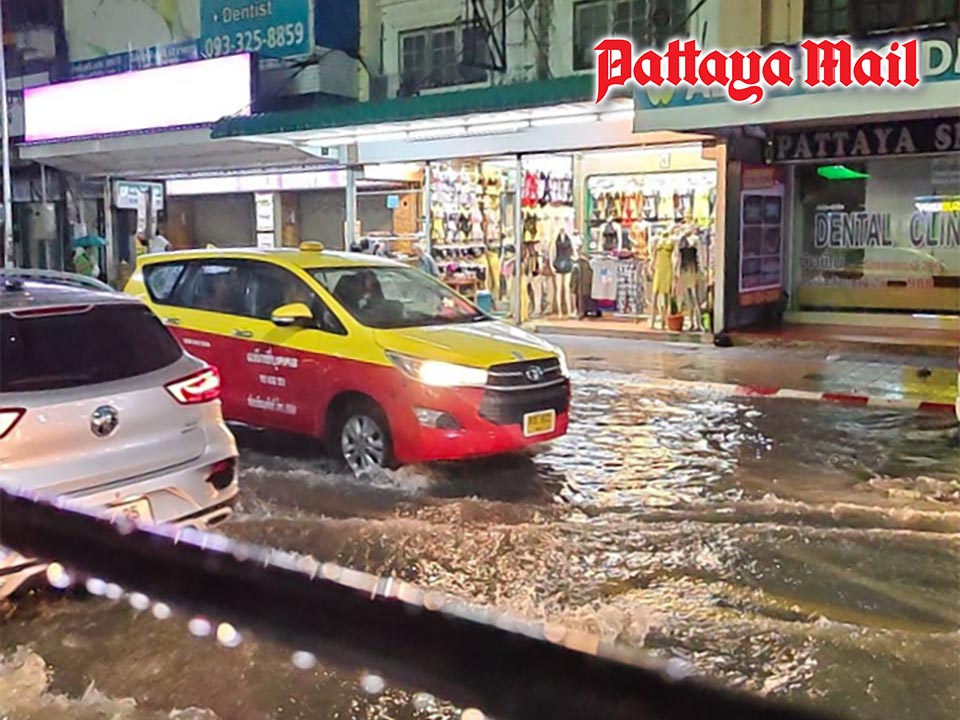
PATTAYA, Thailand — Every heavy downpour in Pattaya can bring the same familiar challenge: roads fill with water, traffic slows and businesses, drivers and tourists have to adjust their plans until the streets clear. Photos taken on Soi Buakhao show how quickly heavy rain can transform one of Pattaya’s busiest areas, leaving vehicles navigating flooded sections of road while pedestrians look for higher ground and businesses wait for the water to recede.
For local businesses, even a relatively short period of flooding can mean fewer customers, delayed deliveries and difficult access. Restaurants, bars, shops and other businesses depend on people being able to move around the city, particularly during the evening when the tourism economy becomes more active.
Drivers face their own problems. Flooded roads can slow traffic dramatically, create difficult conditions for motorcycles and make even familiar routes harder to navigate. For tourists, a sudden storm can mean changing plans, delaying trips or simply waiting for the rain to pass before heading out.
The impact is not limited to the biggest storms. In Pattaya, even smaller but intense bursts of rain can create temporary flooding in low-lying areas, particularly when drainage systems have to handle large amounts of water in a short period.
Yet there is another side to Pattaya’s rainy season. The city does not simply shut down when the rain arrives. Businesses adapt, drivers find alternative routes and tourists often wait out the worst of a storm before continuing their day or evening.
The weather can also change remarkably quickly. A street that looks badly flooded during a downpour can begin clearing once the rain stops, allowing traffic and business activity to return.
The Thai Meteorological Department has indicated that rainfall conditions could ease later, offering some hope for businesses and visitors looking ahead. But September remains part of the rainy season, and the latest forecasts continue to show frequent thunderstorms and periods of heavy rain.
Recent weather patterns have shown why forecasts need to be followed closely. Earlier this month, the Meteorological Department issued repeated heavy-rain warnings covering eastern provinces including Chonburi, with the potential for flooding in low-lying areas.
For Pattaya, that means a forecast for fewer rainy days should not be mistaken for the end of the rainy season. Storms can build quickly, and weather conditions can change faster than a morning forecast suggests. The Meteorological Department has repeatedly updated warnings when conditions warrant it.
The message for the city is therefore one of preparation rather than pessimism. Pattaya’s businesses have learned to work around the rain, while visitors can still enjoy the city by allowing extra time, checking conditions and being prepared for sudden showers.
For drivers, pedestrians and tourists, patience remains important when heavy rain arrives. For businesses, the hope is that improving weather later in the season will bring more consistent foot traffic and a stronger finish to the year. Until then, Pattaya’s rainy season continues to test the city — sometimes with hours of showers, and sometimes with a sudden downpour that turns a busy street into a temporary river.