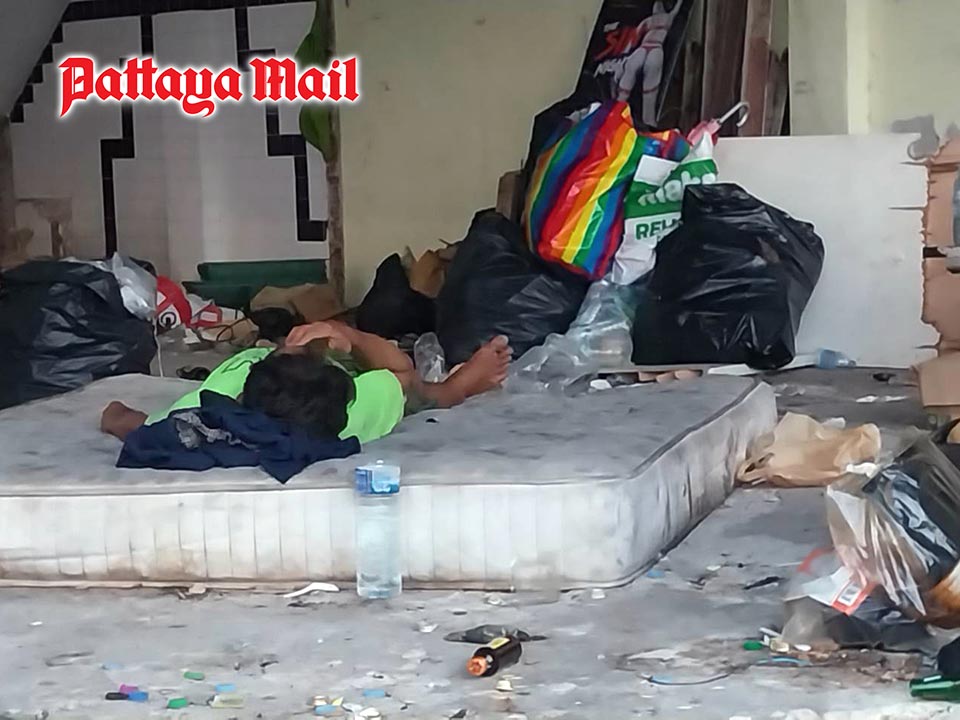
PATTAYA, Thailand – As visitor numbers ease during Pattaya’s low season, another side of the city is becoming increasingly visible: a growing number of homeless individuals taking shelter in abandoned buildings, closed bars, and vacant structures across key tourist areas. A survey conducted on June 2 found that several unused properties throughout Pattaya have become temporary living spaces for homeless residents. Many locations were littered with rubbish, food waste, and personal belongings, creating concerns about sanitation, safety, and the impact on nearby communities. Residents living near some of the abandoned buildings said they have noticed an increase in homeless occupants over recent months, particularly during nighttime hours. “We understand that many of these people are struggling and have nowhere else to go,” one local resident said. “But there are also issues with noise, littering, and concerns about safety. We’d like to see relevant agencies step in and provide assistance, both for the homeless and for the people living nearby.”
A bar owner in South Pattaya said that some businesses that closed or suspended operations during the economic slowdown have left behind vacant premises that are now being used as makeshift shelters. “Some people stay there because they have lost their jobs or cannot afford rent,” the business owner explained. “The problem is that when larger groups gather in these abandoned properties, issues related to cleanliness and security can follow. What is needed is meaningful assistance, not simply moving people from one location to another.” City officials acknowledged that homelessness remains a long-standing social challenge in Pattaya, driven by a combination of economic hardship, family problems, limited employment opportunities, mental health issues, and substance abuse. According to officials, Pattaya City continues to work with social welfare agencies to identify and assist homeless individuals through outreach programs, screening initiatives, and referrals to shelters and support services.
While Pattaya remains one of Thailand’s most important tourism destinations, the presence of homeless communities in abandoned properties highlights broader social and economic issues that extend beyond the tourism sector. Local observers note that long-term solutions will require more than simply clearing public spaces. Sustainable progress will likely depend on expanding access to employment opportunities, social support programs, mental health services, and affordable housing, while helping vulnerable individuals rebuild stable lives and preserving Pattaya’s image as a welcoming destination for residents and visitors alike.