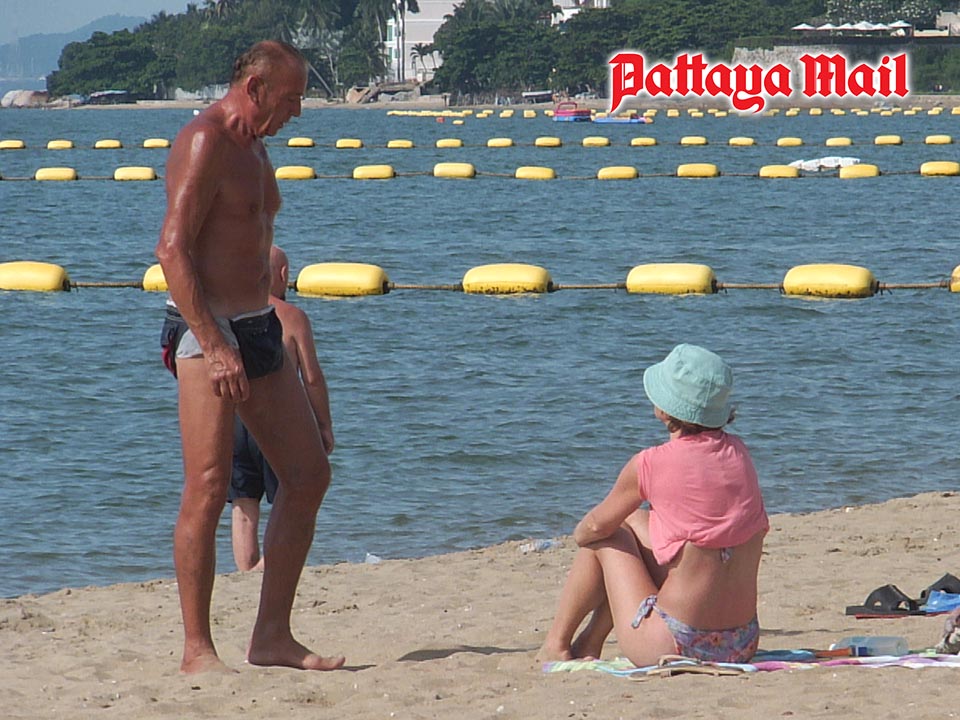
PATTAYA, Thailand – Walk along Pattaya Beach on any given morning and the picture feels reassuringly familiar. Foreign couples sit on benches watching the sea, golfers head out early to beat the heat, and cafés begin to fill as the city wakes up. At first glance, the strong Thai baht does not appear to be keeping anyone away.
But listen more closely to the conversations taking place over coffee, at money exchange counters, or on online forums, and a more nuanced reality emerges.
The idea that “rich tourists don’t care about exchange rates” sounds logical, but it only tells part of the story. Many still come, but how they spend once they arrive is quietly changing. One self-described wealthy visitor admitted that while he is comfortable financially, he has slowed his travel within Thailand and is playing less golf for now. Not because he cannot afford it, but because value still matters. Wealth, after all, is often built on careful decisions, not careless spending.
That theme repeats often. For many visitors, being rich does not mean being indifferent to price. It means choosing when spending feels justified. Some of the wealthiest people, as one reader observed, are also the most cautious with money, and that caution does not disappear just because they are on holiday.
For others, the baht barely enters the equation. Visitors coming to Thailand for rest, recovery, or escape from political and social stress back home see the country as a refuge. Paying a little more for good food, attentive service, warm weather, and a sense of ease feels like a fair trade. Pattaya still delivers something they struggle to find elsewhere, even if it costs more than it once did.
There is also no single definition of a “rich tourist.” Some built their wealth through decades of work and remain acutely aware of costs. Others inherited money or came into it suddenly and treat spending as something closer to background noise. Pattaya has long managed to serve both types, offering value at one end and indulgence at the other.
What stands out is that very few say the strong baht is stopping them from coming altogether. Instead, it reshapes behavior in subtle but important ways. Stays become shorter. Side trips are postponed. Golf rounds, nightlife, and shopping are scaled back. Visitors pay closer attention to exchange rates, hunt harder for bargains, and wait patiently at money changers for better rates.
Some recall a time when the pound traded at 75 baht, a memory that still shapes expectations today. Younger travelers have no such reference point, which perhaps makes the current rates feel more normal. Even so, many visitors now track currency movements, gold prices, and interest rate decisions with surprising intensity, delaying large exchanges until the numbers feel right.
So is the Thai baht the deciding factor in whether tourists choose Pattaya?
Not yet. Climate, familiarity, food, friendliness, and the simple emotional relief the city offers still carry more weight. But the baht has become a quiet influence, a kind of invisible toll that slows enthusiasm even when it doesn’t stop travel entirely.
Pattaya is not losing visitors in large numbers. What it may be losing, however, is spending confidence. Tourists still arrive, but they think twice, calculate more carefully, and hold back in ways that were far less common before.
And in a city that thrives on momentum, that hesitation may matter more than any headline exchange rate.