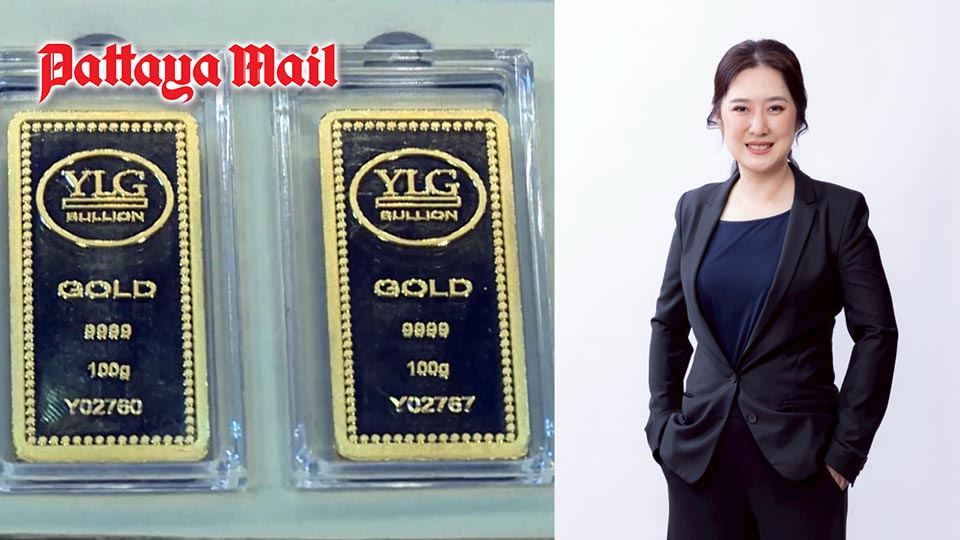
PATTAYA, Thailand – Gold prices have continued to retreat this week, approaching the US$4,000-per-ounce level as investors react to a stronger U.S. dollar and growing expectations that the U.S. Federal Reserve may raise interest rates. According to Ms. Thipa Nawawattanasap, Chief Executive Officer of YLG Bullion & Futures Co., Ltd., the recent correction has placed gold in a potentially attractive accumulation zone for long-term investors despite short-term pressure.
YLG noted that at around US$4,000 per ounce, gold is trading approximately 10.6% below its 200-day simple moving average (SMA), which currently stands at US$4,474 per ounce. Historical data dating back to 2014 shows that gold has fallen more than 10% below its 200-day SMA only seven times, with prices typically stabilizing and recovering afterward. While near-term volatility remains possible, YLG believes the longer-term trend for gold remains positive, supported by continued buying from central banks around the world.
Data from the World Gold Council shows that central banks have purchased an average of 1,000 tonnes of gold annually over the past four years, roughly double the average annual purchases recorded during the previous decade. The increase has been driven by geopolitical uncertainty and concerns over the resilience of the global economy. A recent survey conducted by the World Gold Council, involving a record 76 central banks, revealed strong confidence in gold’s role within global reserves. Approximately 89% of respondents expect total central bank gold holdings worldwide to increase over the next 12 months.
Notably, 45% of participating central banks indicated plans to increase their own gold reserves, while most of the remainder expect to maintain current holdings. Only 1% said they intend to reduce their gold positions. Respondents cited gold’s performance during periods of crisis, its ability to diversify reserve portfolios, hedge against inflation, and provide protection from geopolitical risks as key reasons for increasing holdings.
The survey also highlighted a gradual shift away from the U.S. dollar. Around 74% of central banks expect the dollar’s share of global reserves to decline moderately or significantly over the next five years, while gold’s share is expected to increase. Holdings of the euro and Chinese yuan are expected to remain broadly stable. The findings have reinforced bullish long-term forecasts from many financial institutions, even as short-term price weakness continues.
For investors concerned about market volatility, YLG recommends a dollar-cost averaging (DCA) strategy, gradually accumulating gold over time rather than attempting to time market bottoms. “The short-term outlook may remain challenging, but the longer-term fundamentals continue to support gold,” the company said.