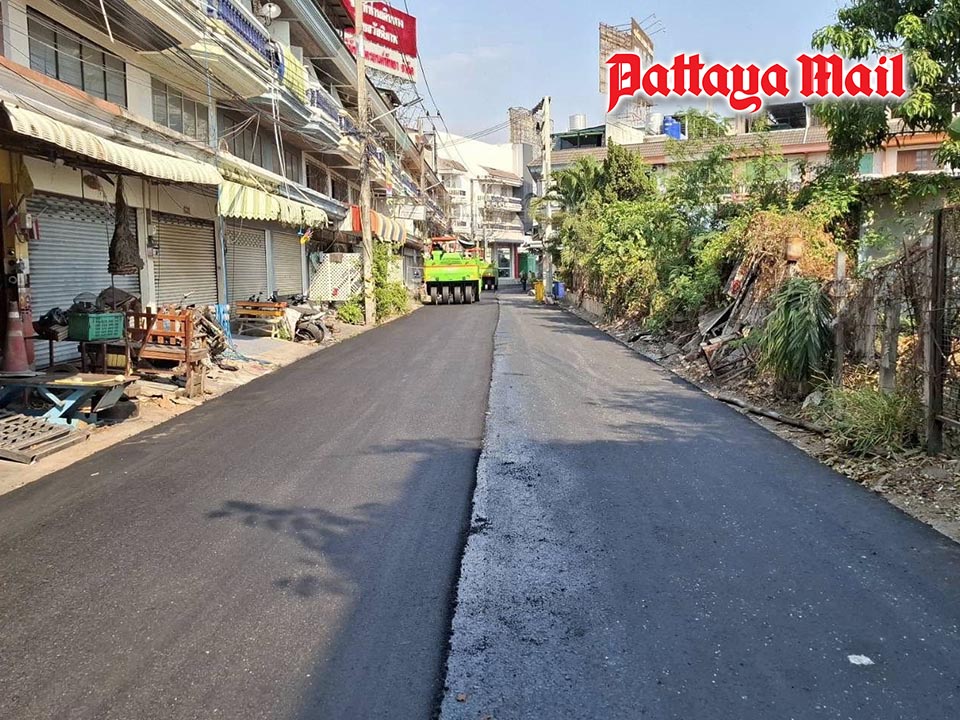
PATTAYA, Thailand – As resurfacing work continues across South Pattaya, City Hall has once again defended its familiar “pave first, cut later” approach, insisting that drainage covers and utility adjustments will be completed after the new asphalt has been laid.
But among long-term residents and daily road users, patience is wearing thin.
While many welcome any effort to improve Pattaya’s crumbling roads, readers point out that resurfacing often appears rushed, narrowly applied, and poorly coordinated — raising questions about durability, safety, and whether lessons are ever learned.
One frequent complaint is road width. “Any chance of paving them more than six feet wide?” one reader asked sarcastically. “We’re driving cars and trucks, not shopping carts.” Others noted that narrow resurfaced sections quickly deteriorate once traffic drifts back onto broken edges, especially on busy routes carrying heavy trucks and buses.
Durability is another concern. Residents say freshly laid asphalt often looks good for a few months, only to break up within a year. The common belief is that new layers are repeatedly laid over old, damaged surfaces without proper excavation or foundation work — a short-term fix that fails under Pattaya’s constant traffic load.
“Where I live, they resurface the road every year,” one reader wrote. “But because they just put tarmac on top of tarmac, it’s never any better. It feels like budget spending, not real repair.”
Timing also draws criticism. Many question why disruptive roadworks are carried out during high season, when traffic congestion is already at its worst, rather than in the quieter low season when disruption would be less severe.
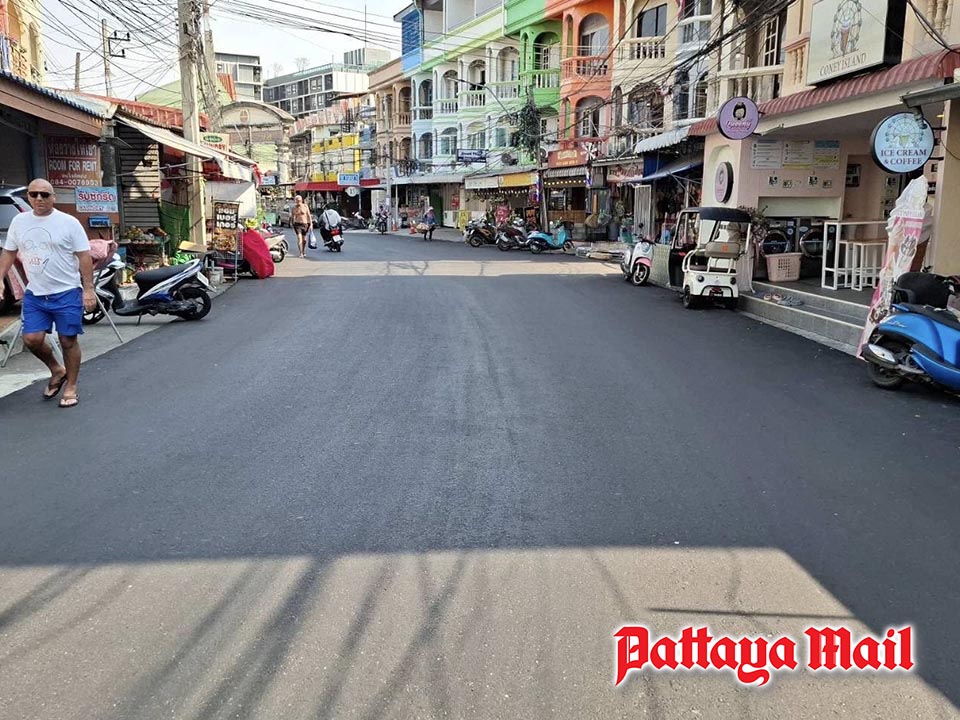
Footpaths are another sore point. Residents argue that pavements should be repaired or replaced before road resurfacing, not as an afterthought — and that once fixed, they should be kept free of poles, signs, cables, parked motorcycles, and street clutter so pedestrians can actually use them.
“Fix the footpaths first, then keep them clear,” one reader commented. “It all helps.”
Specific trouble spots continue to be named. Pratumnak Soi 5was repeatedly mentioned as “badly needing attention,” while Pattaya Second and Third Roads were cited as overdue for full-length resurfacing, not patchwork repairs. Soi Chaiyapoon — jokingly dubbed “Soi Pothole” — was noted as an example of improvement, though residents pointed out it took more than a decade to reach that point.
Despite the criticism, many readers stress they are not against roadworks — quite the opposite.
“The roads that have been done properly are good,” one comment noted. “Good work. Many roads in Pattaya are really bad, and improvements are needed.”
What frustrates residents most is comparison. Visitors returning from Ayutthaya, Pathum Thani, and even rural Isaan provinces report smoother, longer-lasting roads built to higher standards — prompting the uncomfortable question: why does a world-class tourist city still struggle with basic infrastructure?
For many, the message is clear. Pattaya doesn’t lack money or motivation — it lacks planning, coordination, and engineering discipline. Residents want fewer cosmetic fixes and more long-term solutions, even if they take longer or cost more upfront.
As one blunt reader summed it up: “We want Pattaya to be better. But doing the same thing again and again, and expecting different results, isn’t progress.”